<?xml version="1.0" encoding="utf-8" standalone="yes" ?>
<feed xmlns="http://www.w3.org/2005/Atom">

	<title>planet.linuxaudio.org</title>
	<link rel="self" href="http://planet.linuxaudio.org/atom.xml"/>
	<link href="http://planet.linuxaudio.org/"/>
	<id>http://planet.linuxaudio.org/atom.xml</id>
	<updated>2012-05-17T05:05:19+00:00</updated>
	<generator uri="http://www.planetplanet.org/">Planet/2.0 +http://www.planetplanet.org</generator>

	<entry xml:lang="en">
		<title type="html">[LAA] [ANN] gjacktransport/gjackclock update - v0.5.3</title>
		<link href="http://linuxaudio.org/mailarchive/laa/2012/5/16/190403"/>
		<id>http://linuxaudio.org/mailarchive/laa/2012/5/16/190403</id>
		<updated>2012-05-16T13:03:26+00:00</updated>
		<content type="html">From: Robin Gareus &amp;lt;robin@...&amp;gt;&lt;br /&gt;
Subject: [LAA] [ANN] gjacktransport/gjackclock update - v0.5.3&lt;br /&gt;
Date: May 16, 12:56 pm 2012&lt;br /&gt;
&lt;br /&gt;
-----BEGIN PGP SIGNED MESSAGE-----
&lt;br /&gt;Hash: SHA1
&lt;br /&gt;
&lt;br /&gt;gjacktransport is a gtk application that allows to control
&lt;br /&gt;JACK-transport. It includes a stand-alone /big-jack-clock/ application
&lt;br /&gt;called gjackclock.
&lt;br /&gt;
&lt;br /&gt;Version 0.5.3 released last night is a maintenance update that allows
&lt;br /&gt;the apps to run on the GNU Hurd.
&lt;br /&gt;
&lt;br /&gt;Thanks for the bug-report and patch by Cyril Roelandt.
&lt;br /&gt;http://bugs.debian.org/cgi-bin/bugreport.cgi?bug=671586
&lt;br /&gt;
&lt;br /&gt;The sourcecode and more information can be found at
&lt;br /&gt;http://gjacktransport.sf.net/
&lt;br /&gt;
&lt;br /&gt;Cheers!
&lt;br /&gt;robin
&lt;br /&gt;-----BEGIN PGP SIGNATURE-----
&lt;br /&gt;Version: GnuPG v1.4.11 (GNU/Linux)
&lt;br /&gt;
&lt;br /&gt;iQIcBAEBAgAGBQJPs5qaAAoJEKCQvOAs9X8EUY8P/1DCNuAq0Mc1VGkzYt/n1DCF
&lt;br /&gt;ua+bGmczDd5E3zMiCP6zt75MxxO3clxynufiz4TzjzjK3dpAismPHlnvyR/tvxHW
&lt;br /&gt;lMRmb1AHbdthoUZS60eFYe2FUVwlBfaFatyQs7lEeoMooK2iF+qww1Tu8Y4U1Du1
&lt;br /&gt;ZscvE3NrjvW7s+Mi7M32pL3qbVQKKaz6pEqynv5o3b4ZyHrWeOKdYcXbvUZ0n7TT
&lt;br /&gt;DgnCN3wJuFih7Hk6QAEa98Fif5GNHbnQt+t74oImisb9chYeTQ38cjTN7Uuvdpgo
&lt;br /&gt;Yllal+VYfy+qTWxHtggSVZxXAG1ngIN6/UmurPnF+Mt0e+qxCic8FXNsgdU1ODjB
&lt;br /&gt;bXM1ZNSCNOWScLxhS9JArMG/FFCRidsyae05G19WF6DWSHJkbrkw/wkLvg07VaB1
&lt;br /&gt;C/jSRNK9iQOW9o14phr635W7mntey4HYS7YKJhvWpBA0DocsQphrc2U0HBi5L0/N
&lt;br /&gt;pYJFblYSGmkb45pNdQe4imCWy1h10izyE7kqJZup+pNCEGHq3s7QQxp5xa/STEzL
&lt;br /&gt;3MZg1wvz0lHPUHy9b0So7tTLPEmcYjPv7w0PBxF6uF0hAFy0Tr221HZx9cAhbKGv
&lt;br /&gt;8EuH1NrLr8TgkomHamNW6eWQthyTw3UTZjSXzerrQdzVHRjRYMv6JkFzh2Qzd+Pa
&lt;br /&gt;+eitIJw5HM5mPxyLSzWx
&lt;br /&gt;=Winm
&lt;br /&gt;-----END PGP SIGNATURE-----
&lt;br /&gt;_______________________________________________
&lt;br /&gt;Linux-audio-announce mailing list
&lt;br /&gt;Linux-audio-announce@lists.linuxaudio.org
&lt;br /&gt;http://lists.linuxaudio.org/listinfo/linux-audio-announce
&lt;br /&gt;&lt;p&gt;&lt;a href=&quot;http://linuxaudio.org/mailarchive/laa/2012/5/16/190403&quot;&gt;read more&lt;/a&gt;&lt;/p&gt;</content>
		<author>
			<name>laa mailing list - Linuxaudio.org</name>
			<uri>http://linuxaudio.org</uri>
		</author>
		<source>
			<title type="html">laa mailing list - Linuxaudio.org</title>
			<subtitle type="html">This list informs subscribers about new releases or events and is not intended for discussion.The announce list is moderated and each post needs to be approved by the list maintainer.</subtitle>
			<link rel="self" href="http://linuxaudio.org/mailarchive/laa/feed"/>
			<id>http://linuxaudio.org/mailarchive/laa/feed</id>
			<updated>2012-05-17T05:04:26+00:00</updated>
		</source>
	</entry>

	<entry xml:lang="en">
		<title type="html">[LAA] bugfix release guitarix 0.22.3</title>
		<link href="http://linuxaudio.org/mailarchive/laa/2012/5/16/190402"/>
		<id>http://linuxaudio.org/mailarchive/laa/2012/5/16/190402</id>
		<updated>2012-05-16T13:03:26+00:00</updated>
		<content type="html">From: hermann &amp;lt;brummer-@...&amp;gt;&lt;br /&gt;
Subject: [LAA] bugfix release guitarix 0.22.3&lt;br /&gt;
Date: May 16, 12:56 pm 2012&lt;br /&gt;
&lt;br /&gt;
In behave of the guitarix development team I'm happy to announce a new
&lt;br /&gt;bugfix release: guitarix 0.22.3. 
&lt;br /&gt;This is the 3. bugfix release after we reach version 0.22.0 as you can
&lt;br /&gt;properly see on the version number. 
&lt;br /&gt;Below is a list of the squashed bugs, thanks goes to all users witch
&lt;br /&gt;report them to us.  
&lt;br /&gt;
&lt;br /&gt;version 0.22.3
&lt;br /&gt;fix: denormals generated under special circumstances
&lt;br /&gt;fix: switch off auto_startup_notification for splash window (unity)
&lt;br /&gt;convolver bugfix: use correct channel count
&lt;br /&gt;Convolver bugfix: delay and maxsize must be based on system samplerate
&lt;br /&gt;fix: preset_button in config mode
&lt;br /&gt;version 0.22.2
&lt;br /&gt;fix: save scratch preset before switching to a newly created one
&lt;br /&gt;version 0.22.1
&lt;br /&gt;fix: changed &quot;requires&quot; tag for gtk+ to 2.20 in gx_distortion_ui.glade
&lt;br /&gt;ladspa_guitarix: fix preset loading
&lt;br /&gt;ladspa_guitarix: fix module loading
&lt;br /&gt;ladspa_guitarix: fix loading (undefined symbols)
&lt;br /&gt;bugfix: wrong variable in crybaby UI
&lt;br /&gt;
&lt;br /&gt;get it here:
&lt;br /&gt;
&lt;br /&gt;http://sourceforge.net/projects/guitarix/
&lt;br /&gt;
&lt;br /&gt;greets
&lt;br /&gt;hermann
&lt;br /&gt;
&lt;br /&gt;_______________________________________________
&lt;br /&gt;Linux-audio-announce mailing list
&lt;br /&gt;Linux-audio-announce@lists.linuxaudio.org
&lt;br /&gt;http://lists.linuxaudio.org/listinfo/linux-audio-announce
&lt;br /&gt;&lt;p&gt;&lt;a href=&quot;http://linuxaudio.org/mailarchive/laa/2012/5/16/190402&quot;&gt;read more&lt;/a&gt;&lt;/p&gt;</content>
		<author>
			<name>laa mailing list - Linuxaudio.org</name>
			<uri>http://linuxaudio.org</uri>
		</author>
		<source>
			<title type="html">laa mailing list - Linuxaudio.org</title>
			<subtitle type="html">This list informs subscribers about new releases or events and is not intended for discussion.The announce list is moderated and each post needs to be approved by the list maintainer.</subtitle>
			<link rel="self" href="http://linuxaudio.org/mailarchive/laa/feed"/>
			<id>http://linuxaudio.org/mailarchive/laa/feed</id>
			<updated>2012-05-17T05:04:26+00:00</updated>
		</source>
	</entry>

	<entry xml:lang="en">
		<title type="html">Fun with graphics card drivers in Ubuntu 12.04</title>
		<link href="http://thorwil.wordpress.com/2012/05/16/fun-with-graphics-card-drivers-in-ubuntu-12-04/"/>
		<id>http://thorwil.wordpress.com/?p=1348</id>
		<updated>2012-05-16T08:52:07+00:00</updated>
		<content type="html">&lt;p&gt;Summary: If you have performance problems using the JACK Audio-Connection-Kit and the &lt;code&gt;fglrx&lt;/code&gt; ATI grpahics card driver, switching to &lt;code&gt;radeon&lt;/code&gt; may solve them. Unity 3D and radeon can work, but leftovers of other drivers might get in the way. Also: Proprietary, binary blobs smell bad and Ubuntu&amp;#8217;s infrastructure around those drivers is dodgey.&lt;/p&gt;
&lt;p&gt;On Ubuntu 11.10, I switched graphics cards and thus drivers from &lt;code&gt;nvidia&lt;/code&gt; to &lt;code&gt;fglrx&lt;/code&gt; without much of a problem.&lt;/p&gt;
&lt;p&gt;I recently upgraded to Ubuntu 12.04 and was quite pleased by how smooth that went and glad for not having to reconfigure and reinstall a bunch of stuff. As with every release so far, some issues might have disappeared, but a very noticable new one arrived: focus-follows mouse combined with auto-raise does no longer work reliably. So far I failed to identify the pattern for the cases where windows are not raised, when they should be.&lt;/p&gt;
&lt;p&gt;After a while, I wanted to get back to music production with JACK and Ardour. My system was still configured for JACK to run in realtime mode, but I got many disconnects, often right when Ardour brought up its main window. I found out this only happened with Unity 3D, not with 2D. So it seemed like either one or the combination of Unity 3D and the &lt;code&gt;fglrx&lt;/code&gt; driver interfered with realtime mode. A fellow #lad inhabitant knowledgeable about this realtime kernel business suspects that the 3D accleration part of the &lt;code&gt;fglrx&lt;/code&gt; driver is not preemptable.&lt;/p&gt;
&lt;p&gt;Where does one even report bugs about that proprietary blob? And how would one diagnose what exactly goes wrong?&lt;/p&gt;
&lt;p&gt;Now I could use Unity 2D, but I really miss window drop-shadows, dislike the look and different notification animations for the Launcher icons and hate the fact that the Dash doesn&amp;#8217;t react to the same shortcut I configured while using the 3D version.&lt;/p&gt;
&lt;p&gt;Initially, I thought I would need the fglrx driver for Unity 3D, but still wanted to try switching to radeon. The &lt;em&gt;Additional Drivers&lt;/em&gt; dialog claimed that neiter of the 2 ATI options were active, but &lt;code&gt;lsmod&lt;/code&gt; told me otherwise. I have some Wacom-related stuff in my &lt;code&gt;xorg.conf&lt;/code&gt;, which had to be moved out of the way, to get that thing to work. After a reboot, &lt;code&gt;radeon&lt;/code&gt; was in use, but Unity decided to drop back to 2D. The cause: &lt;code&gt;Xlib: extension &quot;GLX&quot; missing on display &quot;:0.0&quot;&lt;/code&gt;. The solution was purging any trace of &lt;code&gt;fglrx&lt;/code&gt; and &lt;code&gt;nividia&lt;/code&gt;(!) from my system. Also, for good measure, but I suspect it&amp;#8217;s unnecessary: &lt;code&gt;sudo apt-get install —reinstall libgl1-mesa-glx libgl1-mesa-dri xserver-xorg-core; sudo dpkg-reconfigure xserver-xorg&lt;/code&gt;.&lt;/p&gt;
&lt;p&gt;Now I have a working Unity 3D, using &lt;code&gt;radeon&lt;/code&gt;, no disconnects or xruns galore using JACK and Ardour. Only new problem so far: shaky mouse pointer on the login screen.&lt;/p&gt;
&lt;br /&gt;Filed under: &lt;a href=&quot;http://thorwil.wordpress.com/category/planet-ubuntu/&quot;&gt;Planet Ubuntu&lt;/a&gt;, &lt;a href=&quot;http://thorwil.wordpress.com/category/ubuntu/&quot;&gt;Ubuntu&lt;/a&gt;  &lt;a rel=&quot;nofollow&quot; href=&quot;http://feeds.wordpress.com/1.0/gocomments/thorwil.wordpress.com/1348/&quot;&gt;&lt;img alt=&quot;&quot; border=&quot;0&quot; src=&quot;http://feeds.wordpress.com/1.0/comments/thorwil.wordpress.com/1348/&quot; /&gt;&lt;/a&gt; &lt;a rel=&quot;nofollow&quot; href=&quot;http://feeds.wordpress.com/1.0/godelicious/thorwil.wordpress.com/1348/&quot;&gt;&lt;img alt=&quot;&quot; border=&quot;0&quot; src=&quot;http://feeds.wordpress.com/1.0/delicious/thorwil.wordpress.com/1348/&quot; /&gt;&lt;/a&gt; &lt;a rel=&quot;nofollow&quot; href=&quot;http://feeds.wordpress.com/1.0/gofacebook/thorwil.wordpress.com/1348/&quot;&gt;&lt;img alt=&quot;&quot; border=&quot;0&quot; src=&quot;http://feeds.wordpress.com/1.0/facebook/thorwil.wordpress.com/1348/&quot; /&gt;&lt;/a&gt; &lt;a rel=&quot;nofollow&quot; href=&quot;http://feeds.wordpress.com/1.0/gotwitter/thorwil.wordpress.com/1348/&quot;&gt;&lt;img alt=&quot;&quot; border=&quot;0&quot; src=&quot;http://feeds.wordpress.com/1.0/twitter/thorwil.wordpress.com/1348/&quot; /&gt;&lt;/a&gt; &lt;a rel=&quot;nofollow&quot; href=&quot;http://feeds.wordpress.com/1.0/gostumble/thorwil.wordpress.com/1348/&quot;&gt;&lt;img alt=&quot;&quot; border=&quot;0&quot; src=&quot;http://feeds.wordpress.com/1.0/stumble/thorwil.wordpress.com/1348/&quot; /&gt;&lt;/a&gt; &lt;a rel=&quot;nofollow&quot; href=&quot;http://feeds.wordpress.com/1.0/godigg/thorwil.wordpress.com/1348/&quot;&gt;&lt;img alt=&quot;&quot; border=&quot;0&quot; src=&quot;http://feeds.wordpress.com/1.0/digg/thorwil.wordpress.com/1348/&quot; /&gt;&lt;/a&gt; &lt;a rel=&quot;nofollow&quot; href=&quot;http://feeds.wordpress.com/1.0/goreddit/thorwil.wordpress.com/1348/&quot;&gt;&lt;img alt=&quot;&quot; border=&quot;0&quot; src=&quot;http://feeds.wordpress.com/1.0/reddit/thorwil.wordpress.com/1348/&quot; /&gt;&lt;/a&gt; &lt;img alt=&quot;&quot; border=&quot;0&quot; src=&quot;http://stats.wordpress.com/b.gif?host=thorwil.wordpress.com&amp;blog=938467&amp;post=1348&amp;subd=thorwil&amp;ref=&amp;feed=1&quot; width=&quot;1&quot; height=&quot;1&quot; /&gt;</content>
		<author>
			<name>Thorwil's</name>
			<uri>http://thorwil.wordpress.com</uri>
		</author>
		<source>
			<title type="html">Thorwil's</title>
			<subtitle type="html">Design for Free Software</subtitle>
			<link rel="self" href="http://thorwil.wordpress.com/feed/"/>
			<id>http://thorwil.wordpress.com/feed/</id>
			<updated>2012-05-16T14:00:20+00:00</updated>
		</source>
	</entry>

	<entry xml:lang="en">
		<title type="html">[LAA] Rivendell v2.1.4</title>
		<link href="http://linuxaudio.org/mailarchive/laa/2012/5/14/190337"/>
		<id>http://linuxaudio.org/mailarchive/laa/2012/5/14/190337</id>
		<updated>2012-05-14T09:04:21+00:00</updated>
		<content type="html">From: Fred Gleason &amp;lt;fredg@...&amp;gt;&lt;br /&gt;
Subject: [LAA] Rivendell v2.1.4&lt;br /&gt;
Date: May 14, 8:14 am 2012&lt;br /&gt;
&lt;br /&gt;
On behalf of the entire Rivendell development team, I'm pleased to announce the availability of Rivendell v2.1.4.  Rivendell is a full-featured radio automation system targeted for use in professional broadcast environments. It is available under the GNU General Public License.
&lt;br /&gt;
&lt;br /&gt;&gt;From the NEWS file:
&lt;br /&gt;*** snip snip ***
&lt;br /&gt;Changes:
&lt;br /&gt;   This is a maintenance release of Rivendell.  Some of the issues
&lt;br /&gt;   addressed include:
&lt;br /&gt;
&lt;br /&gt;   RDCatch XLoad Wildcards.  Several new wildcards and meta-characters
&lt;br /&gt;   have been added for specifying URLs in RDCatch, including:
&lt;br /&gt;     $e -- Day of the month, space padded ( 1 - 12)
&lt;br /&gt;     $E -- Day of the month, unpadded (1 - 12)
&lt;br /&gt;     ^ --  Convert value indicated by following format character to all
&lt;br /&gt;           uppercase.
&lt;br /&gt;     $ --  Convert the initial character of the value indicated by the
&lt;br /&gt;           following format character to uppercase.
&lt;br /&gt;   A complete list of wildcards can be found in 'docs/datetime_wildcards.txt'.
&lt;br /&gt;
&lt;br /&gt;   HPI Compatibility.  Updated HPI subsystem to work with the latest
&lt;br /&gt;   AudioScience driver versions (v4.10.x).
&lt;br /&gt;
&lt;br /&gt;   RDLibrary Reports.  Fixed a problem where generated reports would
&lt;br /&gt;   not accurately reflect the current cart filters.
&lt;br /&gt;
&lt;br /&gt;   A detailed list of all bugfixes can be found in the ChangeLog.
&lt;br /&gt;
&lt;br /&gt;Database Update:
&lt;br /&gt;   This version of Rivendell uses database schema version 205, and will
&lt;br /&gt;   automatically upgrade any earlier versions.  To see the current schema
&lt;br /&gt;   version prior to upgrade, see RDAdmin-&gt;SystemInfo.
&lt;br /&gt;
&lt;br /&gt;   As always, be sure to run RDAdmin immediately after upgrading to allow
&lt;br /&gt;   any necessary changes to the database schema to be applied.
&lt;br /&gt;*** snip snip ***
&lt;br /&gt;
&lt;br /&gt;Further information, screenshots and download links are available at:
&lt;br /&gt;
&lt;br /&gt; http://www.rivendellaudio.org/
&lt;br /&gt;
&lt;br /&gt;Cheers!
&lt;br /&gt;
&lt;br /&gt;
&lt;br /&gt;|-------------------------------------------------------------------------|
&lt;br /&gt;| Frederick F. Gleason, Jr. |               Chief Developer               |
&lt;br /&gt;|                           |               Paravel Systems               |
&lt;br /&gt;|-------------------------------------------------------------------------|
&lt;br /&gt;|  I love deadlines.  I especially like the whoosing sound they make as   |
&lt;br /&gt;|  they go flying by.                                                     |
&lt;br /&gt;|                                        -- Douglas Adams                 |
&lt;br /&gt;|-------------------------------------------------------------------------|
&lt;br /&gt;
&lt;br /&gt;_______________________________________________
&lt;br /&gt;Linux-audio-announce mailing list
&lt;br /&gt;Linux-audio-announce@lists.linuxaudio.org
&lt;br /&gt;http://lists.linuxaudio.org/listinfo/linux-audio-announce
&lt;br /&gt;&lt;p&gt;&lt;a href=&quot;http://linuxaudio.org/mailarchive/laa/2012/5/14/190337&quot;&gt;read more&lt;/a&gt;&lt;/p&gt;</content>
		<author>
			<name>laa mailing list - Linuxaudio.org</name>
			<uri>http://linuxaudio.org</uri>
		</author>
		<source>
			<title type="html">laa mailing list - Linuxaudio.org</title>
			<subtitle type="html">This list informs subscribers about new releases or events and is not intended for discussion.The announce list is moderated and each post needs to be approved by the list maintainer.</subtitle>
			<link rel="self" href="http://linuxaudio.org/mailarchive/laa/feed"/>
			<id>http://linuxaudio.org/mailarchive/laa/feed</id>
			<updated>2012-05-17T05:04:26+00:00</updated>
		</source>
	</entry>

	<entry>
		<title type="html">GStreamer Core 0.11.91, Base Plugins 0.11.91, Good Plugins 0.11.91, Bad
      Plugins 0.11.91, Ugly Plugins 0.11.91, libav Plugins 0.11.91 unstable release</title>
		<link href="http://gstreamer.freedesktop.org/news/#2012-05-13T17:06:00Z"/>
		<id>http://gstreamer.freedesktop.org/news/#2012-05-13T17:06:00Z</id>
		<updated>2012-05-13T16:02:04+00:00</updated>
		<content type="html">&lt;p&gt;
The GStreamer team announces a new release of the GStreamer core,
Base/Good/Bad/Ugly/libav modules for the 0.11 GStreamer unstable release series.
&lt;/p&gt;&lt;p&gt;
This is the second release candidate of the upcoming 1.0 release. It
is intended for developers and people wanting to port their plugins and
applications to the new series. Only minor or absolutely necessary
changes to the core/base API/ABI will happen between this release and
the final 1.0.0 release.
&lt;/p&gt;&lt;p&gt;
Check out release notes for
&lt;a href=&quot;http://gstreamer.freedesktop.org/releases/gstreamer/0.11.91.html&quot;&gt;gstreamer core&lt;/a&gt; or
&lt;a href=&quot;http://gstreamer.freedesktop.org/releases/gst-plugins-base/0.11.91.html&quot;&gt;gst-plugins-base&lt;/a&gt;,
&lt;a href=&quot;http://gstreamer.freedesktop.org/releases/gst-plugins-good/0.11.91.html&quot;&gt;gst-plugins-good&lt;/a&gt;,
&lt;a href=&quot;http://gstreamer.freedesktop.org/releases/gst-plugins-bad/0.11.91.html&quot;&gt;gst-plugins-bad&lt;/a&gt;,
&lt;a href=&quot;http://gstreamer.freedesktop.org/releases/gst-plugins-ugly/0.11.91.html&quot;&gt;gst-plugins-ugly&lt;/a&gt;,
&lt;a href=&quot;http://gstreamer.freedesktop.org/releases/gst-libav/0.11.91.html&quot;&gt;gst-libav&lt;/a&gt;,
or download tarballs for
&lt;a href=&quot;http://gstreamer.freedesktop.org/src/gstreamer/gstreamer-0.11.91.tar.xz&quot;&gt;gstreamer&lt;/a&gt; or
&lt;a href=&quot;http://gstreamer.freedesktop.org/src/gst-plugins-base/gst-plugins-base-0.11.91.tar.xz&quot;&gt;gst-plugins-base&lt;/a&gt;,
&lt;a href=&quot;http://gstreamer.freedesktop.org/src/gst-plugins-good/gst-plugins-good-0.11.91.tar.xz&quot;&gt;gst-plugins-good&lt;/a&gt;,
&lt;a href=&quot;http://gstreamer.freedesktop.org/src/gst-plugins-bad/gst-plugins-bad-0.11.91.tar.xz&quot;&gt;gst-plugins-bad&lt;/a&gt;,
&lt;a href=&quot;http://gstreamer.freedesktop.org/src/gst-plugins-ugly/gst-plugins-ugly-0.11.91.tar.xz&quot;&gt;gst-plugins-ugly&lt;/a&gt;,
&lt;a href=&quot;http://gstreamer.freedesktop.org/src/gst-libav/gst-libav-0.11.91.tar.xz&quot;&gt;gst-libav&lt;/a&gt;,
    &lt;/p&gt;</content>
		<author>
			<name>GStreamer News</name>
			<uri>http://gstreamer.freedesktop.org/news/</uri>
		</author>
		<source>
			<title type="html">GStreamer News</title>
			<subtitle type="html">Latest news from the GStreamer project</subtitle>
			<link rel="self" href="http://gstreamer.freedesktop.org/news/rss-1.0.xml"/>
			<id>http://gstreamer.freedesktop.org/news/rss-1.0.xml</id>
			<updated>2012-05-13T16:02:04+00:00</updated>
		</source>
	</entry>

	<entry xml:lang="en">
		<title type="html">rui’s new synths: synthv1 and samplv1</title>
		<link href="http://wootangent.net/2012/05/ruis-new-synths-synthv1-and-samplv1/"/>
		<id>http://wootangent.net/?p=2079</id>
		<updated>2012-05-13T07:25:07+00:00</updated>
		<content type="html">&lt;p&gt;The last week has seen the announcement of two new LV2 synths, both from Qtractor and QJackCtl developer and all &amp;#8217;round good-guy &lt;a href=&quot;http://www.rncbc.org/&quot;&gt;Rui Nuno Capela&lt;/a&gt;: &lt;a href=&quot;http://www.rncbc.org/drupal/node/473&quot;&gt;synthv1&lt;/a&gt; and &lt;a href=&quot;http://www.rncbc.org/drupal/node/488&quot;&gt;samplv1&lt;/a&gt;. Both are in the early stages of development, but they&amp;#8217;re already looking very promising.&lt;/p&gt;
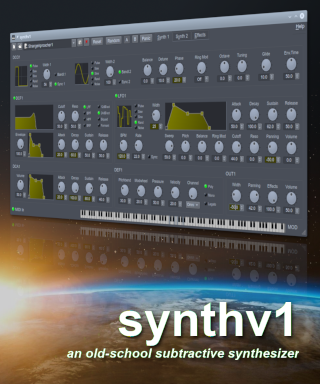
&lt;div id=&quot;attachment_2081&quot; class=&quot;wp-caption aligncenter&quot;&gt;&lt;a href=&quot;http://wootangent.net/wp-content/uploads/2012/05/synthv1_alpha1.png&quot; rel=&quot;shadowbox[sbpost-2079];player=img;&quot;&gt;&lt;img src=&quot;http://wootangent.net/wp-content/uploads/2012/05/synthv1_alpha1-600x423.png&quot; alt=&quot;&quot; title=&quot;synthv1_alpha1&quot; width=&quot;600&quot; height=&quot;423&quot; class=&quot;size-medium wp-image-2081&quot; /&gt;&lt;/a&gt;&lt;p class=&quot;wp-caption-text&quot;&gt;synthv1 is a classic analogue-style synth with a few twists&lt;/p&gt;&lt;/div&gt;
&lt;p&gt;You can never have enough good analogue-style soft-synths, and synthv1 is a welcome addition to the list. The basic synth design is pretty straightforward &amp;#8212; two oscillators (with saw, pulse, sine, and noise waves), a multi-mode filter with its own envelope, and an LFO with various routing options. However, each patch actually has two instances of this synth engine, which are mixed and then processed through an effects section.&lt;/p&gt;
&lt;p&gt;This layered design is particularly handy for adding sub-octaves to create strong bass sounds, or adding some high-end sizzle to pads, especially when combined with the filter&amp;#8217;s high-pass mode and the LFO&amp;#8217;s panning control. It can also create very wide stereo sounds, by building subtly different sounds on each layer and then panning the layers in opposite directions.&lt;/p&gt;
&lt;p&gt;There are some other unique touches, too. For instance, the saw wave is actually continually variable between saw and triangle modes, which gives you more basic oscillator timbres to work with; hopefully later versions will allow the LFO to be routed to this wave shape control, both for saw/triangle variation and for pulse width variation. Also, the LFO has its own envelope, which can be used to adding vibrato or filter cutoff variation to a sound after the initial attack, for instance.&lt;/p&gt;
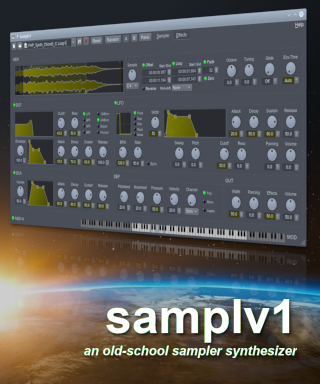
&lt;div id=&quot;attachment_2080&quot; class=&quot;wp-caption aligncenter&quot;&gt;&lt;a href=&quot;http://wootangent.net/wp-content/uploads/2012/05/samplv1_alpha1.png&quot; rel=&quot;shadowbox[sbpost-2079];player=img;&quot;&gt;&lt;img src=&quot;http://wootangent.net/wp-content/uploads/2012/05/samplv1_alpha1-600x393.png&quot; alt=&quot;&quot; title=&quot;samplv1_alpha1&quot; width=&quot;600&quot; height=&quot;393&quot; class=&quot;size-medium wp-image-2080&quot; /&gt;&lt;/a&gt;&lt;p class=&quot;wp-caption-text&quot;&gt;samplv1 fills a major gap: a simple sampler plugin&lt;/p&gt;&lt;/div&gt;
&lt;p&gt;samplv1 is the more interesting for me, though, because it fills what I feel is a major gap in Linux audio: a simple plugin sampler. LinuxSampler is great, and it&amp;#8217;s available as a plugin, but sometimes you just want to take a single sample and do something creative with it, especially when making percussion parts, and LinuxSampler doesn&amp;#8217;t make that easy. Specimen (for which I recorded a &lt;a href=&quot;http://www.youtube.com/watch?v=p6SoNX4bA1Y&quot;&gt;video tutorial&lt;/a&gt;) is a better option for this, but as a standalone JACK app, it&amp;#8217;s cumbersome to use, especially if you&amp;#8217;re using multiple instances to host multiple sounds.&lt;/p&gt;
&lt;p&gt;In a lot of ways, samplv1 is like a plugin version of Specimen &amp;#8212; it lets you load a sample and map it to your keyboard within seconds, and then optionally use other synth components to process that sound. samplv1 uses the same envelope-controlled multi-mode filter and LFO as synthv1, which gives you a lot of scope for creative sound design; Specimen has a bit more modulation flexibility, but it&amp;#8217;s not as immediately accessible as samplv1 is. samplev1 also shares synthv1&amp;#8242;s stereo effects section.&lt;/p&gt;
&lt;p&gt;It&amp;#8217;s still early days for both of these, so don&amp;#8217;t be too surprised if you run in to problems (I&amp;#8217;ve had a few crashes with Ardour 3, for instance, but I haven&amp;#8217;t narrowed down their cause yet), but they&amp;#8217;re definitely worth checking out!&lt;/p&gt;</content>
		<author>
			<name>woo, tangent » Linux</name>
			<uri>http://wootangent.net</uri>
		</author>
		<source>
			<title type="html">woo, tangent » Linux</title>
			<subtitle type="html">lsd's rants about games, music, linux, and technology</subtitle>
			<link rel="self" href="http://wootangent.net/category/linux/feed/"/>
			<id>http://wootangent.net/category/linux/feed/</id>
			<updated>2012-05-13T08:00:35+00:00</updated>
		</source>
	</entry>

	<entry xml:lang="en">
		<title type="html">Yet Another Vee One Prototype</title>
		<link href="http://www.rncbc.org/drupal/node/488"/>
		<id>http://www.rncbc.org/488 at http://www.rncbc.org/drupal</id>
		<updated>2012-05-12T12:00:00+00:00</updated>
		<content type="html">&lt;p&gt;following in the same vein, like &quot;&lt;em&gt;look mamma, I've made this!&lt;/em&gt;&quot;, here goes yet another &lt;em&gt;proto-toy&lt;/em&gt; called &lt;strong&gt;samplv1&lt;/strong&gt;--an(other) &lt;em&gt;old-school&lt;/em&gt; all-digital (of course) polyphonic sampler synthesizer with stereo fx.&lt;/p&gt;
&lt;p align=&quot;center&quot;&gt;&lt;img src=&quot;http://www.rncbc.org/drupal//files/samplv1-1.png&quot; alt=&quot;samplv1&quot; hspace=&quot;4&quot; vspace=&quot;4&quot; /&gt;&lt;/p&gt;
&lt;p&gt;have a sample:&lt;/p&gt;
&lt;dd&gt;&lt;a href=&quot;http://www.rncbc.org/snapshots/#samplv1&quot;&gt;http://www.rncbc.org/snapshots/#samplv1&lt;/a&gt;&lt;br /&gt;
&lt;a href=&quot;http://www.rncbc.org/snapshots/samplv1-svn656.tar.gz&quot;&gt;http://www.rncbc.org/snapshots/samplv1-svn656.tar.gz&lt;/a&gt;&lt;/dd&gt;
&lt;p&gt;upstream svn trunk (and LV2 URI):&lt;/p&gt;
&lt;dd&gt;&lt;a href=&quot;https://www.rncbc.org/svn/test/samplv1&quot;&gt;https://www.rncbc.org/svn/test/samplv1&lt;/a&gt;&lt;/dd&gt;
&lt;p&gt;still rough in the edges but pretty functional; as the &lt;a href=&quot;http://www.rncbc.org/drupal/node/473&quot;&gt;previous one&lt;/a&gt;, it comes in both forms of a JACK stand-alone client and a LV2 instrument plug-in.&lt;/p&gt;
&lt;p&gt;have fun.&lt;/p&gt;
&lt;p&gt;&lt;a href=&quot;http://www.rncbc.org/drupal/node/488&quot; target=&quot;_blank&quot;&gt;read more&lt;/a&gt;&lt;/p&gt;</content>
		<author>
			<name>rncbc.org</name>
			<uri>http://www.rncbc.org/drupal</uri>
		</author>
		<source>
			<title type="html">rncbc.org</title>
			<subtitle type="html">Show-off my open-source stuff, mostly of the Linux Audio/MIDI genre</subtitle>
			<link rel="self" href="http://www.rncbc.org/drupal/rss.xml"/>
			<id>http://www.rncbc.org/drupal/rss.xml</id>
			<updated>2012-05-17T05:04:48+00:00</updated>
		</source>
	</entry>

	<entry xml:lang="en">
		<title type="html">[LAA] NASPRO 0.4.1 released</title>
		<link href="http://linuxaudio.org/mailarchive/laa/2012/5/10/190219"/>
		<id>http://linuxaudio.org/mailarchive/laa/2012/5/10/190219</id>
		<updated>2012-05-10T09:04:15+00:00</updated>
		<content type="html">From: Stefano D'Angelo &amp;lt;zanga.mail@...&amp;gt;&lt;br /&gt;
Subject: [LAA] NASPRO 0.4.1 released&lt;br /&gt;
Date: May 10, 8:46 am 2012&lt;br /&gt;
&lt;br /&gt;
Hi all,
&lt;br /&gt;
&lt;br /&gt;I am glad to announce the release of NASPRO 0.4.1.
&lt;br /&gt;
&lt;br /&gt;NASPRO (http://naspro.atheme.org/) is meant to be a cross-platform
&lt;br /&gt;sound processing software architecture built around the LV2 plugin
&lt;br /&gt;standard (http://lv2plug.in/).
&lt;br /&gt;
&lt;br /&gt;The goal of the project is to develop a series of tools to make it
&lt;br /&gt;easy and convenient to use LV2 for sound processing on any (relevant)
&lt;br /&gt;platform and for everybody: end users, host developers, plugin
&lt;br /&gt;developers, distributors and scientists/researchers.
&lt;br /&gt;
&lt;br /&gt;This is just a small update to NASPRO Bridge it and NASPRO bridges that:
&lt;br /&gt;
&lt;br /&gt; * makes use of LV2 Atom for MIDI events;
&lt;br /&gt; * enables LRDF-equivalent bundle installation and automatic
&lt;br /&gt;translation of DSSI programs to LV2 presets by default;
&lt;br /&gt; * aligns with the unified LV2 distribution.
&lt;br /&gt;
&lt;br /&gt;Enjoy!
&lt;br /&gt;_______________________________________________
&lt;br /&gt;Linux-audio-announce mailing list
&lt;br /&gt;Linux-audio-announce@lists.linuxaudio.org
&lt;br /&gt;http://lists.linuxaudio.org/listinfo/linux-audio-announce
&lt;br /&gt;&lt;p&gt;&lt;a href=&quot;http://linuxaudio.org/mailarchive/laa/2012/5/10/190219&quot;&gt;read more&lt;/a&gt;&lt;/p&gt;</content>
		<author>
			<name>laa mailing list - Linuxaudio.org</name>
			<uri>http://linuxaudio.org</uri>
		</author>
		<source>
			<title type="html">laa mailing list - Linuxaudio.org</title>
			<subtitle type="html">This list informs subscribers about new releases or events and is not intended for discussion.The announce list is moderated and each post needs to be approved by the list maintainer.</subtitle>
			<link rel="self" href="http://linuxaudio.org/mailarchive/laa/feed"/>
			<id>http://linuxaudio.org/mailarchive/laa/feed</id>
			<updated>2012-05-17T05:04:26+00:00</updated>
		</source>
	</entry>

	<entry xml:lang="en">
		<title type="html">Hackaday Links May 9th 2012</title>
		<link href="http://hackaday.com/2012/05/09/hackaday-links-may-9th-2012/"/>
		<id>http://hackaday.com/?p=71809</id>
		<updated>2012-05-09T12:01:13+00:00</updated>
		<content type="html">&lt;p&gt;&lt;strong&gt;Homecut &amp;#8211; CNC Cutting Directory&lt;/strong&gt;&lt;/p&gt;
&lt;p&gt;&lt;a href=&quot;http://hackaday.com/2012/05/09/hackaday-links-may-9th-2012/homecut/&quot; rel=&quot;attachment wp-att-71929&quot;&gt;&lt;img class=&quot;size-full wp-image-71929 alignleft&quot; title=&quot;homecut&quot; src=&quot;http://hackadaycom.files.wordpress.com/2012/04/homecut.png&quot; alt=&quot;homecut&quot; width=&quot;470&quot; height=&quot;83&quot; /&gt;&lt;/a&gt;&lt;/p&gt;
&lt;p&gt;So you have a CNC machine that you use as a hobby, but would like to do some actual work on the side? Or maybe you have an idea you&amp;#8217;d like made. &lt;a title=&quot;homecut&quot; href=&quot;http://homecut.org/&quot; target=&quot;_blank&quot;&gt;Homecut&lt;/a&gt; is a map directory where you can maybe hook up with the right person.&lt;/p&gt;
&lt;p&gt;&lt;strong&gt;The Curta Mechanical Calculator&lt;/strong&gt;&lt;/p&gt;
&lt;p&gt;&lt;a href=&quot;http://hackaday.com/2012/05/09/hackaday-links-may-9th-2012/curta-calc/&quot; rel=&quot;attachment wp-att-71930&quot;&gt;&lt;img class=&quot;size-full wp-image-71930 alignleft&quot; title=&quot;curta-calc&quot; src=&quot;http://hackadaycom.files.wordpress.com/2012/04/curta-calc.png&quot; alt=&quot;curta calculator&quot; width=&quot;470&quot; height=&quot;83&quot; /&gt;&lt;/a&gt;&lt;/p&gt;
&lt;p&gt;As [leehart] mentioned in &lt;a title=&quot;antique mechanical calculating machines&quot; href=&quot;http://hackaday.com/2012/03/25/antique-electromechanical-calculating-machines/&quot;&gt;our comments section&lt;/a&gt;, the Curta mechanical calculator is a truly ingenious piece of engineering. A quick Google search should find all kinds of information on it, but &lt;a title=&quot;Curta mechanical calculator&quot; href=&quot;http://www.jcopro.net/2012/04/06/the-curta-mechanical-calculator-mechanical-hacking-inspiration/&quot; target=&quot;_blank&quot;&gt;this article&lt;/a&gt; could be a good place to start for some mechanical hacking inspiration!&lt;/p&gt;
&lt;p&gt;&lt;strong&gt;Luxman Amplifier DAC&lt;/strong&gt; Upgrade&lt;/p&gt;
&lt;p&gt;&lt;a href=&quot;http://hackaday.com/2012/05/09/hackaday-links-may-9th-2012/nand-dac/&quot; rel=&quot;attachment wp-att-73747&quot;&gt;&lt;img class=&quot;alignleft size-full wp-image-73747&quot; title=&quot;nand-dac&quot; src=&quot;http://hackadaycom.files.wordpress.com/2012/05/nand-dac.jpg&quot; alt=&quot;nand-dac&quot; width=&quot;470&quot; height=&quot;83&quot; /&gt;&lt;/a&gt;&lt;/p&gt;
&lt;p&gt;[R. Barrios] wasn&amp;#8217;t happy with using the sound card for his HTPC setup, so decided to &lt;a title=&quot;Luxman A386 Amplifier DAC Upgrade&quot; href=&quot;http://www.rbarrios.com/projects/MDCDAC/&quot; target=&quot;_blank&quot;&gt;add a DAC module onto his reciever&lt;/a&gt;. The resulting audio quality was very good, and the build came out quite clean.  Check it out if you&amp;#8217;re thinking of a hack-upgrade to your stereo equipment.&lt;/p&gt;
&lt;p&gt;&lt;strong&gt;3D Printable Tilt-Shift Adapter&lt;/strong&gt;&lt;/p&gt;
&lt;p&gt;&lt;strong&gt;&lt;a href=&quot;http://hackaday.com/2012/05/09/hackaday-links-may-9th-2012/tilt-shift-lens/&quot; rel=&quot;attachment wp-att-73751&quot;&gt;&lt;img class=&quot;alignleft size-full wp-image-73751&quot; title=&quot;tilt-shift-lens&quot; src=&quot;http://hackadaycom.files.wordpress.com/2012/05/tilt-shift-lens.jpg&quot; alt=&quot;tilt-shift-lens&quot; width=&quot;470&quot; height=&quot;83&quot; /&gt;&lt;/a&gt;&lt;br /&gt;
&lt;/strong&gt;&lt;/p&gt;
&lt;p&gt;&lt;strong&gt;&lt;/strong&gt;A tilt-shift lens a neat piece of equipment that is used to make a large scene look like they were miniatures. It&amp;#8217;s a cool effect, but professional lenses to do this can cost thousands of dollars. &lt;a title=&quot;3d printable Tilt-shift Adapter&quot; href=&quot;http://www.instructables.com/id/Printable-Tilt-Shift-Lens-Adapter/#step1&quot; target=&quot;_blank&quot;&gt;This Instructable&lt;/a&gt; tells you how to go about printing your own. For more info on the technique itself, check out this &lt;a title=&quot;Diorama Effect&quot; href=&quot;http://en.wikipedia.org/wiki/Miniature_faking&quot; target=&quot;_blank&quot;&gt;Wikipedia article&lt;/a&gt;.&lt;/p&gt;
&lt;p&gt;&lt;strong&gt;New 3D Printer on the Block&lt;/strong&gt;&lt;/p&gt;
&lt;p&gt;&lt;a href=&quot;http://hackaday.com/2012/05/09/hackaday-links-may-9th-2012/3d-printer/&quot; rel=&quot;attachment wp-att-73753&quot;&gt;&lt;img class=&quot;alignleft size-full wp-image-73753&quot; title=&quot;3d-printer&quot; src=&quot;http://hackadaycom.files.wordpress.com/2012/05/3d-printer.jpg&quot; alt=&quot;3d-printer&quot; width=&quot;470&quot; height=&quot;83&quot; /&gt;&lt;/a&gt;&lt;/p&gt;
&lt;p&gt;If you would like to take the plunge into 3D printing, but are looking for somewhere to get a parts kit, the [ORD Bot Hadron 3D Printer] &lt;a href=&quot;https://www.inventables.com/technologies/ord-bot-hadron-3d-printer-mechanical-platform&quot;&gt;may be worth a look&lt;/a&gt;.  The build quality looks great, and the price for the mechanical components is quite reasonable at $399. You&amp;#8217;ll need to provide the electronics and extruder. Thanks [comptechgeek]!&lt;/p&gt;
&lt;br /&gt;Filed under: &lt;a href=&quot;http://hackaday.com/category/classic-hacks/&quot;&gt;classic hacks&lt;/a&gt;, &lt;a href=&quot;http://hackaday.com/category/cnc-hacks/&quot;&gt;cnc hacks&lt;/a&gt;, &lt;a href=&quot;http://hackaday.com/category/digital-audio-hacks/&quot;&gt;digital audio hacks&lt;/a&gt;, &lt;a href=&quot;http://hackaday.com/category/digital-cameras-hacks/&quot;&gt;digital cameras hacks&lt;/a&gt;, &lt;a href=&quot;http://hackaday.com/category/hackaday-links/&quot;&gt;Hackaday links&lt;/a&gt;  &lt;a rel=&quot;nofollow&quot; href=&quot;http://feeds.wordpress.com/1.0/gocomments/hackadaycom.wordpress.com/71809/&quot;&gt;&lt;img alt=&quot;&quot; border=&quot;0&quot; src=&quot;http://feeds.wordpress.com/1.0/comments/hackadaycom.wordpress.com/71809/&quot; /&gt;&lt;/a&gt; &lt;a rel=&quot;nofollow&quot; href=&quot;http://feeds.wordpress.com/1.0/godelicious/hackadaycom.wordpress.com/71809/&quot;&gt;&lt;img alt=&quot;&quot; border=&quot;0&quot; src=&quot;http://feeds.wordpress.com/1.0/delicious/hackadaycom.wordpress.com/71809/&quot; /&gt;&lt;/a&gt; &lt;a rel=&quot;nofollow&quot; href=&quot;http://feeds.wordpress.com/1.0/gofacebook/hackadaycom.wordpress.com/71809/&quot;&gt;&lt;img alt=&quot;&quot; border=&quot;0&quot; src=&quot;http://feeds.wordpress.com/1.0/facebook/hackadaycom.wordpress.com/71809/&quot; /&gt;&lt;/a&gt; &lt;a rel=&quot;nofollow&quot; href=&quot;http://feeds.wordpress.com/1.0/gotwitter/hackadaycom.wordpress.com/71809/&quot;&gt;&lt;img alt=&quot;&quot; border=&quot;0&quot; src=&quot;http://feeds.wordpress.com/1.0/twitter/hackadaycom.wordpress.com/71809/&quot; /&gt;&lt;/a&gt; &lt;a rel=&quot;nofollow&quot; href=&quot;http://feeds.wordpress.com/1.0/gostumble/hackadaycom.wordpress.com/71809/&quot;&gt;&lt;img alt=&quot;&quot; border=&quot;0&quot; src=&quot;http://feeds.wordpress.com/1.0/stumble/hackadaycom.wordpress.com/71809/&quot; /&gt;&lt;/a&gt; &lt;a rel=&quot;nofollow&quot; href=&quot;http://feeds.wordpress.com/1.0/godigg/hackadaycom.wordpress.com/71809/&quot;&gt;&lt;img alt=&quot;&quot; border=&quot;0&quot; src=&quot;http://feeds.wordpress.com/1.0/digg/hackadaycom.wordpress.com/71809/&quot; /&gt;&lt;/a&gt; &lt;a rel=&quot;nofollow&quot; href=&quot;http://feeds.wordpress.com/1.0/goreddit/hackadaycom.wordpress.com/71809/&quot;&gt;&lt;img alt=&quot;&quot; border=&quot;0&quot; src=&quot;http://feeds.wordpress.com/1.0/reddit/hackadaycom.wordpress.com/71809/&quot; /&gt;&lt;/a&gt; &lt;img alt=&quot;&quot; border=&quot;0&quot; src=&quot;http://stats.wordpress.com/b.gif?host=hackaday.com&amp;blog=4779443&amp;post=71809&amp;subd=hackadaycom&amp;ref=&amp;feed=1&quot; width=&quot;1&quot; height=&quot;1&quot; /&gt;</content>
		<author>
			<name>Hack a Day » digital audio hacks</name>
			<uri>http://hackaday.com</uri>
		</author>
		<source>
			<title type="html">Hack a Day » digital audio hacks</title>
			<subtitle type="html">Fresh hacks every day</subtitle>
			<link rel="self" href="http://hackaday.com/category/digital-audio-hacks/feed/"/>
			<id>http://hackaday.com/category/digital-audio-hacks/feed/</id>
			<updated>2012-05-17T05:01:30+00:00</updated>
		</source>
	</entry>

	<entry xml:lang="en">
		<title type="html">The Vee One Prototype</title>
		<link href="http://www.rncbc.org/drupal/node/473"/>
		<id>http://www.rncbc.org/473 at http://www.rncbc.org/drupal</id>
		<updated>2012-05-07T20:00:00+00:00</updated>
		<content type="html">&lt;p&gt;aka. &lt;strong&gt;synthv1&lt;/strong&gt;--as announced  last week on IRC (#lad, #qtractor and #opensourcemusicians)--an &lt;em&gt;old-school&lt;/em&gt; all-digital 4-oscillator subtractive polyphonic synthesizer with stereo fx.&lt;/p&gt;
&lt;p align=&quot;center&quot;&gt;&lt;img src=&quot;http://www.rncbc.org/drupal//files/synthv1-1.png&quot; alt=&quot;synthv1&quot; hspace=&quot;4&quot; vspace=&quot;4&quot; /&gt;&lt;/p&gt;
&lt;p&gt;take no prisoners:&lt;/p&gt;
&lt;dd&gt;&lt;a href=&quot;http://www.rncbc.org/snapshots/#synthv1&quot;&gt;http://www.rncbc.org/snapshots/#synthv1&lt;/a&gt;&lt;br /&gt;
&lt;a href=&quot;http://www.rncbc.org/snapshots/synthv1-svn656.tar.gz&quot;&gt;http://www.rncbc.org/snapshots/synthv1-svn656.tar.gz&lt;/a&gt;&lt;/dd&gt;
&lt;p&gt;upstream svn trunk (also LV2 URI):&lt;/p&gt;
&lt;dd&gt;&lt;a href=&quot;https://www.rncbc.org/svn/test/synthv1&quot;&gt;https://www.rncbc.org/svn/test/synthv1&lt;/a&gt;&lt;/dd&gt;
&lt;p&gt;nb. licensed under the GPLv2 or later (see LICENSE)&lt;/p&gt;
&lt;p&gt;&lt;a href=&quot;http://www.rncbc.org/drupal/node/473&quot; target=&quot;_blank&quot;&gt;read more&lt;/a&gt;&lt;/p&gt;</content>
		<author>
			<name>rncbc.org</name>
			<uri>http://www.rncbc.org/drupal</uri>
		</author>
		<source>
			<title type="html">rncbc.org</title>
			<subtitle type="html">Show-off my open-source stuff, mostly of the Linux Audio/MIDI genre</subtitle>
			<link rel="self" href="http://www.rncbc.org/drupal/rss.xml"/>
			<id>http://www.rncbc.org/drupal/rss.xml</id>
			<updated>2012-05-17T05:04:48+00:00</updated>
		</source>
	</entry>

	<entry xml:lang="en">
		<title type="html">Simple mod to keep your downstairs neighbors from hearing you pound the keys</title>
		<link href="http://hackaday.com/2012/05/06/simple-mod-to-keep-your-downstairs-neighbors-from-hearing-you-pound-the-keys/"/>
		<id>http://hackaday.com/?p=73447</id>
		<updated>2012-05-06T15:01:59+00:00</updated>
		<content type="html">&lt;p&gt;&lt;img class=&quot;aligncenter size-full wp-image-73448&quot; title=&quot;keyboard shocks&quot; src=&quot;http://hackadaycom.files.wordpress.com/2012/05/keyboard-shocks.jpg&quot; alt=&quot;&quot; width=&quot;400&quot; height=&quot;300&quot; /&gt;&lt;/p&gt;
&lt;p&gt;[Mesoiam] managed to pick up a Viscount hammer weighted keyboard for pretty cheap. For those who are unfamiliar, Viscount makes keyboards that feel like you&amp;#8217;re playing a piano, hammers and all. The only problem with this, as [Mesoiam] discovered, is that even when he&amp;#8217;s jamming with headphones in, his friends down stairs can still hear the keyboard banging due to the vibration going through the stand to the floor. His resolution to this problem was to &lt;a href=&quot;https://sites.google.com/site/mesoiam/home/quiet-keyboard&quot;&gt;build some custom dampers to reduce the vibration&lt;/a&gt;. He built two brackets that fit over the stand and suspend the keyboard on two strips of flexible rubber. Quite a simple solution to a possibly annoying problem.&lt;/p&gt;
&lt;br /&gt;Filed under: &lt;a href=&quot;http://hackaday.com/category/digital-audio-hacks/&quot;&gt;digital audio hacks&lt;/a&gt;, &lt;a href=&quot;http://hackaday.com/category/musical-hacks/&quot;&gt;musical hacks&lt;/a&gt;  &lt;a rel=&quot;nofollow&quot; href=&quot;http://feeds.wordpress.com/1.0/gocomments/hackadaycom.wordpress.com/73447/&quot;&gt;&lt;img alt=&quot;&quot; border=&quot;0&quot; src=&quot;http://feeds.wordpress.com/1.0/comments/hackadaycom.wordpress.com/73447/&quot; /&gt;&lt;/a&gt; &lt;a rel=&quot;nofollow&quot; href=&quot;http://feeds.wordpress.com/1.0/godelicious/hackadaycom.wordpress.com/73447/&quot;&gt;&lt;img alt=&quot;&quot; border=&quot;0&quot; src=&quot;http://feeds.wordpress.com/1.0/delicious/hackadaycom.wordpress.com/73447/&quot; /&gt;&lt;/a&gt; &lt;a rel=&quot;nofollow&quot; href=&quot;http://feeds.wordpress.com/1.0/gofacebook/hackadaycom.wordpress.com/73447/&quot;&gt;&lt;img alt=&quot;&quot; border=&quot;0&quot; src=&quot;http://feeds.wordpress.com/1.0/facebook/hackadaycom.wordpress.com/73447/&quot; /&gt;&lt;/a&gt; &lt;a rel=&quot;nofollow&quot; href=&quot;http://feeds.wordpress.com/1.0/gotwitter/hackadaycom.wordpress.com/73447/&quot;&gt;&lt;img alt=&quot;&quot; border=&quot;0&quot; src=&quot;http://feeds.wordpress.com/1.0/twitter/hackadaycom.wordpress.com/73447/&quot; /&gt;&lt;/a&gt; &lt;a rel=&quot;nofollow&quot; href=&quot;http://feeds.wordpress.com/1.0/gostumble/hackadaycom.wordpress.com/73447/&quot;&gt;&lt;img alt=&quot;&quot; border=&quot;0&quot; src=&quot;http://feeds.wordpress.com/1.0/stumble/hackadaycom.wordpress.com/73447/&quot; /&gt;&lt;/a&gt; &lt;a rel=&quot;nofollow&quot; href=&quot;http://feeds.wordpress.com/1.0/godigg/hackadaycom.wordpress.com/73447/&quot;&gt;&lt;img alt=&quot;&quot; border=&quot;0&quot; src=&quot;http://feeds.wordpress.com/1.0/digg/hackadaycom.wordpress.com/73447/&quot; /&gt;&lt;/a&gt; &lt;a rel=&quot;nofollow&quot; href=&quot;http://feeds.wordpress.com/1.0/goreddit/hackadaycom.wordpress.com/73447/&quot;&gt;&lt;img alt=&quot;&quot; border=&quot;0&quot; src=&quot;http://feeds.wordpress.com/1.0/reddit/hackadaycom.wordpress.com/73447/&quot; /&gt;&lt;/a&gt; &lt;img alt=&quot;&quot; border=&quot;0&quot; src=&quot;http://stats.wordpress.com/b.gif?host=hackaday.com&amp;blog=4779443&amp;post=73447&amp;subd=hackadaycom&amp;ref=&amp;feed=1&quot; width=&quot;1&quot; height=&quot;1&quot; /&gt;</content>
		<author>
			<name>Hack a Day » digital audio hacks</name>
			<uri>http://hackaday.com</uri>
		</author>
		<source>
			<title type="html">Hack a Day » digital audio hacks</title>
			<subtitle type="html">Fresh hacks every day</subtitle>
			<link rel="self" href="http://hackaday.com/category/digital-audio-hacks/feed/"/>
			<id>http://hackaday.com/category/digital-audio-hacks/feed/</id>
			<updated>2012-05-17T05:01:30+00:00</updated>
		</source>
	</entry>

	<entry xml:lang="en">
		<title type="html">NASPRO 0.4.1 released</title>
		<link href="http://naspro.atheme.org/2012/05/06/naspro-0-4-1-released/"/>
		<id>http://naspro.atheme.org/?p=211</id>
		<updated>2012-05-06T13:49:15+00:00</updated>
		<content type="html">&lt;p&gt;Hi all,&lt;/p&gt;
&lt;p&gt;I am glad to announce the release of NASPRO 0.4.1.&lt;/p&gt;
&lt;p&gt;This is just a small update to &lt;a title=&quot;NASPRO Bridge it&quot; href=&quot;http://naspro.atheme.org/libraries/naspro-bridge-it/&quot;&gt;NASPRO Bridge it&lt;/a&gt; and &lt;a title=&quot;NASPRO bridges&quot; href=&quot;http://naspro.atheme.org/plugins/naspro-bridges/&quot;&gt;NASPRO bridges&lt;/a&gt; that:&lt;/p&gt;
&lt;ul&gt;
&lt;li&gt;makes use of &lt;a href=&quot;http://lv2plug.in/ns/ext/atom/&quot;&gt;LV2 Atom&lt;/a&gt; for MIDI events;&lt;/li&gt;
&lt;li&gt;enables LRDF-equivalent bundle installation and automatic translation of DSSI programs to LV2 presets by default;&lt;/li&gt;
&lt;li&gt;aligns with the unified LV2 distribution.&lt;/li&gt;
&lt;/ul&gt;
&lt;p&gt;Enjoy!&lt;/p&gt;</content>
		<author>
			<name>NASPRO</name>
			<uri>http://naspro.atheme.org</uri>
		</author>
		<source>
			<title type="html">NASPRO</title>
			<subtitle type="html">the NASPRO Architecture for Sound PROcessing</subtitle>
			<link rel="self" href="http://naspro.atheme.org/feed/"/>
			<id>http://naspro.atheme.org/feed/</id>
			<updated>2012-05-06T14:00:18+00:00</updated>
		</source>
	</entry>

	<entry xml:lang="en">
		<title type="html">Playing the song “Still Alive” on hacked exercise equipment</title>
		<link href="http://hackaday.com/2012/05/05/playing-the-song-still-alive-on-hacked-exercise-equipment/"/>
		<id>http://hackaday.com/?p=73349</id>
		<updated>2012-05-05T12:01:14+00:00</updated>
		<content type="html">&lt;p&gt;&lt;img class=&quot;aligncenter size-full wp-image-73350&quot; title=&quot;Screen Shot 2012-05-03 at 2.07.19 PM&quot; src=&quot;http://hackadaycom.files.wordpress.com/2012/05/screen-shot-2012-05-03-at-2-07-19-pm.png&quot; alt=&quot;&quot; width=&quot;375&quot; height=&quot;247&quot; /&gt;&lt;/p&gt;
&lt;p&gt;Back in 2009, [Evi1wombat] pulled of this interesting hack, and it has slowly made its way through the internet to find us today. He obtained the computer from a recently deceased treadmill and decided to hack into it. Finding himself unable to flash the existing chip, he yanked it out and replaced it with something he was more familiar with, a dsPIC30F4011. Unfortunately we don&amp;#8217;t have any pics of the inside, but he says that he had some fun with wire because the pin mapping wasn&amp;#8217;t exactly the same. [Evi1wombat] also gained some respect for the original designer judging by  this quote from the &lt;a href=&quot;http://www.club.cc.cmu.edu/~smoskovc/portal.c&quot;&gt;source code&lt;/a&gt;:&lt;/p&gt;
&lt;blockquote&gt;&lt;p&gt;* Damn, the dude who designed that board pulled&lt;br /&gt;
* some pretty nifty tricks&amp;#8230; took a while to&lt;br /&gt;
* get all the drivers working.&lt;/p&gt;&lt;/blockquote&gt;
&lt;p&gt;Of course, once you have control over some nifty new hardware, the first logical thing to do on it is &lt;a href=&quot;http://www.youtube.com/watch?v=hfmGnLMlKvs&amp;feature=youtu.be&quot;&gt;play &amp;#8220;Still Alive&amp;#8221; from the game Portal&lt;/a&gt;.&lt;/p&gt;
&lt;p&gt;Enjoy the video after the break.&lt;br /&gt;
&lt;span id=&quot;more-73349&quot;&gt;&lt;/span&gt;&lt;/p&gt;
&lt;p&gt;&lt;span&gt;&lt;a href=&quot;http://hackaday.com/2012/05/05/playing-the-song-still-alive-on-hacked-exercise-equipment/&quot;&gt;&lt;img src=&quot;http://img.youtube.com/vi/hfmGnLMlKvs/2.jpg&quot; alt=&quot;&quot; /&gt;&lt;/a&gt;&lt;/span&gt;&lt;/p&gt;
&lt;br /&gt;Filed under: &lt;a href=&quot;http://hackaday.com/category/digital-audio-hacks/&quot;&gt;digital audio hacks&lt;/a&gt;  &lt;a rel=&quot;nofollow&quot; href=&quot;http://feeds.wordpress.com/1.0/gocomments/hackadaycom.wordpress.com/73349/&quot;&gt;&lt;img alt=&quot;&quot; border=&quot;0&quot; src=&quot;http://feeds.wordpress.com/1.0/comments/hackadaycom.wordpress.com/73349/&quot; /&gt;&lt;/a&gt; &lt;a rel=&quot;nofollow&quot; href=&quot;http://feeds.wordpress.com/1.0/godelicious/hackadaycom.wordpress.com/73349/&quot;&gt;&lt;img alt=&quot;&quot; border=&quot;0&quot; src=&quot;http://feeds.wordpress.com/1.0/delicious/hackadaycom.wordpress.com/73349/&quot; /&gt;&lt;/a&gt; &lt;a rel=&quot;nofollow&quot; href=&quot;http://feeds.wordpress.com/1.0/gofacebook/hackadaycom.wordpress.com/73349/&quot;&gt;&lt;img alt=&quot;&quot; border=&quot;0&quot; src=&quot;http://feeds.wordpress.com/1.0/facebook/hackadaycom.wordpress.com/73349/&quot; /&gt;&lt;/a&gt; &lt;a rel=&quot;nofollow&quot; href=&quot;http://feeds.wordpress.com/1.0/gotwitter/hackadaycom.wordpress.com/73349/&quot;&gt;&lt;img alt=&quot;&quot; border=&quot;0&quot; src=&quot;http://feeds.wordpress.com/1.0/twitter/hackadaycom.wordpress.com/73349/&quot; /&gt;&lt;/a&gt; &lt;a rel=&quot;nofollow&quot; href=&quot;http://feeds.wordpress.com/1.0/gostumble/hackadaycom.wordpress.com/73349/&quot;&gt;&lt;img alt=&quot;&quot; border=&quot;0&quot; src=&quot;http://feeds.wordpress.com/1.0/stumble/hackadaycom.wordpress.com/73349/&quot; /&gt;&lt;/a&gt; &lt;a rel=&quot;nofollow&quot; href=&quot;http://feeds.wordpress.com/1.0/godigg/hackadaycom.wordpress.com/73349/&quot;&gt;&lt;img alt=&quot;&quot; border=&quot;0&quot; src=&quot;http://feeds.wordpress.com/1.0/digg/hackadaycom.wordpress.com/73349/&quot; /&gt;&lt;/a&gt; &lt;a rel=&quot;nofollow&quot; href=&quot;http://feeds.wordpress.com/1.0/goreddit/hackadaycom.wordpress.com/73349/&quot;&gt;&lt;img alt=&quot;&quot; border=&quot;0&quot; src=&quot;http://feeds.wordpress.com/1.0/reddit/hackadaycom.wordpress.com/73349/&quot; /&gt;&lt;/a&gt; &lt;img alt=&quot;&quot; border=&quot;0&quot; src=&quot;http://stats.wordpress.com/b.gif?host=hackaday.com&amp;blog=4779443&amp;post=73349&amp;subd=hackadaycom&amp;ref=&amp;feed=1&quot; width=&quot;1&quot; height=&quot;1&quot; /&gt;</content>
		<author>
			<name>Hack a Day » digital audio hacks</name>
			<uri>http://hackaday.com</uri>
		</author>
		<source>
			<title type="html">Hack a Day » digital audio hacks</title>
			<subtitle type="html">Fresh hacks every day</subtitle>
			<link rel="self" href="http://hackaday.com/category/digital-audio-hacks/feed/"/>
			<id>http://hackaday.com/category/digital-audio-hacks/feed/</id>
			<updated>2012-05-17T05:01:30+00:00</updated>
		</source>
	</entry>

	<entry xml:lang="en">
		<title type="html">m-audio transit on Ubuntu 12.04</title>
		<link href="http://linuxaudiolive.wordpress.com/2012/05/04/m-audio-transit-on-ubuntu-12-04/"/>
		<id>http://linuxaudiolive.wordpress.com/?p=341</id>
		<updated>2012-05-04T17:51:52+00:00</updated>
		<content type="html">&lt;p&gt;I freshly installed Ubuntu 12.04 and the ubuntustudio meta package. To get the m-audio transit card working I followed my older post (&lt;a title=&quot;Permalink to m-audio transit and ubuntu&amp;nbsp;linux&quot; href=&quot;http://linuxaudiolive.wordpress.com/2008/07/05/m-audio-on-ubuntu/&quot; rel=&quot;bookmark&quot;&gt;m-audio transit and ubuntu&amp;nbsp;linux&lt;/a&gt;), i.e. installing &lt;code&gt;madfuload&lt;/code&gt; which comes in the repository and adjust the udev-rules. They do not work the way they come installed.&lt;/p&gt;
&lt;p&gt;So I used the content from &lt;a title=&quot;/etc/udev/rules.d/42-madfuload.rules 8.04&quot; href=&quot;http://linuxaudiolive.wordpress.com/configuration-files/etcudevrulesd42-madfuloadrules-for-ubuntu-804/&quot;&gt;corrected-madfu-rules&lt;/a&gt; and saved it as &lt;code&gt;/etc/udev/rules.d/41-madfuload.rules&lt;/code&gt;. The according file in &lt;code&gt;/lib/udev/rules.d&lt;/code&gt; I left untouched. The &amp;#8220;41&amp;#8243; instead of &amp;#8220;42&amp;#8243; is there because it reads &lt;em&gt;&amp;#8220;&amp;#8230;Pick a number higher than the rules you want to override, and yours will be used. &amp;#8230;&amp;#8221;&lt;/em&gt; in &lt;code&gt;/etc/udev/rules.d/README&lt;/code&gt;.&lt;/p&gt;
&lt;p&gt;Something hang on my machine when trying the outcome so I rebooted the machine, although this might not be necessary for everybody. After that the sound card works as it used to.&lt;/p&gt;
&lt;br /&gt;  &lt;a rel=&quot;nofollow&quot; href=&quot;http://feeds.wordpress.com/1.0/gocomments/linuxaudiolive.wordpress.com/341/&quot;&gt;&lt;img alt=&quot;&quot; border=&quot;0&quot; src=&quot;http://feeds.wordpress.com/1.0/comments/linuxaudiolive.wordpress.com/341/&quot; /&gt;&lt;/a&gt; &lt;a rel=&quot;nofollow&quot; href=&quot;http://feeds.wordpress.com/1.0/godelicious/linuxaudiolive.wordpress.com/341/&quot;&gt;&lt;img alt=&quot;&quot; border=&quot;0&quot; src=&quot;http://feeds.wordpress.com/1.0/delicious/linuxaudiolive.wordpress.com/341/&quot; /&gt;&lt;/a&gt; &lt;a rel=&quot;nofollow&quot; href=&quot;http://feeds.wordpress.com/1.0/gofacebook/linuxaudiolive.wordpress.com/341/&quot;&gt;&lt;img alt=&quot;&quot; border=&quot;0&quot; src=&quot;http://feeds.wordpress.com/1.0/facebook/linuxaudiolive.wordpress.com/341/&quot; /&gt;&lt;/a&gt; &lt;a rel=&quot;nofollow&quot; href=&quot;http://feeds.wordpress.com/1.0/gotwitter/linuxaudiolive.wordpress.com/341/&quot;&gt;&lt;img alt=&quot;&quot; border=&quot;0&quot; src=&quot;http://feeds.wordpress.com/1.0/twitter/linuxaudiolive.wordpress.com/341/&quot; /&gt;&lt;/a&gt; &lt;a rel=&quot;nofollow&quot; href=&quot;http://feeds.wordpress.com/1.0/gostumble/linuxaudiolive.wordpress.com/341/&quot;&gt;&lt;img alt=&quot;&quot; border=&quot;0&quot; src=&quot;http://feeds.wordpress.com/1.0/stumble/linuxaudiolive.wordpress.com/341/&quot; /&gt;&lt;/a&gt; &lt;a rel=&quot;nofollow&quot; href=&quot;http://feeds.wordpress.com/1.0/godigg/linuxaudiolive.wordpress.com/341/&quot;&gt;&lt;img alt=&quot;&quot; border=&quot;0&quot; src=&quot;http://feeds.wordpress.com/1.0/digg/linuxaudiolive.wordpress.com/341/&quot; /&gt;&lt;/a&gt; &lt;a rel=&quot;nofollow&quot; href=&quot;http://feeds.wordpress.com/1.0/goreddit/linuxaudiolive.wordpress.com/341/&quot;&gt;&lt;img alt=&quot;&quot; border=&quot;0&quot; src=&quot;http://feeds.wordpress.com/1.0/reddit/linuxaudiolive.wordpress.com/341/&quot; /&gt;&lt;/a&gt; &lt;img alt=&quot;&quot; border=&quot;0&quot; src=&quot;http://stats.wordpress.com/b.gif?host=linuxaudiolive.wordpress.com&amp;blog=3851163&amp;post=341&amp;subd=linuxaudiolive&amp;ref=&amp;feed=1&quot; width=&quot;1&quot; height=&quot;1&quot; /&gt;</content>
		<author>
			<name>linux audio live</name>
			<uri>http://linuxaudiolive.wordpress.com</uri>
		</author>
		<source>
			<title type="html">linux audio live</title>
			<subtitle type="html">making live music with free software</subtitle>
			<link rel="self" href="http://linuxaudiolive.wordpress.com/feed/"/>
			<id>http://linuxaudiolive.wordpress.com/feed/</id>
			<updated>2012-05-05T18:03:33+00:00</updated>
		</source>
	</entry>

	<entry xml:lang="en">
		<title type="html">rtirq update - a 2012 edition</title>
		<link href="http://www.rncbc.org/drupal/node/465"/>
		<id>http://www.rncbc.org/465 at http://www.rncbc.org/drupal</id>
		<updated>2012-05-04T12:00:00+00:00</updated>
		<content type="html">&lt;p&gt;rtirq has been hacked, yet again. Thanks to &lt;a href=&quot;https://ccrma.stanford.edu/~nando&quot;&gt;Fernando Lopez-Lezcano&lt;/a&gt; on &lt;a href=&quot;mailto:linux-audio-users@lists.linuxaudio.org&quot;&gt;LAU&lt;/a&gt;, with especial regards on current/latest kernel-rt 3.2.16-rt27, a new rtirq release has just bumped in:&lt;br /&gt;
&lt;dd&gt;
  &lt;a href=&quot;http://www.rncbc.org/jack/#rtirq&quot; title=&quot;http://www.rncbc.org/jack/#rtirq&quot;&gt;http://www.rncbc.org/jack/#rtirq&lt;/a&gt;&lt;br /&gt;
&lt;/dd&gt;
&lt;/p&gt;&lt;p&gt;packages available:&lt;br /&gt;
&lt;dd&gt;
  &lt;a href=&quot;http://www.rncbc.org/jack/rtirq-20120505.tar.gz&quot; title=&quot;http://www.rncbc.org/jack/rtirq-20120505.tar.gz&quot;&gt;http://www.rncbc.org/jack/rtirq-20120505.tar.gz&lt;/a&gt;&lt;br /&gt;
  &lt;a href=&quot;http://www.rncbc.org/jack/rtirq-20120505-29.src.rpm&quot; title=&quot;http://www.rncbc.org/jack/rtirq-20120505-29.src.rpm&quot;&gt;http://www.rncbc.org/jack/rtirq-20120505-29.src.rpm&lt;/a&gt;&lt;br /&gt;
  &lt;a href=&quot;http://www.rncbc.org/jack/rtirq-20120505-29.noarch.rpm&quot; title=&quot;http://www.rncbc.org/jack/rtirq-20120505-29.noarch.rpm&quot;&gt;http://www.rncbc.org/jack/rtirq-20120505-29.noarch.rpm&lt;/a&gt;&lt;br /&gt;
&lt;/dd&gt;
&lt;/p&gt;&lt;p&gt;upstream svn trunk:&lt;br /&gt;
&lt;dd&gt;
  &lt;a href=&quot;https://www.rncbc.org/svn/rtirq/trunk&quot; title=&quot;https://www.rncbc.org/svn/rtirq/trunk&quot;&gt;https://www.rncbc.org/svn/rtirq/trunk&lt;/a&gt;&lt;br /&gt;
&lt;/dd&gt;
&lt;/p&gt;&lt;p&gt;DISCLAIMER: rtirq makes sense on PREEMPT_RT or &lt;strong&gt;threadirqs&lt;/strong&gt; enabled kernels (&amp;gt;= 2.6.39) only.&lt;/p&gt;
&lt;p&gt;cheers &amp;amp;&amp;amp; enjoy&lt;br /&gt;
--&lt;br /&gt;
rncbc aka Rui Nuno Capela&lt;/p&gt;
&lt;p&gt;&lt;a href=&quot;http://www.rncbc.org/drupal/node/465&quot; target=&quot;_blank&quot;&gt;read more&lt;/a&gt;&lt;/p&gt;</content>
		<author>
			<name>rncbc.org</name>
			<uri>http://www.rncbc.org/drupal</uri>
		</author>
		<source>
			<title type="html">rncbc.org</title>
			<subtitle type="html">Show-off my open-source stuff, mostly of the Linux Audio/MIDI genre</subtitle>
			<link rel="self" href="http://www.rncbc.org/drupal/rss.xml"/>
			<id>http://www.rncbc.org/drupal/rss.xml</id>
			<updated>2012-05-17T05:04:48+00:00</updated>
		</source>
	</entry>

	<entry xml:lang="en">
		<title type="html">[LAA] LAC 2012 @ CCRMA wrap up</title>
		<link href="http://linuxaudio.org/mailarchive/laa/2012/5/4/190105"/>
		<id>http://linuxaudio.org/mailarchive/laa/2012/5/4/190105</id>
		<updated>2012-05-04T10:02:29+00:00</updated>
		<content type="html">From: Fernando Lopez-Lezcano &amp;lt;nando@...&amp;gt;&lt;br /&gt;
Subject: [LAA] LAC 2012 @ CCRMA wrap up&lt;br /&gt;
Date: May 4, 9:11 am 2012&lt;br /&gt;
&lt;br /&gt;
Hi all,
&lt;br /&gt;
&lt;br /&gt;A bit more than two weeks ago LAC 2012 was closing its doors and The 
&lt;br /&gt;Knoll felt suddenly empty. In the meantime part of the amazing team that 
&lt;br /&gt;helped us host this year's Linux Audio Conference has been working in 
&lt;br /&gt;the background, uploading, encoding, compressing, editing and posting 
&lt;br /&gt;pictures, videos, slides and papers. All the goodness that happened in 
&lt;br /&gt;those very intense four days is now there, ready and available for download:
&lt;br /&gt;
&lt;br /&gt;   http://lac.linuxaudio.org/2012/
&lt;br /&gt;
&lt;br /&gt;Thanks to everyone that helped make it a reality, and to all those that 
&lt;br /&gt;participated both here and through Ethernet packets. A substantial 
&lt;br /&gt;subset of all the local lac'ers was captured in a picture which Robin[*] 
&lt;br /&gt;promptly transformed into a great who's who...
&lt;br /&gt;
&lt;br /&gt;Great papers, very good music and very good memories! So let's start 
&lt;br /&gt;preparing new stuff for next year's LAC2013 @ Graz! Passing the baton on 
&lt;br /&gt;to the next host... go go GO!!
&lt;br /&gt;
&lt;br /&gt;Fernando Lopez-Lezcano
&lt;br /&gt;Bruno Ruviaro
&lt;br /&gt;LAC 2012 organizers
&lt;br /&gt;CCRMA, Stanford University
&lt;br /&gt;
&lt;br /&gt;[*] special thanks to Robin and Jörn for a killer web site and 
&lt;br /&gt;organization, amazing dvswitch hacks, super professional streaming, 
&lt;br /&gt;sound and video, the best that could be done with limited resources. And 
&lt;br /&gt;to Carr Wilkerson, Sasha Leitman and many others for their tireless 
&lt;br /&gt;support work. Thanks!
&lt;br /&gt;_______________________________________________
&lt;br /&gt;Linux-audio-announce mailing list
&lt;br /&gt;Linux-audio-announce@lists.linuxaudio.org
&lt;br /&gt;http://lists.linuxaudio.org/listinfo/linux-audio-announce
&lt;br /&gt;&lt;p&gt;&lt;a href=&quot;http://linuxaudio.org/mailarchive/laa/2012/5/4/190105&quot;&gt;read more&lt;/a&gt;&lt;/p&gt;</content>
		<author>
			<name>laa mailing list - Linuxaudio.org</name>
			<uri>http://linuxaudio.org</uri>
		</author>
		<source>
			<title type="html">laa mailing list - Linuxaudio.org</title>
			<subtitle type="html">This list informs subscribers about new releases or events and is not intended for discussion.The announce list is moderated and each post needs to be approved by the list maintainer.</subtitle>
			<link rel="self" href="http://linuxaudio.org/mailarchive/laa/feed"/>
			<id>http://linuxaudio.org/mailarchive/laa/feed</id>
			<updated>2012-05-17T05:04:26+00:00</updated>
		</source>
	</entry>

	<entry xml:lang="en">
		<title type="html">Boot &amp;amp; Base OS Miniconf at Linux Plumbers Conference 2012, San Diego</title>
		<link href="http://0pointer.de/blog/projects/lpc2012.html"/>
		<id>http://0pointer.de/blog/projects/lpc2012</id>
		<updated>2012-05-03T18:42:00+00:00</updated>
		<content type="html">&lt;p&gt;&lt;a href=&quot;http://www.linuxplumbersconf.org/2012/&quot;&gt;&lt;img src=&quot;http://www.linuxplumbersconf.org/2012/style/tagline.png&quot; width=&quot;493&quot; height=&quot;90&quot; alt=&quot;Linux Plumbers Conference Logo&quot; /&gt;&lt;/a&gt;&lt;/p&gt;

&lt;p&gt;We are working on putting together &lt;a href=&quot;http://wiki.linuxplumbersconf.org/2012:boot_and_base_os&quot;&gt;a miniconf on
the topic of Boot &amp;amp; Base OS&lt;/a&gt; for the Linux Plumbers Conference 2012 in San
Diego (Aug 29-31). And we need your submission!&lt;/p&gt;

&lt;p&gt;Are you working on some exciting project related to Boot and Base OS and
would like to present your work? Then please submit something &lt;a href=&quot;http://www.linuxplumbersconf.org/2012/2012-lpc-call-for-proposals-take-2/&quot;&gt;following
these guidelines&lt;/a&gt;, but please CC Kay Sievers and Lennart Poettering.&lt;/p&gt;

&lt;p&gt;I hope that at this point the Linux Plumbers Conference
needs little introduction, so I will spare any further prose on how great and
useful and the best conference ever it is for everybody who works on the plumbing
layer of Linux. However, there's one conference that will be co-located with
LPC that is still little known, because it happens for the first time: &lt;a href=&quot;http://www.cconf.org/&quot;&gt;The C Conference&lt;/a&gt;, organized by Brandon Philips
and friends. It covers all things C, and they are still looking for more
topics, in a &lt;a href=&quot;http://www.cconf.org/pfc/&quot;&gt;reverse CFP&lt;/a&gt;. Please
consider submitting a proposal and registering to the conference!&lt;/p&gt;

&lt;p&gt;&lt;a href=&quot;http://www.cconf.org/&quot;&gt;&lt;img src=&quot;http://www.cconf.org/assets/cconf.png&quot; width=&quot;270&quot; height=&quot;270&quot; alt=&quot;C
Conference Logo&quot; /&gt;&lt;/a&gt;&lt;/p&gt;</content>
		<author>
			<name>Wunschkonzert, Ponyhof und Abenteuerspielplatz</name>
			<uri>http://0pointer.de/blog</uri>
		</author>
		<source>
			<title type="html">Wunschkonzert, Ponyhof und Abenteuerspielplatz</title>
			<subtitle type="html">Lennart's Blog</subtitle>
			<link rel="self" href="http://0pointer.de/blog/index.rss20"/>
			<id>http://0pointer.de/blog/index.rss20</id>
			<updated>2012-05-17T05:03:40+00:00</updated>
		</source>
	</entry>

	<entry xml:lang="en">
		<title type="html">Reich…</title>
		<link href="http://eugenecormier.com/?p=336&amp;utm_source=rss&amp;utm_medium=rss&amp;utm_campaign=reich"/>
		<id>http://eugenecormier.com/?p=336</id>
		<updated>2012-05-02T19:17:46+00:00</updated>
		<content type="html">&lt;p&gt;&lt;a href=&quot;http://eugenecormier.com/wp-content/uploads/2012/05/test.jpg&quot;&gt;&lt;img class=&quot;alignnone size-full wp-image-337&quot; title=&quot;test&quot; src=&quot;http://eugenecormier.com/wp-content/uploads/2012/05/test.jpg&quot; alt=&quot;&quot; width=&quot;612&quot; height=&quot;792&quot; /&gt;&lt;/a&gt;&lt;/p&gt;
&lt;p&gt;So I&amp;#8217;ve just gotten home from a few weeks on the road. Edmonton and Montreal were great. I got to hear many good players while I was out, but I&amp;#8217;m very happy to be home again. The next thing that I&amp;#8217;m getting ready for is another concert playing the great Steve Reich piece 2&amp;#215;5&amp;#8230;.time to dust off the strat again &lt;img src=&quot;http://eugenecormier.com/wp-includes/images/smilies/icon_smile.gif&quot; alt=&quot;:)&quot; class=&quot;wp-smiley&quot; /&gt; &lt;/p&gt;</content>
		<author>
			<name>Eugene Cormier</name>
			<uri>http://eugenecormier.com</uri>
		</author>
		<source>
			<title type="html">Eugene Cormier</title>
			<subtitle type="html">Classical Guitarist</subtitle>
			<link rel="self" href="http://eugenecormier.com/?feed=rss2"/>
			<id>http://eugenecormier.com/?feed=rss2</id>
			<updated>2012-05-02T20:02:54+00:00</updated>
		</source>
	</entry>

	<entry xml:lang="en">
		<title type="html">Surround Sound system controller replacement includes home automation</title>
		<link href="http://hackaday.com/2012/05/02/surround-sound-system-controller-replacement-includes-home-automation/"/>
		<id>http://hackaday.com/?p=73210</id>
		<updated>2012-05-02T19:01:14+00:00</updated>
		<content type="html">&lt;p&gt;&lt;img class=&quot;alignnone size-full wp-image-73211&quot; title=&quot;surround-sound-controller-replacement&quot; src=&quot;http://hackadaycom.files.wordpress.com/2012/05/surround-sound-controller-replacement-e1335975292242.jpg&quot; alt=&quot;&quot; width=&quot;470&quot; height=&quot;352&quot; /&gt;&lt;/p&gt;
&lt;p&gt;[Neoxy] always wanted surround sound for his computer, and one day he managed to get a hold of a dead 5.1 system. Why buy one when you can repair someone&amp;#8217;s rubbish, right? That turned out to be easier said than done, but after several false-starts &lt;a href=&quot;http://neoxy-yx.blogspot.com/2012/04/51-amplifier-system-redesign.html&quot;&gt;he managed to resurrect the audio system by replacing the microcontroller&lt;/a&gt;.&lt;/p&gt;
&lt;p&gt;We find his trouble-shooting technique interesting. The amp would power up without a hitch but no sound would come out of it. So he took a headphone cable and used the L and R conductors as probes. That cable was fed from an MP3 player, and by touching the probes to the audio inputs for the pre-amp and amplifier circuits he could get great sound out of the speakers. Reasonably certain that those boards were working fine he narrowed down the troubles to three chips that mix, select inputs, and control the system.&lt;/p&gt;
&lt;p&gt;A lot of prototyping with an ATmega328 and an Arduino led him to the functionality you see in the video after the break. Not only did he get the system working, but he&amp;#8217;s using the Arduino to add Internet control for the device.&lt;/p&gt;
&lt;p&gt;&lt;span id=&quot;more-73210&quot;&gt;&lt;/span&gt;&lt;/p&gt;
&lt;p&gt;&lt;span&gt;&lt;a href=&quot;http://hackaday.com/2012/05/02/surround-sound-system-controller-replacement-includes-home-automation/&quot;&gt;&lt;img src=&quot;http://img.youtube.com/vi/tExITUtYqXA/2.jpg&quot; alt=&quot;&quot; /&gt;&lt;/a&gt;&lt;/span&gt;&lt;/p&gt;
&lt;br /&gt;Filed under: &lt;a href=&quot;http://hackaday.com/category/digital-audio-hacks/&quot;&gt;digital audio hacks&lt;/a&gt;, &lt;a href=&quot;http://hackaday.com/category/home-entertainment-hacks/&quot;&gt;home entertainment hacks&lt;/a&gt;  &lt;a rel=&quot;nofollow&quot; href=&quot;http://feeds.wordpress.com/1.0/gocomments/hackadaycom.wordpress.com/73210/&quot;&gt;&lt;img alt=&quot;&quot; border=&quot;0&quot; src=&quot;http://feeds.wordpress.com/1.0/comments/hackadaycom.wordpress.com/73210/&quot; /&gt;&lt;/a&gt; &lt;a rel=&quot;nofollow&quot; href=&quot;http://feeds.wordpress.com/1.0/godelicious/hackadaycom.wordpress.com/73210/&quot;&gt;&lt;img alt=&quot;&quot; border=&quot;0&quot; src=&quot;http://feeds.wordpress.com/1.0/delicious/hackadaycom.wordpress.com/73210/&quot; /&gt;&lt;/a&gt; &lt;a rel=&quot;nofollow&quot; href=&quot;http://feeds.wordpress.com/1.0/gofacebook/hackadaycom.wordpress.com/73210/&quot;&gt;&lt;img alt=&quot;&quot; border=&quot;0&quot; src=&quot;http://feeds.wordpress.com/1.0/facebook/hackadaycom.wordpress.com/73210/&quot; /&gt;&lt;/a&gt; &lt;a rel=&quot;nofollow&quot; href=&quot;http://feeds.wordpress.com/1.0/gotwitter/hackadaycom.wordpress.com/73210/&quot;&gt;&lt;img alt=&quot;&quot; border=&quot;0&quot; src=&quot;http://feeds.wordpress.com/1.0/twitter/hackadaycom.wordpress.com/73210/&quot; /&gt;&lt;/a&gt; &lt;a rel=&quot;nofollow&quot; href=&quot;http://feeds.wordpress.com/1.0/gostumble/hackadaycom.wordpress.com/73210/&quot;&gt;&lt;img alt=&quot;&quot; border=&quot;0&quot; src=&quot;http://feeds.wordpress.com/1.0/stumble/hackadaycom.wordpress.com/73210/&quot; /&gt;&lt;/a&gt; &lt;a rel=&quot;nofollow&quot; href=&quot;http://feeds.wordpress.com/1.0/godigg/hackadaycom.wordpress.com/73210/&quot;&gt;&lt;img alt=&quot;&quot; border=&quot;0&quot; src=&quot;http://feeds.wordpress.com/1.0/digg/hackadaycom.wordpress.com/73210/&quot; /&gt;&lt;/a&gt; &lt;a rel=&quot;nofollow&quot; href=&quot;http://feeds.wordpress.com/1.0/goreddit/hackadaycom.wordpress.com/73210/&quot;&gt;&lt;img alt=&quot;&quot; border=&quot;0&quot; src=&quot;http://feeds.wordpress.com/1.0/reddit/hackadaycom.wordpress.com/73210/&quot; /&gt;&lt;/a&gt; &lt;img alt=&quot;&quot; border=&quot;0&quot; src=&quot;http://stats.wordpress.com/b.gif?host=hackaday.com&amp;blog=4779443&amp;post=73210&amp;subd=hackadaycom&amp;ref=&amp;feed=1&quot; width=&quot;1&quot; height=&quot;1&quot; /&gt;</content>
		<author>
			<name>Hack a Day » digital audio hacks</name>
			<uri>http://hackaday.com</uri>
		</author>
		<source>
			<title type="html">Hack a Day » digital audio hacks</title>
			<subtitle type="html">Fresh hacks every day</subtitle>
			<link rel="self" href="http://hackaday.com/category/digital-audio-hacks/feed/"/>
			<id>http://hackaday.com/category/digital-audio-hacks/feed/</id>
			<updated>2012-05-17T05:01:30+00:00</updated>
		</source>
	</entry>

	<entry>
		<title type="html">GStreamer Conference 2012 Announced</title>
		<link href="http://gstreamer.freedesktop.org/news/#2012-05-02T15:31:00Z"/>
		<id>http://gstreamer.freedesktop.org/news/#2012-05-02T15:31:00Z</id>
		<updated>2012-05-02T15:31:00+00:00</updated>
		<content type="html">&lt;p&gt;
The popular GStreamer user and developers Conference is back for the third year, this year going to San Diego in the USA. The conference will take place on August 27th and August 28th. Check
out our &lt;a href=&quot;http://gstreamer.freedesktop.org/conference&quot;&gt;conference page&lt;/a&gt; for details and the Call for Papers and mark the dates in your calendar. See you in San Diego!
         &lt;/p&gt;</content>
		<author>
			<name>GStreamer News</name>
			<uri>http://gstreamer.freedesktop.org/news/</uri>
		</author>
		<source>
			<title type="html">GStreamer News</title>
			<subtitle type="html">Latest news from the GStreamer project</subtitle>
			<link rel="self" href="http://gstreamer.freedesktop.org/news/rss-1.0.xml"/>
			<id>http://gstreamer.freedesktop.org/news/rss-1.0.xml</id>
			<updated>2012-05-13T16:02:04+00:00</updated>
		</source>
	</entry>

	<entry>
		<title type="html">Luppp milestone: Timestretch!</title>
		<link href="http://harryhaaren.blogspot.com/2012/05/luppp-milestone-timestretch.html"/>
		<id>tag:blogger.com,1999:blog-6426055874900292298.post-9040934231163072384</id>
		<updated>2012-05-02T02:11:02+00:00</updated>
		<content type="html">Although its been a relatively quite period for development (due to lots of deadlines) today one of Luppp's long term goals has been reached: on-the-fly time stretching per track.&lt;br /&gt;&lt;br /&gt;For the non-techie: This means that you can play a melody loop, and slow it down or speed it up, and the audio will remain in the same key! (No turntable RPM effect? Nope :)&lt;br /&gt;&lt;br /&gt;Mandatory examples:&lt;br /&gt;&lt;div class=&quot;separator&quot;&gt;&lt;/div&gt;&lt;br /&gt;&lt;div class=&quot;separator&quot;&gt;&lt;/div&gt;Although I'd call the quality &quot;passable&quot; is obviously not fantastic but there's some parameters in the algorithm that are available to tweak, so I hope to be able to improve it a bit a least :)&lt;br /&gt;&lt;br /&gt;So when is a beta release?? Don't hold your breath, sorry. There's still some work to be done before Luppp will be ready for prime-time, but until then feel free to test it if you're interested!&lt;br /&gt;&lt;br /&gt;Will keep you posted, -Harry&lt;div class=&quot;blogger-post-footer&quot;&gt;&lt;img width=&quot;1&quot; height=&quot;1&quot; src=&quot;https://blogger.googleusercontent.com/tracker/6426055874900292298-9040934231163072384?l=harryhaaren.blogspot.com&quot; alt=&quot;&quot; /&gt;&lt;/div&gt;</content>
		<author>
			<name>Harry van Haaren</name>
			<email>noreply@blogger.com</email>
			<uri>http://harryhaaren.blogspot.com/</uri>
		</author>
		<source>
			<title type="html">harryhaaren</title>
			<subtitle type="html">A blog dedicated to Linux Audio. Some Programming tutorials will be posted, some howTo articles for using certain features of a program, or just my own thoughts/options on any topic.</subtitle>
			<link rel="self" href="http://harryhaaren.blogspot.com/feeds/posts/default"/>
			<id>tag:blogger.com,1999:blog-6426055874900292298</id>
			<updated>2012-05-16T14:03:28+00:00</updated>
		</source>
	</entry>

	<entry xml:lang="en">
		<title type="html">The Most Awesome, Least-Advertised Fedora 17 Feature</title>
		<link href="http://0pointer.de/blog/projects/multi-seat.html"/>
		<id>http://0pointer.de/blog/projects/multi-seat</id>
		<updated>2012-05-01T21:07:00+00:00</updated>
		<content type="html">&lt;p&gt;There's one feature In the upcoming Fedora 17 release that is
immensly useful but very little known, since its &lt;a href=&quot;https://fedoraproject.org/wiki/Features/ckremoval&quot;&gt;feature page
'ckremoval'&lt;/a&gt; does not explicitly refer to it in its name: true
&lt;i&gt;automatic multi-seat&lt;/i&gt; support for Linux.&lt;/p&gt;

&lt;p&gt;A multi-seat computer is a system that offers not only one local
seat for a user, but multiple, at the same time. A seat refers to a
combination of a screen, a set of input devices (such as mice and
keyboards), and maybe an audio card or webcam, as individual local
workplace for a user. A multi-seat computer can drive an entire class
room of seats with only a fraction of the cost in hardware, energy,
administration and space: you only have one PC, which usually has way
enough CPU power to drive 10 or more workplaces. (In fact, even a
Netbook has fast enough to drive a couple of seats!) &lt;i&gt;Automatic
multi-seat&lt;/i&gt; refers to an entirely automatically managed seat setup:
whenever a new seat is plugged in a new login screen immediately
appears -- without any manual configuration --, and when the seat is
unplugged all user sessions on it are removed without delay.&lt;/p&gt;

&lt;p&gt;In Fedora 17 we added this functionality to the low-level user and
device tracking of systemd, replacing the previous ConsoleKit logic
that lacked support for automatic multi-seat. With all the ground work
done in systemd, udev and the other components of our plumbing layer
the last remaining bits were surprisingly easy to add.&lt;/p&gt;

&lt;p&gt;Currently, the automatic multi-seat logic works best with the USB
multi-seat hardware from &lt;a href=&quot;http://www.amazon.com/Plugable-Universal-DisplayLink-1920x1080-High-Speed/dp/B002PONXAI/ref=sr_1_3?ie=UTF8&amp;qid=1335904746&amp;sr=8-3&quot;&gt;Plugable&lt;/a&gt;
you can buy cheaply on &lt;a href=&quot;http://www.amazon.com/Plugable-DC-125-Docking-Station-Multiseat/dp/B004PXPPNA/ref=sr_1_10?ie=UTF8&amp;qid=1335904746&amp;sr=8-10&quot;&gt;Amazon
(US)&lt;/a&gt;. These devices require exactly zero configuration with the
new scheme implemented in Fedora 17: just plug them in at any time,
login screens pop up on them, and you have your additional
seats. Alternatively you can also assemble your seat manually with a
few easy &lt;a href=&quot;http://www.freedesktop.org/software/systemd/man/loginctl.html&quot;&gt;loginctl
attach&lt;/a&gt; commands, from any kind of hardware you might have lying
around. To get a full seat you need multiple graphics cards, keyboards
and mice: one set for each seat. (Later on we'll probably have a graphical
setup utility for additional seats, but that's not a pressing issue we
believe, as the plug-n-play multi-seat support with the Plugable
devices is so awesomely nice.)&lt;/p&gt;

&lt;p&gt;Plugable provided us for free with hardware for testing
multi-seat. They are also involved with the upstream development of
the USB DisplayLink driver for Linux. Due to their positive
involvement with Linux we can only recommend to buy their
hardware. They are good guys, and support Free Software the way all
hardware vendors should! (And besides that, their hardware is also
nicely put together. For example, in contrast to most similar vendors
they actually assign proper vendor/product IDs to their USB hardware
so that we can easily recognize their hardware when plugged in to set
up automatic seats.)&lt;/p&gt;

&lt;p&gt;Currently, all this magic is only implemented in the GNOME stack
with the biggest component getting updated being the GNOME Display
Manager. On the Plugable USB hardware you get a full GNOME Shell
session with all the usual graphical gimmicks, the same way as on any
other hardware. (Yes, GNOME 3 works perfectly fine on simpler graphics
cards such as these USB devices!) If you are hacking on a different
desktop environment, or on a different display manager, please have a
look at &lt;a href=&quot;http://www.freedesktop.org/wiki/Software/systemd/multiseat&quot;&gt;the
multi-seat documentation&lt;/a&gt; we put together, and particularly at
our short piece about &lt;a href=&quot;http://www.freedesktop.org/wiki/Software/systemd/writing-display-managers&quot;&gt;writing
display managers&lt;/a&gt; which are multi-seat capable.&lt;/p&gt;

&lt;p&gt;If you work on a major desktop environment or display manager and
would like to implement multi-seat support for it, but lack the
aforementioned Plugable hardware, we might be able to provide you with
the hardware for free. Please contact us directly, and we might be
able to send you a device. Note that we don't have unlimited devices
available, hence we'll probably not be able to pass hardware to
everybody who asks, and we will pass the hardware preferably to people
who work on well-known software or otherwise have contributed good
code to the community already. Anyway, if in doubt, ping us, and
explain to us why you should get the hardware, and we'll consider you!
(Oh, and this not only applies to display managers, if you hack on some other
software where multi-seat awareness would be truly useful, then don't
hesitate and ping us!)&lt;/p&gt;

&lt;p&gt;Phoronix has &lt;a href=&quot;http://www.phoronix.com/scan.php?page=article&amp;item=plugable_multiseat_kick&quot;&gt;this
story about this new multi-seat&lt;/a&gt; support which is quite interesting and
full of pictures. Please have a look.&lt;/p&gt;

&lt;p&gt;Plugable started a &lt;a href=&quot;http://www.kickstarter.com/projects/1666707630/plugable-thin-client-the-50-computer&quot;&gt;Pledge
drive&lt;/a&gt; to lower the price of the Plugable USB multi-seat terminals
further. It's full of pictures (&lt;a href=&quot;http://www.kickstarter.com/projects/1666707630/plugable-thin-client-the-50-computer/widget/video.html&quot;&gt;&lt;b&gt;and a video showing all this in action!&lt;/b&gt;&lt;/a&gt;), and uses the code we now make
available in Fedora 17 as base. Please consider pledging a few
bucks.&lt;/p&gt;

&lt;p&gt;Recently David Zeuthen &lt;a href=&quot;https://plus.google.com/110773474140772402317/posts/NqPUifsFUYH&quot;&gt;added
multi-seat support to udisks&lt;/a&gt; as well. With this in place, a user
logged in on a specific seat can only see the USB storage plugged into
his individual seat, but does not see any USB storage plugged into any
other local seat. With this in place we closed the last missing bit of
multi-seat support in our desktop stack.&lt;/p&gt;

&lt;p&gt;With this code in Fedora 17 we cover the big use cases of
multi-seat already: internet cafes, class rooms and similar
installations can provide PC workplaces cheaply and easily without any
manual configuration. Later on we want to build on this and make this
useful for different uses too: for example, the ability to get a login
screen as easily as plugging in a USB connector makes this not useful
only for saving money in setups for many people, but also in embedded
environments (consider monitoring/debugging screens made available via
this hotplug logic) or servers (get trivially quick local access to
your otherwise head-less server). To be truly useful in these areas we
need one more thing though: the ability to run a simply getty
(i.e. text login) on the seat, without necessarily involving a
graphical UI.&lt;/p&gt;

&lt;p&gt;The well-known X successor Wayland already comes out of the box with multi-seat
support based on this logic.&lt;/p&gt;

&lt;p&gt;Oh, and BTW, as Ubuntu appears to be &quot;&lt;i&gt;focussing&lt;/i&gt;&quot; on &quot;&lt;i&gt;clarity&lt;/i&gt;&quot; in the
&quot;&lt;i&gt;cloud&lt;/i&gt;&quot; now ;-), and chose Upstart instead of systemd, this feature
won't be available in Ubuntu any time soon. That's (one detail of) the
price Ubuntu has to pay for choosing to maintain it's own (largely
legacy, such as ConsoleKit) plumbing stack.&lt;/p&gt;

&lt;p&gt;Multi-seat has a long history on Unix. Since the earliest days Unix
systems could be accessed by multiple local terminals at the same
time. Since then local terminal support (and hence multi-seat)
gradually moved out of view in computing. The fewest machines these
days have more than one seat, the concept of terminals survived almost
exclusively in the context of PTYs (i.e. fully virtualized API
objects, disconnected from any real hardware seat) and VCs (i.e. a
single virtualized local seat), but almost not in any other way (well,
server setups still use serial terminals for emergency remote access,
but they almost never have more than one serial terminal). All what we
do in systemd is based on the ideas originally brought forward in
Unix; with systemd we now try to bring back a number of the good ideas
of Unix that since the old times were lost on the roadside. For
example, in true Unix style we already started to expose the concept
of a service in the file system (in
&lt;tt&gt;/sys/fs/cgroup/systemd/system/&lt;/tt&gt;), something where on Linux the
(often misunderstood) &quot;&lt;i&gt;everything is a file&lt;/i&gt;&quot; mantra previously
fell short. With automatic multi-seat support we bring back support
for terminals, but updated with all the features of today's desktops:
plug and play, zero configuration, full graphics, and not limited to
input devices and screens, but extending to all kinds of devices, such
as audio, webcams or USB memory sticks.&lt;/p&gt;

&lt;p&gt;Anyway, this is all for now; I'd like to thank everybody who was
involved with making multi-seat work so nicely and natively on the
Linux platform. You know who you are! Thanks a ton!&lt;/p&gt;</content>
		<author>
			<name>Wunschkonzert, Ponyhof und Abenteuerspielplatz</name>
			<uri>http://0pointer.de/blog</uri>
		</author>
		<source>
			<title type="html">Wunschkonzert, Ponyhof und Abenteuerspielplatz</title>
			<subtitle type="html">Lennart's Blog</subtitle>
			<link rel="self" href="http://0pointer.de/blog/index.rss20"/>
			<id>http://0pointer.de/blog/index.rss20</id>
			<updated>2012-05-17T05:03:40+00:00</updated>
		</source>
	</entry>

	<entry xml:lang="en">
		<title type="html">Music, to Go: The Mobile Music Computer Revolution, BeagleBoard Workshop and Software</title>
		<link href="http://createdigitalmusic.com/2012/05/music-to-go-the-mobile-music-computer-renaissance-beagleboard-workshop-and-software/"/>
		<id>http://createdigitalmusic.noisepages.com/?p=23735</id>
		<updated>2012-05-01T13:51:59+00:00</updated>
		<content type="html">&lt;p&gt;&lt;a href=&quot;http://createdigitalmusic.com/files/2012/05/beagleboard.jpg&quot;&gt;&lt;img src=&quot;http://createdigitalmusic.com/files/2012/05/beagleboard.jpg&quot; alt=&quot;&quot; title=&quot;beagleboard&quot; width=&quot;640&quot; height=&quot;428&quot; class=&quot;alignnone size-full wp-image-23739&quot; /&gt;&lt;/a&gt;&lt;/p&gt;
&lt;div class=&quot;imgcaption&quot;&gt;Something like this could be the guts of your next digital musical instrument &amp;#8211; and it might even mean leaving your laptop at home for the next gig. Photo (&lt;a href=&quot;http://creativecommons.org/licenses/by/2.0/deed.en&quot;&gt;CC-BY&lt;/a&gt;) &lt;a href=&quot;http://dominion.thruhere.net/koen/cms/&quot;&gt;Koen Kooi&lt;/a&gt;.&lt;/div&gt;
&lt;p&gt;Mobile computing has already had an enormous impact on music making. A modern phone or tablet (and yes, most often, these come from Apple) is capable of out-performing a lot of dedicated hardware and easily runs the synths and workstations that required state-of-the-art desktops just a decade or so ago. &lt;/p&gt;
&lt;p&gt;But what if this same computing power &amp;#8211; low-energy, low-cost chips &amp;#8211; could be in other music gear, too? They could offer significant advantages. Bare boards, while on their own not quite road-ready, can wind up in music-friendly housings. (Think stompboxes &amp;#8211; without stomping on your phone, or buying a big, silly dock.) You&amp;#8217;ll never have to sign a contract with a phone company to get one, or stop your latest song sketch to take a call. And they could be significantly cheaper: the Raspberry Pi isn&amp;#8217;t quite ready for mass consumption yet, but it has already begun shipping at US$25, meaning the entire computer costs what a phone car charger might.&lt;/p&gt;
&lt;p&gt;In fact, much as the original personal computing revolution took computing to masses of new audiences, this could extend music computational power worldwide. We&amp;#8217;re not just talking strange DIY software, either &amp;#8211; these boards run Linux, meaning a lot of off-the-shelf music software will &amp;#8220;just work,&amp;#8221; including even some fine commercial entries.&lt;/p&gt;
&lt;p&gt;If you&amp;#8217;re ready to stop dreaming and start making music, now&amp;#8217;s a great time. CCRMA at Stanford in the United States and STEIM in Amsterdam, NL have each been working on development. STEIM even has a workshop scheduled for June, taught by Edgar Berdahl (CCRMA) and Florian Goltz (DE):&lt;br /&gt;
&lt;a href=&quot;http://steim.org/event/ccrma-invention-embedded-instrument-design/&quot;&gt;Satellite CCRMA: Interactive design with open embedded computers&lt;/a&gt;&lt;/p&gt;
&lt;p&gt;The instructors offer some great inspiration about what this is all about in their description:&lt;/p&gt;
&lt;blockquote&gt;&lt;p&gt;These small computers combine the connectivity of a laptop with the computational power of a high-end smartphone; however they are less expensive than either and fit inside a cigar box. We will dedicate much of the workshop to prototyping new functional artworks, for example: musical instruments, effects processors, interactive installation works, and anything else you can imagine that requires high computational power in a small, inexpensive footprint.&lt;span id=&quot;more-23735&quot;&gt;&lt;/span&gt;&lt;/p&gt;
&lt;p&gt;In the broader sense this workshop deals with interaction design: What happens when human behaviours meet those of machines? &lt;/p&gt;&lt;/blockquote&gt;
&lt;p&gt;But even if you&amp;#8217;re not able to get to California or Holland, you can give the software a try. The BeagleBoard is now supported by a custom distro; the Raspberry Pi seems a logical next frontier once it starts shipping. With Pd (Pure Data) included, you can even copy-and-paste instruments and effects like synthesizers, step sequencers and drum machines, and granulators built by a broad community &amp;#8211; even without necessarily being a master patcher yourself. (And then, when you do want to modify the way it functions or sounds or gets controller, you can.)&lt;br /&gt;
&lt;a href=&quot;https://ccrma.stanford.edu/~eberdahl/Satellite/&quot;&gt;https://ccrma.stanford.edu/~eberdahl/Satellite/&lt;/a&gt;&lt;/p&gt;
&lt;p&gt;&lt;a href=&quot;http://createdigitalmusic.com/files/2012/05/raspberry_pi.jpg&quot;&gt;&lt;img src=&quot;http://createdigitalmusic.com/files/2012/05/raspberry_pi.jpg&quot; alt=&quot;&quot; title=&quot;raspberry_pi&quot; width=&quot;640&quot; height=&quot;424&quot; class=&quot;alignnone size-full wp-image-23741&quot; /&gt;&lt;/a&gt;&lt;/p&gt;
&lt;div class=&quot;imgcaption&quot;&gt;&lt;a href=&quot;http://www.raspberrypi.org/&quot;&gt;Raspberry Pi&lt;/a&gt;, you&amp;#8217;re next. Smaller and far cheaper than the BeagleBoard, you could buy this up the way you would milk and eggs. Photo (&lt;a href=&quot;http://creativecommons.org/licenses/by-sa/2.0/&quot;&gt;CC-BY-SA&lt;/a&gt;) &lt;a href=&quot;http://www.jaredsmith.net/&quot;&gt;Jared Smith&lt;/a&gt;.&lt;/div&gt;
&lt;p&gt;It&amp;#8217;s not all beginner-friendly yet, but these hacklabs seem the perfect way to begin to move in that direction, as more people test the solutions, gather data on how different patches perform, and make tweaks and write documentation. &lt;/p&gt;
&lt;div&gt;&lt;a href=&quot;http://twitter.com/share?url=http://createdigitalmusic.com/2012/05/music-to-go-the-mobile-music-computer-renaissance-beagleboard-workshop-and-software/&amp;via=cdmblogs&amp;text=Music, to Go: The Mobile Music Computer Revolution, BeagleBoard Workshop and Software&amp;related=:&amp;lang=en&amp;count=horizontal&quot; class=&quot;twitter-share-button&quot;&gt;Tweet&lt;/a&gt;&lt;/div&gt;&lt;div&gt;&lt;a href=&quot;http://twitter.com/share?url=http://createdigitalmusic.com/2012/05/music-to-go-the-mobile-music-computer-renaissance-beagleboard-workshop-and-software/&amp;via=cdmblogs&amp;text=Music, to Go: The Mobile Music Computer Revolution, BeagleBoard Workshop and Software&amp;related=:&amp;lang=en&amp;count=horizontal&quot; class=&quot;twitter-share-button&quot;&gt;Tweet&lt;/a&gt;&lt;/div&gt;&lt;div class=&quot;wpfblike&quot;&gt;&lt;/div&gt;</content>
		<author>
			<name>Create Digital Music » Linux</name>
			<uri>http://createdigitalmusic.com</uri>
		</author>
		<source>
			<title type="html">Create Digital Music » Linux</title>
			<subtitle type="html">Making music with technology</subtitle>
			<link rel="self" href="http://createdigitalmusic.com/tag/linux/feed/"/>
			<id>http://createdigitalmusic.com/tag/linux/feed/</id>
			<updated>2012-05-16T11:00:32+00:00</updated>
		</source>
	</entry>

	<entry xml:lang="en">
		<title type="html">[LAA] Upcoming DISIS/L2Ork Spring Event</title>
		<link href="http://linuxaudio.org/mailarchive/laa/2012/5/1/190046"/>
		<id>http://linuxaudio.org/mailarchive/laa/2012/5/1/190046</id>
		<updated>2012-05-01T09:03:20+00:00</updated>
		<content type="html">From: Ivica Ico Bukvic &amp;lt;ico@...&amp;gt;&lt;br /&gt;
Subject: [LAA] Upcoming DISIS/L2Ork Spring Event&lt;br /&gt;
Date: May 1, 8:57 am 2012&lt;br /&gt;
&lt;br /&gt;
This is a multi-part message in MIME format.
&lt;br /&gt;
&lt;br /&gt;------=_NextPart_000_042E_01CD2706.7D0E5230
&lt;br /&gt;Content-Type: text/plain;
&lt;br /&gt;	charset=&quot;us-ascii&quot;
&lt;br /&gt;Content-Transfer-Encoding: quoted-printable
&lt;br /&gt;
&lt;br /&gt;Apologies for cross-posting as well as for the 10-minute notice...
&lt;br /&gt;
&lt;br /&gt;DISIS presents &quot;A New Beginning&quot; Digital iD Spring Event - 7:30 pm, =
&lt;br /&gt;Monday, April 30, 2012 - Virginia Tech Squires Studio Theatre
&lt;br /&gt;
&lt;br /&gt;As part of the Arts Fusion festival, VT Institute for Creativity, Arts =
&lt;br /&gt;and Technology (  ICAT) and Digital Interactive =
&lt;br /&gt;Sound and Intermedia Studio (  DISIS) =
&lt;br /&gt;presents the &quot;A New Beginning &quot; Spring Showcase, a part of the &quot;Digital =
&lt;br /&gt;iD&quot; performance series featuring an evening of multisensory performances =
&lt;br /&gt;that fit no preexisting form or template. Sponsored by the Institute for =
&lt;br /&gt;Creativity, Arts and Technology and School of Performing Arts &amp;amp; Cinema, =
&lt;br /&gt;and in collaboration with Kids' Tech University, the event will feature =
&lt;br /&gt;performances by guest artists Jillian Harris, Benjamin Knapp, and Gascia =
&lt;br /&gt;Ouzounian, Virginia Tech's   Linux Laptop =
&lt;br /&gt;Orchestra (L2Ork) and DISIS students. &quot;Digital iD&quot; offers an exploration =
&lt;br /&gt;of synergies among music, technology, arts, gesture, collaboration, =
&lt;br /&gt;interactivity, and ultimately community.
&lt;br /&gt;
&lt;br /&gt;  Facebook Page
&lt;br /&gt;  =
&lt;br /&gt;Official Poster (~500KB 11x17 JPG)
&lt;br /&gt;  Contact
&lt;br /&gt;
&lt;br /&gt;=20
&lt;br /&gt;
&lt;br /&gt;Ivica Ico Bukvic, D.M.A.
&lt;br /&gt;
&lt;br /&gt;Composition, Music Technology
&lt;br /&gt;
&lt;br /&gt;Director, DISIS Interactive Sound &amp;amp; Intermedia Studio
&lt;br /&gt;
&lt;br /&gt;Director, L2Ork Linux Laptop Orchestra
&lt;br /&gt;
&lt;br /&gt;Assistant Director, CCTAD
&lt;br /&gt;
&lt;br /&gt;Virginia Tech
&lt;br /&gt;
&lt;br /&gt;Dept. of Music - 0240
&lt;br /&gt;
&lt;br /&gt;Blacksburg, VA 24061
&lt;br /&gt;
&lt;br /&gt;(540) 231-6139
&lt;br /&gt;
&lt;br /&gt;(540) 231-5034 (fax)
&lt;br /&gt;
&lt;br /&gt;ico@vt.edu
&lt;br /&gt;
&lt;br /&gt;http://www.music.vt.edu/faculty/bukvic/
&lt;br /&gt;
&lt;br /&gt;=20
&lt;br /&gt;
&lt;br /&gt;
&lt;br /&gt;------=_NextPart_000_042E_01CD2706.7D0E5230
&lt;br /&gt;Content-Type: text/html;
&lt;br /&gt;	charset=&quot;us-ascii&quot;
&lt;br /&gt;Content-Transfer-Encoding: quoted-printable
&lt;br /&gt;
&lt;br /&gt;&lt;br /&gt;xmlns:w=3D&quot;urn:schemas-microsoft-com:office:word&quot; =
&lt;br /&gt;xmlns:st1=3D&quot;urn:schemas-microsoft-com:office:smarttags&quot; =
&lt;br /&gt;xmlns=3D&quot;http://www.w3.org/TR/REC-html40&quot;&gt;
&lt;br /&gt;
&lt;br /&gt;
&lt;br /&gt;&lt;br /&gt;charset=3Dus-ascii&quot;&gt;
&lt;br /&gt;
&lt;br /&gt;&lt;br /&gt;namespaceuri=3D&quot;urn:schemas-microsoft-com:office:smarttags&quot;
&lt;br /&gt; name=3D&quot;PostalCode&quot;/&gt;
&lt;br /&gt;&lt;br /&gt;namespaceuri=3D&quot;urn:schemas-microsoft-com:office:smarttags&quot;
&lt;br /&gt; name=3D&quot;State&quot;/&gt;
&lt;br /&gt;&lt;br /&gt;namespaceuri=3D&quot;urn:schemas-microsoft-com:office:smarttags&quot;
&lt;br /&gt; name=3D&quot;City&quot;/&gt;
&lt;br /&gt;&lt;br /&gt;namespaceuri=3D&quot;urn:schemas-microsoft-com:office:smarttags&quot;
&lt;br /&gt; name=3D&quot;PlaceName&quot;/&gt;
&lt;br /&gt;&lt;br /&gt;namespaceuri=3D&quot;urn:schemas-microsoft-com:office:smarttags&quot;
&lt;br /&gt; name=3D&quot;PlaceType&quot;/&gt;
&lt;br /&gt;&lt;br /&gt;namespaceuri=3D&quot;urn:schemas-microsoft-com:office:smarttags&quot;
&lt;br /&gt; name=3D&quot;place&quot;/&gt;
&lt;br /&gt;&lt;br /&gt;namespaceuri=3D&quot;urn:schemas-microsoft-com:office:smarttags&quot;
&lt;br /&gt; name=3D&quot;PersonName&quot;/&gt;
&lt;br /&gt;&lt;!--[if !mso]&gt;
&lt;br /&gt;&lt;style&gt;
&lt;br /&gt;st1\:*{behavior:url(#default#ieooui) }
&lt;br /&gt;&lt;/style&gt;
&lt;br /&gt;&lt;![endif]--&gt;
&lt;br /&gt;
&lt;br /&gt;</content>
		<author>
			<name>laa mailing list - Linuxaudio.org</name>
			<uri>http://linuxaudio.org</uri>
		</author>
		<source>
			<title type="html">laa mailing list - Linuxaudio.org</title>
			<subtitle type="html">This list informs subscribers about new releases or events and is not intended for discussion.The announce list is moderated and each post needs to be approved by the list maintainer.</subtitle>
			<link rel="self" href="http://linuxaudio.org/mailarchive/laa/feed"/>
			<id>http://linuxaudio.org/mailarchive/laa/feed</id>
			<updated>2012-05-17T05:04:26+00:00</updated>
		</source>
	</entry>

	<entry xml:lang="en">
		<title type="html">[LAA] Linux Audio Conference 2012 at CCRMA - proceedings and videos now available</title>
		<link href="http://linuxaudio.org/mailarchive/laa/2012/5/1/190045"/>
		<id>http://linuxaudio.org/mailarchive/laa/2012/5/1/190045</id>
		<updated>2012-05-01T09:03:20+00:00</updated>
		<content type="html">From: Jörn Nettingsmeier &amp;lt;nettings@...&amp;gt;&lt;br /&gt;
Subject: [LAA] Linux Audio Conference 2012 at CCRMA - proceedings and videos now available&lt;br /&gt;
Date: May 1, 8:57 am 2012&lt;br /&gt;
&lt;br /&gt;
On 04/11/2012 07:55 PM, Jörn Nettingsmeier wrote:
&lt;br /&gt;&gt; Hi *!
&lt;br /&gt;&gt;
&lt;br /&gt;&gt;
&lt;br /&gt;&gt; On behalf of the conference organizers, we would like to invite you to
&lt;br /&gt;&gt; join the Linux Audio Conference 2012, kindly hosted by the Center for
&lt;br /&gt;&gt; Computer Research in Music and Acoustics (CCRMA) at Stanford University.
&lt;br /&gt;&gt;
&lt;br /&gt;&gt; The conference will start tomorrow, Thursday April 12, at 10:00 PST
&lt;br /&gt;&gt; (that's UTC - 0700). Please refer to the schedule at
&lt;br /&gt;&gt;
&lt;br /&gt;&gt; http://lac.linuxaudio.org/2012/program
&lt;br /&gt;&gt;
&lt;br /&gt;&gt; for detailed information.
&lt;br /&gt;
&lt;br /&gt;thanks to robin gareus, who not only designed and implemented the most 
&lt;br /&gt;kick-ass video workflow we ever had and integrated it with the sweetest 
&lt;br /&gt;conference database system we ever had, but also ran his machines day 
&lt;br /&gt;and nite to re-encode our video dumps, you can now surf to
&lt;br /&gt;
&lt;br /&gt;   http://lac.linuxaudio.org/2012/program
&lt;br /&gt;
&lt;br /&gt;and enjoy the results of a very intense four days at ccrma: slides, 
&lt;br /&gt;papers, and videos of all talks and workshops.
&lt;br /&gt;
&lt;br /&gt;best,
&lt;br /&gt;
&lt;br /&gt;
&lt;br /&gt;jörn
&lt;br /&gt;
&lt;br /&gt;
&lt;br /&gt;
&lt;br /&gt;-- 
&lt;br /&gt;Jörn Nettingsmeier
&lt;br /&gt;Lortzingstr. 11, 45128 Essen, Tel. +49 177 7937487
&lt;br /&gt;
&lt;br /&gt;Meister für Veranstaltungstechnik (Bühne/Studio)
&lt;br /&gt;Tonmeister VDT
&lt;br /&gt;
&lt;br /&gt;http://stackingdwarves.net
&lt;br /&gt;
&lt;br /&gt;_______________________________________________
&lt;br /&gt;Linux-audio-announce mailing list
&lt;br /&gt;Linux-audio-announce@lists.linuxaudio.org
&lt;br /&gt;http://lists.linuxaudio.org/listinfo/linux-audio-announce
&lt;br /&gt;&lt;p&gt;&lt;a href=&quot;http://linuxaudio.org/mailarchive/laa/2012/5/1/190045&quot;&gt;read more&lt;/a&gt;&lt;/p&gt;</content>
		<author>
			<name>laa mailing list - Linuxaudio.org</name>
			<uri>http://linuxaudio.org</uri>
		</author>
		<source>
			<title type="html">laa mailing list - Linuxaudio.org</title>
			<subtitle type="html">This list informs subscribers about new releases or events and is not intended for discussion.The announce list is moderated and each post needs to be approved by the list maintainer.</subtitle>
			<link rel="self" href="http://linuxaudio.org/mailarchive/laa/feed"/>
			<id>http://linuxaudio.org/mailarchive/laa/feed</id>
			<updated>2012-05-17T05:04:26+00:00</updated>
		</source>
	</entry>

	<entry xml:lang="en">
		<title type="html">Portable OpenGL Plugin UIs</title>
		<link href="http://drobilla.net/2012/04/30/portable-opengl-plugin-uis/"/>
		<id>http://drobilla.net/?p=674</id>
		<updated>2012-05-01T02:40:46+00:00</updated>
		<content type="html">&lt;p&gt;&lt;a href=&quot;http://lv2plug.in/&quot;&gt;LV2&lt;/a&gt; allows plugins to implement UIs in any toolkit.  This has led to UIs being implemented in several (which is a Good Thing, and works fine in all hosts via &lt;a href=&quot;http://drobilla.net/software/suil&quot;&gt;Suil&lt;/a&gt;), but mostly Gtk.&lt;/p&gt;
&lt;p&gt;Unfortunately, Gtk is not really suitable for use in plugins on platforms where a &amp;#8220;system Gtk&amp;#8221; can&amp;#8217;t be relied on.  Some toolkits are suitable for static linking, but personally, I am somewhat disillusioned with &amp;#8220;toolkits&amp;#8221; lately, and massive libraries in general.  Sometimes all you want or need is a straightforward standard graphics API and some keyboard/mouse events.&lt;/p&gt;
&lt;p&gt;When it comes to standard cross-platform graphics APIs, the undisputed heavyweight king is OpenGL.  While not perfect (what is?), no other API is &lt;em&gt;already there&lt;/em&gt; on almost any platform you&amp;#8217;d care about (heck, most modern &lt;em&gt;phones&lt;/em&gt; have hardware accelerated OpenGL).  Unfortunately, OpenGL deals only with rendering, and not user input or windowing issues.  What is needed is a minimal framework to get an OpenGL view to draw to, and receive keyboard and mouse events.  Enter &lt;a href=&quot;http://drobilla.net/software/jalv&quot;&gt;Jalv&lt;/a&gt;.&lt;/p&gt;
&lt;p&gt;Jalv handles all the platform specific business behind an API very similar to GLUT, but much smaller and appropriate for plugins (which GLUT unfortunately is not).  In terms of size, this is a few hundred lines of C per platform (on a personal note, this fits in well with my ever-increasing distaste in dealing with bloated junk with tons of dependencies&amp;#8230; give me a Couple Hundred Lines of C&amp;trade; any day).  The breakdown on Jalv is on its homepage, but suffice to say after a few days&amp;#8217; work it does the job it was designed to do on X11, Mac OS X, and Windows.  Since embedding X11 works in LV2 land, that means an OpenGL plugin UI can be embedded in the host, and I have the pretty pictures to prove it:&lt;/p&gt;
&lt;p&gt;&lt;a href=&quot;http://drobilla.net/blog/wp-content/uploads/2012/04/ardour_lv2_gl.png&quot;&gt;&lt;img src=&quot;http://drobilla.net/blog/wp-content/uploads/2012/04/ardour_lv2_gl-109x150.png&quot; alt=&quot;Pugl embedded in Ardour&quot; title=&quot;Pugl embedded in Ardour&quot; width=&quot;109&quot; height=&quot;150&quot; class=&quot;alignleft size-thumbnail wp-image-673&quot; /&gt;&lt;/a&gt;&lt;/p&gt;
&lt;p&gt;&lt;a href=&quot;http://drobilla.net/blog/wp-content/uploads/2012/04/ingen_lv2_gl.png&quot;&gt;&lt;img src=&quot;http://drobilla.net/blog/wp-content/uploads/2012/04/ingen_lv2_gl-135x150.png&quot; alt=&quot;Pugl embedded in Ingen&quot; title=&quot;Pugl embedded in Ingen&quot; width=&quot;135&quot; height=&quot;150&quot; class=&quot;alignleft size-thumbnail wp-image-672&quot; /&gt;&lt;/a&gt;&lt;/p&gt;
&lt;p&gt;This is a simple test plugin (complete with gratuitous use of 3D) embedded in Ingen and Ardour.  Both are Gtk based programs, but this works in Qt as well.  Testing so far on other platforms has only been top-level since I have no programs to embed in, but the bulk of the work is done.  This includes full keyboard and mouse support, with significantly more complete keyboard support than GLUT.&lt;/p&gt;
&lt;p&gt;Naturally I can&amp;#8217;t predict the future, so it remains to be seen how much OpenGL UI action we&amp;#8217;ll see for plugins.  Being just a low level drawing API and not a set of boxed widgets, it&amp;#8217;s a bit open ended with a bit of a learning curve, but on the other hand there is &lt;em&gt;lots&lt;/em&gt; of existing OpenGL code out there.  Perhaps someone will throw together a library of audio appropriate widgets, if one doesn&amp;#8217;t already exist.  Either way, I think an easy to use API for writing truly portable LV2 plugin UIs is a very good thing, which hopefully eliminates a barrier for some plugin developers and helps LV2 invade the territory of its proprietary adversaries&amp;#8230; or, at the very least, makes for a really cool 3D panner GUI :)&lt;/p&gt;
 &lt;p&gt;&lt;a href=&quot;http://drobilla.net/blog/?flattrss_redirect&amp;id=674&amp;md5=ffcaa1cdd5540090d97df88ba041c38e&quot; title=&quot;Flattr&quot; target=&quot;_blank&quot;&gt;&lt;img src=&quot;http://drobilla.net/blog/wp-content/plugins/flattr/img/flattr-badge-large.png&quot; alt=&quot;flattr this!&quot; /&gt;&lt;/a&gt;&lt;/p&gt;</content>
		<author>
			<name>drobilla.net » LAD</name>
			<uri>http://drobilla.net</uri>
		</author>
		<source>
			<title type="html">drobilla.net » LAD</title>
			<link rel="self" href="http://drobilla.net/category/lad/feed/"/>
			<id>http://drobilla.net/category/lad/feed/</id>
			<updated>2012-05-09T02:01:52+00:00</updated>
		</source>
	</entry>

	<entry xml:lang="en">
		<title type="html">not-quite-announcing my next project!</title>
		<link href="http://wootangent.net/2012/04/not-quite-announcing-my-next-project/"/>
		<id>http://wootangent.net/?p=2072</id>
		<updated>2012-04-29T13:12:46+00:00</updated>
		<content type="html">&lt;p&gt;Things have been decidedly quiet here after the flurry of activity across March and April, but thankfully, in the real world, things haven&amp;#8217;t been quite so quiet. I&amp;#8217;ve been working on a new project with a couple of really talented guys, and while I can&amp;#8217;t say too much about it yet, I can at least reveal that it&amp;#8217;s a game!&lt;/p&gt;
&lt;p&gt;Unsurprisingly, I&amp;#8217;m taking care of the audio. I was initially brought on to write some music, but as we discussed the game&amp;#8217;s design and setting, it became clear that the soundtrack would be much more sparse and ambient than my usual video game ditties. I do have a lot of ideas for the music that will fit the mood of the game, but for now, I&amp;#8217;m focusing on the sound effects.&lt;/p&gt;
&lt;p&gt;Designing those sound effects has definitely been a challenge. I&amp;#8217;ve been creating sounds from scratch on the Blofeld, and using Ardour and Audacity to process recorded sounds from my Zoom H1 recorder, and while those tools are all quite familiar, these sounds are unlike anything I&amp;#8217;ve created before. Part of the challenge is just getting an understanding of what sounds I need to make, so I&amp;#8217;ve been playing a few different games and even watching bits of movies to get ideas on what different things should sound like.&lt;/p&gt;
&lt;p&gt;A new prototype of the game should be ready soon; hopefully then I can real a bit more about what the game is and who I&amp;#8217;ve been working with!&lt;/p&gt;</content>
		<author>
			<name>woo, tangent » Music</name>
			<uri>http://wootangent.net</uri>
		</author>
		<source>
			<title type="html">woo, tangent » Music</title>
			<subtitle type="html">lsd's rants about games, music, linux, and technology</subtitle>
			<link rel="self" href="http://wootangent.net/feed/?cat=7"/>
			<id>http://wootangent.net/feed/?cat=7</id>
			<updated>2012-05-13T08:01:16+00:00</updated>
		</source>
	</entry>

	<entry xml:lang="en">
		<title type="html">[LAA] QJackRcd 1.0.6 released</title>
		<link href="http://linuxaudio.org/mailarchive/laa/2012/4/27/189984"/>
		<id>http://linuxaudio.org/mailarchive/laa/2012/4/27/189984</id>
		<updated>2012-04-27T10:03:22+00:00</updated>
		<content type="html">From: Olivier Rouits &amp;lt;olivier.rouits@...&amp;gt;&lt;br /&gt;
Subject: [LAA] QJackRcd 1.0.6 released&lt;br /&gt;
Date: Apr 27, 8:28 am 2012&lt;br /&gt;
&lt;br /&gt;
This is a multi-part message in MIME format.
&lt;br /&gt;--------------030400060101030808090901
&lt;br /&gt;Content-Type: text/plain; charset=ISO-8859-1; format=flowed
&lt;br /&gt;Content-Transfer-Encoding: 7bit
&lt;br /&gt;
&lt;br /&gt;HI,
&lt;br /&gt;
&lt;br /&gt;QJackRcd 1.0.6 released with german translation from Michael Dahms
&lt;br /&gt;
&lt;br /&gt;https://sourceforge.net/projects/qjackrcd/
&lt;br /&gt;
&lt;br /&gt;QJackRcd is a simple QT application to record JACK server outputs with 
&lt;br /&gt;native &quot;turnkey&quot; features as automatic pause/split on silence and 
&lt;br /&gt;background sound file processing.
&lt;br /&gt;
&lt;br /&gt;// or
&lt;br /&gt;
&lt;br /&gt;--------------030400060101030808090901
&lt;br /&gt;Content-Type: text/html; charset=ISO-8859-1
&lt;br /&gt;Content-Transfer-Encoding: 7bit
&lt;br /&gt;
&lt;br /&gt;
&lt;br /&gt;  
&lt;br /&gt;    &lt;br /&gt;      http-equiv=&quot;Content-Type&quot;&gt;
&lt;br /&gt;  
&lt;br /&gt;  
&lt;br /&gt;    HI,&lt;br /&gt;
&lt;br /&gt;    &lt;br /&gt;
&lt;br /&gt;    QJackRcd 1.0.6 released with german translation from Michael Dahms&lt;br /&gt;
&lt;br /&gt;    &lt;br /&gt;
&lt;br /&gt;    &lt;a href=&quot;https://sourceforge.net/projects/qjackrcd/&quot;&gt;https://sourceforge.net/projects/qjackrcd/&lt;/a&gt;&lt;br /&gt;
&lt;br /&gt;    &lt;br /&gt;
&lt;br /&gt;    &lt;br /&gt;      charset=ISO-8859-1&quot; /&gt;&lt;br /&gt;      charset=ISO-8859-1&quot;&gt;
&lt;br /&gt;    QJackRcd is a simple QT application to record JACK server outputs
&lt;br /&gt;    with native &quot;turnkey&quot; features
&lt;br /&gt;    as automatic pause/split on silence and background sound file
&lt;br /&gt;    processing.
&lt;br /&gt;    &lt;br /&gt;
&lt;br /&gt;    &lt;br /&gt;      charset=ISO-8859-1&quot; /&gt;&lt;br /&gt;      charset=ISO-8859-1&quot;&gt;
&lt;br /&gt;    &lt;br /&gt;
&lt;br /&gt;    // or&lt;br /&gt;
&lt;br /&gt;  
&lt;br /&gt;
&lt;br /&gt;
&lt;br /&gt;--------------030400060101030808090901--
&lt;br /&gt;&lt;p&gt;&lt;a href=&quot;http://linuxaudio.org/mailarchive/laa/2012/4/27/189984&quot;&gt;read more&lt;/a&gt;&lt;/p&gt;</content>
		<author>
			<name>laa mailing list - Linuxaudio.org</name>
			<uri>http://linuxaudio.org</uri>
		</author>
		<source>
			<title type="html">laa mailing list - Linuxaudio.org</title>
			<subtitle type="html">This list informs subscribers about new releases or events and is not intended for discussion.The announce list is moderated and each post needs to be approved by the list maintainer.</subtitle>
			<link rel="self" href="http://linuxaudio.org/mailarchive/laa/feed"/>
			<id>http://linuxaudio.org/mailarchive/laa/feed</id>
			<updated>2012-05-17T05:04:26+00:00</updated>
		</source>
	</entry>

	<entry xml:lang="en">
		<title type="html">Tube – Open Movie Project</title>
		<link href="http://linuxmusicvideos.com/archives/1487"/>
		<id>http://linuxmusicvideos.com/?p=1487</id>
		<updated>2012-04-27T03:08:34+00:00</updated>
		<content type="html">&lt;p&gt;The &amp;#8220;Tube&amp;#8221; &amp;#8211; Open movie project is starting to pick up some steam. With a kickstarter campaign running to help them generate enough funds to pay a meagre contribution to the artists involved in the production and development of the film. Linux Audio tools are being used heavily in the sound track production with Thomas Vecchione at the helm. &lt;/p&gt;
&lt;p&gt;&lt;a href=&quot;http://www.kickstarter.com/projects/1331941187/the-tube-open-movie&quot;&gt;Show your support by pledging a donation to the kickstarter fund for tube open movie project&lt;/a&gt;.&lt;/p&gt;
&lt;p&gt;&lt;center&gt;&lt;br /&gt;
&lt;br /&gt;
&lt;/center&gt;&lt;/p&gt;</content>
		<author>
			<name>Linux Audio Users &amp;amp; Musicians Video Blog</name>
			<uri>http://linuxmusicvideos.com</uri>
		</author>
		<source>
			<title type="html">Linux Audio Users &amp;amp; Musicians Video Blog</title>
			<subtitle type="html">A collection of video links created by Linux Audio Users and Musicians</subtitle>
			<link rel="self" href="http://linuxmusicvideos.com/feed"/>
			<id>http://linuxmusicvideos.com/feed</id>
			<updated>2012-04-27T04:01:14+00:00</updated>
		</source>
	</entry>

	<entry xml:lang="en">
		<title type="html">[LAA] LoMus 2012</title>
		<link href="http://linuxaudio.org/mailarchive/laa/2012/4/25/189937"/>
		<id>http://linuxaudio.org/mailarchive/laa/2012/4/25/189937</id>
		<updated>2012-04-25T10:02:27+00:00</updated>
		<content type="html">From: Thierry Coduys &amp;lt;Thierry.Coduys@...&amp;gt;&lt;br /&gt;
Subject: [LAA] LoMus 2012&lt;br /&gt;
Date: Apr 25, 9:40 am 2012&lt;br /&gt;
&lt;br /&gt;

&lt;br /&gt;--Apple-Mail-4-551437377
&lt;br /&gt;Content-Transfer-Encoding: quoted-printable
&lt;br /&gt;Content-Type: text/plain;
&lt;br /&gt;	charset=windows-1252
&lt;br /&gt;
&lt;br /&gt;D=E9sol=E9 en cas d=92envois multiples / sorry for possible crossposting
&lt;br /&gt;
&lt;br /&gt;The dead line for software submission was extended to the April 29th
&lt;br /&gt;_______________
&lt;br /&gt;
&lt;br /&gt;LoMus 2012
&lt;br /&gt;
&lt;br /&gt;=C0 la recherche des logiciels libres pour la cr=E9ation sonore et =
&lt;br /&gt;intermedia
&lt;br /&gt;
&lt;br /&gt;Pour sa quatri=E8me =E9dition, LoMus 2012 s=92adresse =E0 tous ceux qui =
&lt;br /&gt;s=92aventurent dans le d=E9veloppement de logiciels libres musicaux ou =
&lt;br /&gt;de logiciels libres qui peuvent contribuer au processus de la cr=E9ation =
&lt;br /&gt;musicale.
&lt;br /&gt;
&lt;br /&gt;Un prix sera remis aux logiciels qui font preuve non seulement =
&lt;br /&gt;d=92innovation, mais notamment d=92inventivit=E9 face aux enjeux actuels =
&lt;br /&gt;de la cr=E9ation musicale.
&lt;br /&gt;
&lt;br /&gt;Calendrier
&lt;br /&gt;6 avril 2012 - Appel =E0 soumissions
&lt;br /&gt;29 avril 2012 - Date limite de soumission des logiciels
&lt;br /&gt;5 mai 2012 - Notification d'acceptation
&lt;br /&gt;11 mai 2012 - Remise du prix lors des JIM 2012
&lt;br /&gt;
&lt;br /&gt;Info : http://concours.afim-asso.org/
&lt;br /&gt;JIM2012 : http://www.jim2012.be
&lt;br /&gt;
&lt;br /&gt;
&lt;br /&gt;LoMus 2012
&lt;br /&gt;
&lt;br /&gt;In search of open-source software for musical and intermedia creation
&lt;br /&gt;
&lt;br /&gt;For its fourth edition, LoMus 2012 invites music and audio open-source =
&lt;br /&gt;software creators to submit original projects that either directly or =
&lt;br /&gt;indirectly contribute to musical creation.
&lt;br /&gt;
&lt;br /&gt;A prize will be awarded to open-source sofware that proves to be not =
&lt;br /&gt;only innovatory but also inventive in the present context of music and =
&lt;br /&gt;audio creation.
&lt;br /&gt;
&lt;br /&gt;Calendar
&lt;br /&gt;April 6, 2012 - Call for submissions=20
&lt;br /&gt;April 29, 2012 - Submission deadline=20
&lt;br /&gt;May 5, 2012 - Admission notification=20
&lt;br /&gt;May 11, 2012 - JIM Awards Ceremony
&lt;br /&gt;
&lt;br /&gt;Info: http://concours.afim-asso.org/
&lt;br /&gt;JIM2012 : http://www.jim2012.be
&lt;br /&gt;http://www.le-hub.org/
&lt;br /&gt;
&lt;br /&gt;
&lt;br /&gt;--Apple-Mail-4-551437377
&lt;br /&gt;Content-Transfer-Encoding: quoted-printable
&lt;br /&gt;Content-Type: text/html;
&lt;br /&gt;	charset=windows-1252
&lt;br /&gt;
&lt;br /&gt;&lt;br /&gt;-webkit-line-break: after-white-space; &quot;&gt;&lt;span class=&quot;3D&quot;&gt;&lt;br /&gt;style=3D&quot;font-size: 12px; &quot;&gt;D=E9sol=E9 en cas d=92envois multiples / =
&lt;br /&gt;sorry for possible crossposting&lt;/span&gt;&lt;div&gt;&lt;br /&gt;&quot;&gt;&lt;br /&gt;&lt;/div&gt;&lt;div&gt;&lt;font&gt;&lt;br /&gt;class=3D&quot;Apple-style-span&quot; size=3D&quot;5&quot;&gt;&lt;b&gt;The dead line for software =
&lt;br /&gt;submission was extended to the April =
&lt;br /&gt;29th&lt;/b&gt;&lt;/font&gt;&lt;div&gt;_______________&lt;/div&gt;&lt;div&gt;&lt;br /&gt;&lt;/div&gt;&lt;div&gt;&lt;b&gt;&lt;br /&gt;style=3D&quot;font-size: 14px; &quot;&gt;LoMus 2012&lt;/b&gt;&lt;br /&gt;&lt;div&gt;&lt;div&gt;&lt;div&gt;&lt;br /&gt;&lt;b&gt;&lt;br /&gt;style=3D&quot;font-size: 14px; &quot;&gt;=C0 la recherche des logiciels libres pour =
&lt;br /&gt;la cr=E9ation sonore et intermedia&lt;/b&gt;&lt;br /&gt;&lt;br /&gt;&quot;&gt;&lt;br /&gt;Pour sa quatri=E8me =E9dition, LoMus 2012 s=92adresse =E0 tous =
&lt;br /&gt;ceux qui s=92aventurent dans le d=E9veloppement de logiciels libres =
&lt;br /&gt;musicaux ou de logiciels libres qui&amp;nbsp;peuvent contribuer au processus =
&lt;br /&gt;de la cr=E9ation musicale.&lt;br /&gt;&lt;br /&gt;Un prix sera remis aux logiciels qui =
&lt;br /&gt;font preuve non seulement d=92innovation, mais notamment d=92inventivit=E9=
&lt;br /&gt; face aux enjeux actuels de la cr=E9ation =
&lt;br /&gt;musicale.&lt;br /&gt;&lt;br /&gt;&lt;b&gt;Calendrier&lt;/b&gt;&lt;br /&gt;&lt;b&gt;6 avril 2012 -&amp;nbsp;&lt;/b&gt;Appel =E0=
&lt;br /&gt; soumissions&lt;br /&gt;&lt;b&gt;29 avril 2012 -&amp;nbsp;&lt;/b&gt;Date limite de soumission =
&lt;br /&gt;des logiciels&lt;/div&gt;&lt;div&gt;&lt;b&gt;5 mai 2012 -&amp;nbsp;&lt;/b&gt;Notification =
&lt;br /&gt;d'acceptation&lt;/div&gt;&lt;div&gt;&lt;b&gt;11 mai 2012 -&amp;nbsp;&lt;/b&gt;Remise du prix lors =
&lt;br /&gt;des JIM 2012&lt;/div&gt;&lt;div&gt;&lt;br /&gt;&lt;b&gt;Info&lt;/b&gt;&amp;nbsp;:&amp;nbsp;&lt;a&gt;&lt;br /&gt;href=3D&quot;http://concours.afim-asso.org/&quot;&gt;http://concours.afim-asso.org/&lt;/a&gt;=
&lt;br /&gt;&lt;/div&gt;&lt;div&gt;&lt;span class=&quot;3D&quot;&gt;&lt;br /&gt;Verdana; font-size: 10px; &quot;&gt;&lt;b&gt;JIM2012 :&lt;/b&gt;&lt;/span&gt;&lt;span&gt;&lt;br /&gt;class=3D&quot;Apple-style-span&quot; style=3D&quot;fon [&lt;a href=&quot;http://linuxaudio.org/mailarchive/laa/2012/4/25/189937&quot;&gt;message continues&lt;/a&gt;]&lt;p&gt;&lt;a href=&quot;http://linuxaudio.org/mailarchive/laa/2012/4/25/189937&quot;&gt;read more&lt;/a&gt;&lt;/p&gt;&lt;/span&gt;&lt;/div&gt;&lt;/div&gt;&lt;/div&gt;&lt;/div&gt;&lt;/div&gt;</content>
		<author>
			<name>laa mailing list - Linuxaudio.org</name>
			<uri>http://linuxaudio.org</uri>
		</author>
		<source>
			<title type="html">laa mailing list - Linuxaudio.org</title>
			<subtitle type="html">This list informs subscribers about new releases or events and is not intended for discussion.The announce list is moderated and each post needs to be approved by the list maintainer.</subtitle>
			<link rel="self" href="http://linuxaudio.org/mailarchive/laa/feed"/>
			<id>http://linuxaudio.org/mailarchive/laa/feed</id>
			<updated>2012-05-17T05:04:26+00:00</updated>
		</source>
	</entry>

	<entry xml:lang="en">
		<title type="html">Csound FLOSS Manual - Second Release is out!</title>
		<link href="http://www.csounds.com/node/1565"/>
		<id>http://www.csounds.com/1565 at http://www.csounds.com</id>
		<updated>2012-04-24T23:14:56+00:00</updated>
		<content type="html">&lt;p&gt;The second release of the Csound FLOSS Manual is finally out at &lt;a href=&quot;http://www.flossmanuals.net/csound&quot; title=&quot;www.flossmanuals.net/csound&quot;&gt;www.flossmanuals.net/csound&lt;/a&gt;. These are some news to the first version: new chapters. chapters now completed etc. See more details in &lt;a href=&quot;http://en.flossmanuals.net/csound/on-this-release&quot; title=&quot;http://en.flossmanuals.net/csound/on-this-release&quot;&gt;http://en.flossmanuals.net/csound/on-this-release&lt;/a&gt;.&lt;br /&gt;
Thanks to all the contributors and supporters!&lt;br /&gt;
   Joachim Heintz &amp;amp; Iain McCurdy&lt;/p&gt;</content>
		<author>
			<name>Csounds.com</name>
			<uri>http://www.csounds.com</uri>
		</author>
		<source>
			<title type="html">Csounds.com</title>
			<subtitle type="html">Csound is a sound design, audio synthesis, and signal processing system, providing facilities for music composition and performance on all major operating systems and platforms.  Its use is not restricted to any style of music, having been employed for many years in the creation of classical, pop, techno, ambient, experimental, and (of course) computer music, as well as music for film and television.[Read more]


Quick links: download Csound  |  tutorials  |  online manual  |  FLOSS manual  |  Csounds.com forums  |  nabble discussion boards  |  #Csound IRC chat room</subtitle>
			<link rel="self" href="http://www.csounds.com/rss.xml"/>
			<id>http://www.csounds.com/rss.xml</id>
			<updated>2012-05-17T05:04:42+00:00</updated>
		</source>
	</entry>

	<entry>
		<title type="html">Hydrogen drumkit creator script V2</title>
		<link href="http://audio-and-linux.blogspot.com/2012/04/hydrogen-drumkit-creator-script-v2.html"/>
		<id>tag:blogger.com,1999:blog-278456805967952834.post-523765711312700365</id>
		<updated>2012-04-24T21:06:00+00:00</updated>
		<content type="html">&lt;div class=&quot;separator&quot;&gt;&lt;a href=&quot;http://3.bp.blogspot.com/-V7A7Wjfo5N0/T5cGPnRDQTI/AAAAAAAAAZs/wBZtzVjzEHg/s1600/V2.png&quot;&gt;&lt;img border=&quot;0&quot; src=&quot;http://3.bp.blogspot.com/-V7A7Wjfo5N0/T5cGPnRDQTI/AAAAAAAAAZs/wBZtzVjzEHg/s1600/V2.png&quot; /&gt;&lt;/a&gt;&lt;/div&gt;&lt;br /&gt;An improved version of &lt;a href=&quot;http://audio-and-linux.blogspot.com/2012/04/hydrogen-drumkit-creator-script.html&quot;&gt;the original script&lt;/a&gt; is ready.&lt;br /&gt;&lt;br /&gt;What's new:&lt;br /&gt;- some small bugfixes&lt;br /&gt;- more options&lt;br /&gt;- espeak sample generator&lt;br /&gt;&lt;br /&gt;&lt;a href=&quot;http://audio-and-linux.blogspot.com/2012/04/hydrogen-drumkit-creator-script-v2.html#more&quot;&gt;Read more »&lt;/a&gt;&lt;div class=&quot;blogger-post-footer&quot;&gt;&lt;img width=&quot;1&quot; height=&quot;1&quot; src=&quot;https://blogger.googleusercontent.com/tracker/278456805967952834-523765711312700365?l=audio-and-linux.blogspot.com&quot; alt=&quot;&quot; /&gt;&lt;/div&gt;</content>
		<author>
			<name>Thijs Van Severen</name>
			<email>noreply@blogger.com</email>
			<uri>http://audio-and-linux.blogspot.com/</uri>
		</author>
		<source>
			<title type="html">Audio, Linux and the combination</title>
			<subtitle type="html">A blog about Audio production under Linux with a strong emphasis on usability.
The link with the current industry standard in audio production (Mac) is never far away.</subtitle>
			<link rel="self" href="http://audio-and-linux.blogspot.com/feeds/posts/default?alt=rss"/>
			<id>tag:blogger.com,1999:blog-278456805967952834</id>
			<updated>2012-05-16T18:00:35+00:00</updated>
		</source>
	</entry>

	<entry>
		<title type="html">The Cat reads about Bach.</title>
		<link href="http://www.nilsgey.de/2012/04/23/photo.49/"/>
		<id>tag:www.nilsgey.de,2012-04-23:/id/49/</id>
		<updated>2012-04-23T16:08:15+00:00</updated>
		<content type="html">&lt;img src=&quot;http://www.nilsgey.de/includes/thumb.php?file=../uploads/merlebachchoralsatz.jpg&amp;max_width=500&amp;max_height=500&amp;quality=100&quot; alt=&quot;merlebachchoralsatz.jpg&quot; /&gt;&lt;br /&gt;&lt;br /&gt;&lt;p&gt;The Cat reads about Bach.&lt;/p&gt;

&lt;p&gt;This is the most matching picture to this blogs topic until now.&lt;/p&gt;</content>
		<author>
			<name>Nils Gey</name>
			<uri>http://www.nilsgey.de</uri>
		</author>
		<source>
			<title type="html">Music, Programming and a Cat</title>
			<subtitle type="html">music theory, composing, programming and a cat</subtitle>
			<link rel="self" href="http://nilsgey.de/feed/"/>
			<id>http://nilsgey.de/feed/</id>
			<updated>2012-05-17T05:03:05+00:00</updated>
		</source>
	</entry>

	<entry xml:lang="en">
		<title type="html">Sculpting clay with sound</title>
		<link href="http://hackaday.com/2012/04/23/sculpting-clay-with-sound/"/>
		<id>http://hackaday.com/?p=72379</id>
		<updated>2012-04-23T15:01:06+00:00</updated>
		<content type="html">&lt;p&gt;&lt;img class=&quot;aligncenter size-large wp-image-72380&quot; title=&quot;user-shot&quot; src=&quot;http://hackadaycom.files.wordpress.com/2012/04/user-shot.jpg?w=450&amp;h=299&quot; alt=&quot;&quot; width=&quot;450&quot; height=&quot;299&quot; /&gt;&lt;/p&gt;
&lt;p&gt;A group of students at the University of Dundee have created this interesting prototype called &lt;a href=&quot;http://soundbydesign.wordpress.com/about/&quot;&gt;Sound Sculpted&lt;/a&gt;. The goal was to sculpt clay using sound files drive the sculpting arms. Ideally, you would end up with pieces of art that were unique to each piece of music. As you can see in the video (after the break), they did a pretty good job of building this thing and getting the arms to respond to the music. It is almost hypnotizing to watch.&lt;/p&gt;
&lt;p&gt;We can&amp;#8217;t help but notice that there is a bit of a design issue. Since the 4 arms are fixed vertically, and the clay spins on the same axis they are able to move on, your variation will be very limited. We think this doesn&amp;#8217;t detract from the project, but does offer a large area for improvement.&lt;/p&gt;
&lt;p&gt;How would you change the sculpting arms or their motion to make each piece more unique?&lt;/p&gt;
&lt;p&gt;&lt;span id=&quot;more-72379&quot;&gt;&lt;/span&gt;&lt;/p&gt;
&lt;p&gt;&lt;span&gt;&lt;a href=&quot;http://hackaday.com/2012/04/23/sculpting-clay-with-sound/&quot;&gt;&lt;img src=&quot;http://img.youtube.com/vi/g1VCdWbyYzA/2.jpg&quot; alt=&quot;&quot; /&gt;&lt;/a&gt;&lt;/span&gt;&lt;/p&gt;
&lt;br /&gt;Filed under: &lt;a href=&quot;http://hackaday.com/category/digital-audio-hacks/&quot;&gt;digital audio hacks&lt;/a&gt;, &lt;a href=&quot;http://hackaday.com/category/musical-hacks/&quot;&gt;musical hacks&lt;/a&gt;  &lt;a rel=&quot;nofollow&quot; href=&quot;http://feeds.wordpress.com/1.0/gocomments/hackadaycom.wordpress.com/72379/&quot;&gt;&lt;img alt=&quot;&quot; border=&quot;0&quot; src=&quot;http://feeds.wordpress.com/1.0/comments/hackadaycom.wordpress.com/72379/&quot; /&gt;&lt;/a&gt; &lt;a rel=&quot;nofollow&quot; href=&quot;http://feeds.wordpress.com/1.0/godelicious/hackadaycom.wordpress.com/72379/&quot;&gt;&lt;img alt=&quot;&quot; border=&quot;0&quot; src=&quot;http://feeds.wordpress.com/1.0/delicious/hackadaycom.wordpress.com/72379/&quot; /&gt;&lt;/a&gt; &lt;a rel=&quot;nofollow&quot; href=&quot;http://feeds.wordpress.com/1.0/gofacebook/hackadaycom.wordpress.com/72379/&quot;&gt;&lt;img alt=&quot;&quot; border=&quot;0&quot; src=&quot;http://feeds.wordpress.com/1.0/facebook/hackadaycom.wordpress.com/72379/&quot; /&gt;&lt;/a&gt; &lt;a rel=&quot;nofollow&quot; href=&quot;http://feeds.wordpress.com/1.0/gotwitter/hackadaycom.wordpress.com/72379/&quot;&gt;&lt;img alt=&quot;&quot; border=&quot;0&quot; src=&quot;http://feeds.wordpress.com/1.0/twitter/hackadaycom.wordpress.com/72379/&quot; /&gt;&lt;/a&gt; &lt;a rel=&quot;nofollow&quot; href=&quot;http://feeds.wordpress.com/1.0/gostumble/hackadaycom.wordpress.com/72379/&quot;&gt;&lt;img alt=&quot;&quot; border=&quot;0&quot; src=&quot;http://feeds.wordpress.com/1.0/stumble/hackadaycom.wordpress.com/72379/&quot; /&gt;&lt;/a&gt; &lt;a rel=&quot;nofollow&quot; href=&quot;http://feeds.wordpress.com/1.0/godigg/hackadaycom.wordpress.com/72379/&quot;&gt;&lt;img alt=&quot;&quot; border=&quot;0&quot; src=&quot;http://feeds.wordpress.com/1.0/digg/hackadaycom.wordpress.com/72379/&quot; /&gt;&lt;/a&gt; &lt;a rel=&quot;nofollow&quot; href=&quot;http://feeds.wordpress.com/1.0/goreddit/hackadaycom.wordpress.com/72379/&quot;&gt;&lt;img alt=&quot;&quot; border=&quot;0&quot; src=&quot;http://feeds.wordpress.com/1.0/reddit/hackadaycom.wordpress.com/72379/&quot; /&gt;&lt;/a&gt; &lt;img alt=&quot;&quot; border=&quot;0&quot; src=&quot;http://stats.wordpress.com/b.gif?host=hackaday.com&amp;blog=4779443&amp;post=72379&amp;subd=hackadaycom&amp;ref=&amp;feed=1&quot; width=&quot;1&quot; height=&quot;1&quot; /&gt;</content>
		<author>
			<name>Hack a Day » digital audio hacks</name>
			<uri>http://hackaday.com</uri>
		</author>
		<source>
			<title type="html">Hack a Day » digital audio hacks</title>
			<subtitle type="html">Fresh hacks every day</subtitle>
			<link rel="self" href="http://hackaday.com/category/digital-audio-hacks/feed/"/>
			<id>http://hackaday.com/category/digital-audio-hacks/feed/</id>
			<updated>2012-05-17T05:01:30+00:00</updated>
		</source>
	</entry>

	<entry xml:lang="en">
		<title type="html">Patch Your Own Music Creations, Free: Pd-extended Arrives, Far More Usable</title>
		<link href="http://createdigitalmusic.com/2012/04/patch-your-own-music-creations-free-pd-extended-arrives-far-more-usable/"/>
		<id>http://createdigitalmusic.noisepages.com/?p=23669</id>
		<updated>2012-04-23T14:32:46+00:00</updated>
		<content type="html">&lt;p&gt;&lt;a href=&quot;http://createdigitalmusic.com/files/2012/04/bang1.jpg&quot;&gt;&lt;img src=&quot;http://createdigitalmusic.com/files/2012/04/bang1.jpg&quot; alt=&quot;&quot; title=&quot;bang&quot; width=&quot;529&quot; height=&quot;477&quot; class=&quot;alignnone size-full wp-image-23677&quot; /&gt;&lt;/a&gt;&lt;/p&gt;
&lt;p&gt;&lt;em&gt;Pure Data is a wonder: a free and open source environment for creating your own musical and multimedia creations with graphical programming, from Miller Puckette, the original creator of Max. You can produce everything from interactive sequencers and drum machines to synths to video performance tools by connecting patch cables visually, and you can run on virtually any platform, from BeagleBoards and Rasberry Pi to Mac, Windows, and Linux desktop. Via &lt;a href=&quot;http://libpd.cc&quot;&gt;libpd&lt;/a&gt;, you can target other development languages and environments, embed engines in games, or work with Android and iOS. &lt;/em&gt;&lt;/p&gt;
&lt;p&gt;What hasn&amp;#8217;t been so wonderful, of course, is Pd&amp;#8217;s graphical editing environment, which can be charitably described as &amp;#8220;bare-bones.&amp;#8221; That is, until now. Pd-extended 0.43 massively improves performance and usability of the GUI in a ground-up rewrite and new plug-in architecture, and it&amp;#8217;s just about ready for prime time. That gives you new patching and debugging tools, many familiar to users of Pd&amp;#8217;s proprietary cousin, Max/MSP, but which are finally available to Pd, too.&lt;/p&gt;
&lt;p&gt;It&amp;#8217;s so important, in fact, that CDM invites Hans-Christoph Steiner, one of the key developers of Pd-extended, to give us a tour of what&amp;#8217;s new. (Note: because Pd-extended includes various additional objects or &amp;#8220;externals&amp;#8221; that Pd Vanilla lacks, you should be careful when building patches for libpd. What I like to do is use Pd-extended as my editing environment, then double-check patches by opening them in Vanilla to make sure I haven&amp;#8217;t accidentally used an object that&amp;#8217;s not part of the bare-bones version. I can then substitute an object, copy an abstraction, or if necessary build that external.) -Ed.&lt;/p&gt;&lt;span id=&quot;more-23669&quot;&gt;&lt;/span&gt;
&lt;p&gt;The Pd-extended 0.43 release has been brewing an extra long time, about 18 months now, mostly because there are lots of big improvements.  We wanted to make sure we got it right, so your patches all work, but the improvements all shine, so its taken a while.  It&amp;#8217;s now solidly beta, so we&amp;#8217;re looking for testers. Download a beta build to try here:&lt;/p&gt;
&lt;p&gt;&lt;a href=&quot;http://puredata.info/downloads/pd-extended/releases/0.43.1&quot; target=&quot;_blank&quot;&gt; http://puredata.info/downloads/pd-extended/releases/0.43.1&lt;/a&gt;&lt;/p&gt;
&lt;p&gt;First off, the &lt;code&gt;pd-gui&lt;/code&gt; side of Pd has been rewritten from scratch.  The focus for most of the recent work has been on the editing experience, making your patching experience as productive and flexible as possible.  To give some background, Pd has always been made up of two programs: &lt;code&gt;pd&lt;/code&gt; is the core engine and &lt;code&gt;pd-gui&lt;/code&gt; is the GUI.  Since basically all computers now come with multiple CPU cores, this means that &lt;code&gt;pd-gui&lt;/code&gt; will usually run on a separate CPU core than &lt;code&gt;pd&lt;/code&gt;, so they don&amp;#8217;t step on each other&amp;#8217;s toes.  &lt;code&gt;pd&lt;/code&gt; can entirely take over its own core.  If you want to make your patch use more CPU cores, then check out the &lt;code&gt;[pd~]&lt;/code&gt; object introduced in the last release, but fine-tuned in this one.&lt;/p&gt;
&lt;p&gt;There are so many ideas for making a better editing experience in Pd; this release makes big strides to address the editing experience.  There are new features like Magic Glass, Autotips, Autopatch and Perf Mode, all available on the Edit menu.  &lt;/p&gt;
&lt;p&gt;&lt;a href=&quot;http://createdigitalmusic.com/files/2012/04/newfeatures-1.jpg&quot;&gt;&lt;img src=&quot;http://createdigitalmusic.com/files/2012/04/newfeatures-1.jpg&quot; alt=&quot;&quot; title=&quot;newfeatures-1&quot; width=&quot;522&quot; height=&quot;374&quot; class=&quot;alignnone size-full wp-image-23679&quot; /&gt;&lt;/a&gt;&lt;/p&gt;
&lt;div class=&quot;imgcaption&quot;&gt;Awesome new Pd features: now in Pd-extended, on the Edit menu. Messy patch: Peter&amp;#8217;s. (Hint: yours may look better.)&lt;/div&gt;
&lt;ul&gt;
&lt;li&gt;Magic Glass lets you magically see the messages as they pass through the cords.  Just turn it on and hover above a cord, and you&amp;#8217;ll see the messages as they go by.  You can even look at signal/audio cords.&lt;/li&gt;
&lt;li&gt;Autotips gives you tips about what an object does, what its inlet expects, and what comes out of the outlets.&lt;/li&gt;
&lt;li&gt;Autopatch mode automatically connects objects as you create them.  &lt;/li&gt;
&lt;li&gt;Perf Mode, is a mode for performance that makes it harder to accidentally close windows that are part of your performance.&lt;/li&gt;
&lt;/ul&gt;
&lt;p&gt;&lt;a href=&quot;http://createdigitalmusic.com/files/2012/04/tips-1.jpg&quot;&gt;&lt;img src=&quot;http://createdigitalmusic.com/files/2012/04/tips-1.jpg&quot; alt=&quot;&quot; title=&quot;tips-1&quot; width=&quot;451&quot; height=&quot;318&quot; class=&quot;alignnone size-full wp-image-23680&quot; /&gt;&lt;/a&gt;&lt;/p&gt;
&lt;h3&gt;A whole new Pd Window&lt;/h3&gt;
&lt;p&gt;The Pd Window is also majorly overhauled.  First of all, it&amp;#8217;s fast.  Much much faster than the old one.  You can now print thousands of messages per second to the Pd Window and still edit your patch.  No more will an accidental dump of info cause the GUI to freeze up (well, okay, maybe if you send 10,000 messages/second, but that is way too many).  There are also five levels of printing messages to the Pd Window: &lt;em&gt;fatal&lt;/em&gt;, &lt;em&gt;error&lt;/em&gt;, &lt;em&gt;normal&lt;/em&gt;, &lt;em&gt;debug&lt;/em&gt;, &lt;em&gt;all&lt;/em&gt;. If you are only interested in fatal errors, switch the Pd Window to &lt;strong&gt;0 &amp;#8211; fatal&lt;/strong&gt;, and you&amp;#8217;ll only see the worst problems.  You want to see every single message to debug?  Switch to &lt;strong&gt;4 &amp;#8211; all&lt;/strong&gt;, and you&amp;#8217;ll drink from the firehose.&lt;/p&gt;
&lt;p&gt;There is also the new &lt;strong&gt;log&lt;/strong&gt; library, which lets you easily send messages for those different levels.  And all messages logged with the objects from the &lt;strong&gt;log&lt;/strong&gt; library are clickable: when you Ctrl-Click or Cmd-click (Mac OS X) on the line in the Pd Window, it&amp;#8217;ll pop up the patch where the message came from, and highlight the specific object that printed it.  That even works for many messages from other objects, as well.&lt;/p&gt;
&lt;p&gt;The Pd Window also includes very basic level meters for monitoring the input and output levels.  And for those who want to play with the GUI in realtime, you can type Tcl code in the Tcl entry field, and directly modify and probe the running GUI. &lt;/p&gt;
&lt;h3&gt;Customize the GUI with Plugins&lt;/h3&gt;
&lt;p&gt;One thing that you can do now is customize the GUI using &lt;a href=&quot;http://puredata.info/docs/guiplugins&quot; target=&quot;_blank&quot;&gt;GUI plugins&lt;/a&gt;.  You can change all sorts of colors, some fonts, and many behaviors.  Want to create a new object when you triple-click?  Try the &lt;a href=&quot;http://puredata.info/docs/guiplugins/SimpleExamples/&quot; target=&quot;_blank&quot;&gt;tripleclick example plugin&lt;/a&gt;  Want to make the patch cords disappear when you leave Edit Mode? Check out the &amp;#8220;&lt;a href=&quot;http://puredata.info/docs/guiplugins/SimpleExamples/&quot; target=&quot;_blank&quot;&gt;only show cords in edit mode&lt;/a&gt;&amp;#8221; example.  Those are the simple ones.  There is also &lt;a href=&quot;http://puredata.info/community/projects/software/completion-plugin&quot;&gt;Tab Completion&lt;/a&gt;, a search engine for the docs, a category browser for the right-click menu, a &lt;a href=&quot;http://puredata.info/downloads/buttonbar&quot;&gt;buttonbar&lt;/a&gt; for creating objects, and more.&lt;/p&gt;
&lt;p&gt;You can find many GUI plugins in the &lt;a href=&quot;http://puredata.info/downloads/by-category/guiplugin&quot; target=&quot;_blank&quot;&gt;new section of the downloads page&lt;/a&gt; as well as &lt;a href=&quot;http://puredata.info/docs/guiplugins&quot; target=&quot;_blank&quot;&gt;documentation for making your own&lt;/a&gt;.  (What kind of GUI plugin will you write?)&lt;/p&gt;
&lt;h3&gt;Write Pd objects in more languages&lt;/h3&gt;
&lt;p&gt;Traditionally, Pd objects are written in Pd (abstractions), C and some in C++.  This new release includes two &amp;#8220;loaders&amp;#8221;, Lua and Tcl, which allow you to write regular Pd objects in either Lua or Tcl.  Pd is not the best for processing strings, so if you need to do that, you can now easily use Lua or Tcl, both very easy scripting languages for working with strings.  Lua is often used for OpenGL work, so you can also run Lua objects to work in conjunction with Gem.  Also, the Tcl loader lets you write GUI objects in pure Tcl, no C needed.&lt;/p&gt;
&lt;h3&gt;Multi-processing, Pd-style!&lt;/h3&gt;
&lt;p&gt;The [pd~] object now works out of box.  In case you missed the introduction of the [pd~] object in the last release, we&amp;#8217;ll introduce you now.  [pd~] is Pd itself incapsulated into an object.  You can run any patch inside that instance of Pd, the difference is that the Pd in the [pd~] object runs in a totally separate process.  So if your computer has multiple CPU cores, which basically all computers do these days, then the Pd process inside the [pd~] object will run on a separate core.  This means you can have a heavy Pd patch spread across multiple cores or CPUs.  Or for people who work with video and audio together, you  can have one instance for video running at a normal priority, then another instance for audio running at a high priority to make sure there aren&amp;#8217;t clicks in the audio caused by heavy video processing.&lt;/p&gt;
&lt;h3&gt;Autotips, generated from help patches&lt;/h3&gt;
&lt;p&gt;This release also provides a new &amp;#8220;autotips&amp;#8221; feature to provide instant information about objects and their inlets and outlets.  It is one of the first new developments to showcase all of the meta data that is now included in all of the help patches. (Check out the [pd META] subpatches.)  When you hover above an inlet or the object itself in Edit Mode, you&amp;#8217;ll see a short text description pop up on the lower left corner. But, of course, using a GUI plugin, you could customize how they are displayed to make it how you want to see it. If you want to add autotips to your object, then just add a [pd META] subpatch to your objects&amp;#8217; help patches, and fill out the description, etc.  Voila!  They&amp;#8217;ll have instant information. &lt;/p&gt;
&lt;h3&gt;What&amp;#8217;s next?&lt;/h3&gt;
&lt;p&gt;The core &lt;code&gt;pd&lt;/code&gt; process still handles a lot of the GUI stuff, but we are working on splitting that out for the 0.44 release.  That is a big chunk of work, but it will also bring big gains.  In particular, it means that it will be possible for people to write their own GUIs for Pd, covering not just the display of the patch, but also the editing, and everything else.  You like OpenFrameworks, Python, iOS, JUCE, Qt, etc.? Write your own  &lt;code&gt;pd-gui&lt;/code&gt; using the toolkit of your choice. That&amp;#8217;s the idea at least.  That will take a solid chunk of work, so we are looking for people to join that effort.&lt;/p&gt;
&lt;p&gt;&lt;strong&gt;Try it yourself:&lt;/strong&gt;&lt;/p&gt;
&lt;p&gt;&lt;a href=&quot;http://puredata.info/downloads/pd-extended/releases/0.43.1&quot;&gt;http://puredata.info/downloads/pd-extended/releases/0.43.1&lt;/a&gt;&lt;br /&gt;
&lt;a href=&quot;http://puredata.info/downloads/pd-extended&quot;&gt;http://puredata.info/downloads/pd-extended&lt;/a&gt;&lt;/p&gt;
&lt;p&gt;&lt;strong&gt;Where to learn Pd:&lt;/strong&gt;&lt;/p&gt;
&lt;p&gt;&lt;a href=&quot;http://puredata.info/docs/ResourcesToStartLearning/&quot;&gt;Resources to start learning&lt;/a&gt;&lt;/p&gt;
&lt;p&gt;&lt;em&gt;-Hans-Christoph Steiner for CDM&lt;/em&gt;&lt;/p&gt;
&lt;div&gt;&lt;a href=&quot;http://twitter.com/share?url=http://createdigitalmusic.com/2012/04/patch-your-own-music-creations-free-pd-extended-arrives-far-more-usable/&amp;via=cdmblogs&amp;text=Patch Your Own Music Creations, Free: Pd-extended Arrives, Far More Usable&amp;related=:&amp;lang=en&amp;count=horizontal&quot; class=&quot;twitter-share-button&quot;&gt;Tweet&lt;/a&gt;&lt;/div&gt;&lt;div&gt;&lt;a href=&quot;http://twitter.com/share?url=http://createdigitalmusic.com/2012/04/patch-your-own-music-creations-free-pd-extended-arrives-far-more-usable/&amp;via=cdmblogs&amp;text=Patch Your Own Music Creations, Free: Pd-extended Arrives, Far More Usable&amp;related=:&amp;lang=en&amp;count=horizontal&quot; class=&quot;twitter-share-button&quot;&gt;Tweet&lt;/a&gt;&lt;/div&gt;&lt;div class=&quot;wpfblike&quot;&gt;&lt;/div&gt;</content>
		<author>
			<name>Create Digital Music » Linux</name>
			<uri>http://createdigitalmusic.com</uri>
		</author>
		<source>
			<title type="html">Create Digital Music » Linux</title>
			<subtitle type="html">Making music with technology</subtitle>
			<link rel="self" href="http://createdigitalmusic.com/tag/linux/feed/"/>
			<id>http://createdigitalmusic.com/tag/linux/feed/</id>
			<updated>2012-05-16T11:00:32+00:00</updated>
		</source>
	</entry>

	<entry xml:lang="en">
		<title type="html">[LAA] gst123-0.3.1</title>
		<link href="http://linuxaudio.org/mailarchive/laa/2012/4/23/189875"/>
		<id>http://linuxaudio.org/mailarchive/laa/2012/4/23/189875</id>
		<updated>2012-04-23T11:02:28+00:00</updated>
		<content type="html">From: Stefan Westerfeld &amp;lt;stefan@...&amp;gt;&lt;br /&gt;
Subject: [LAA] gst123-0.3.1&lt;br /&gt;
Date: Apr 23, 10:12 am 2012&lt;br /&gt;
&lt;br /&gt;
gst123-0.3.1 has been released.
&lt;br /&gt;
&lt;br /&gt;Overview of changes in gst123-0.3.1:
&lt;br /&gt;------------------------------------
&lt;br /&gt;* Added quiet mode (Issue 9).
&lt;br /&gt;* Ignore image files during playback (Issue 1).
&lt;br /&gt;* Added keybinding 'n' for 'play next file'.
&lt;br /&gt;
&lt;br /&gt;What is gst123?
&lt;br /&gt;---------------
&lt;br /&gt;The program gst123 is designed to be a more flexible command line player in the
&lt;br /&gt;spirit of ogg123 and mpg123, based on gstreamer. It plays all file formats
&lt;br /&gt;gstreamer understands, so if you have a music collection which contains
&lt;br /&gt;different file formats, like flac, ogg and mp3, you can use gst123 to play all
&lt;br /&gt;your music files.
&lt;br /&gt;
&lt;br /&gt;Since gst123-0.1.0 support for watching videos has been added; however gst123
&lt;br /&gt;should run fine in situations where no X11 display is available; videos can be
&lt;br /&gt;played without X11 display, too (-x, --novideo); in this case, only the audio
&lt;br /&gt;stream will be played.
&lt;br /&gt;
&lt;br /&gt;It is implemented in C++ and licensed under the GNU LGPL version 2 
&lt;br /&gt;
&lt;br /&gt;Links:
&lt;br /&gt;------
&lt;br /&gt;Website:  http://space.twc.de/~stefan/gst123.php
&lt;br /&gt;Download: http://space.twc.de/~stefan/gst123/gst123-0.3.1.tar.bz2
&lt;br /&gt;-- 
&lt;br /&gt;Stefan Westerfeld, Hamburg/Germany, http://space.twc.de/~stefan
&lt;br /&gt;_______________________________________________
&lt;br /&gt;Linux-audio-announce mailing list
&lt;br /&gt;Linux-audio-announce@lists.linuxaudio.org
&lt;br /&gt;http://lists.linuxaudio.org/listinfo/linux-audio-announce
&lt;br /&gt;&lt;p&gt;&lt;a href=&quot;http://linuxaudio.org/mailarchive/laa/2012/4/23/189875&quot;&gt;read more&lt;/a&gt;&lt;/p&gt;</content>
		<author>
			<name>laa mailing list - Linuxaudio.org</name>
			<uri>http://linuxaudio.org</uri>
		</author>
		<source>
			<title type="html">laa mailing list - Linuxaudio.org</title>
			<subtitle type="html">This list informs subscribers about new releases or events and is not intended for discussion.The announce list is moderated and each post needs to be approved by the list maintainer.</subtitle>
			<link rel="self" href="http://linuxaudio.org/mailarchive/laa/feed"/>
			<id>http://linuxaudio.org/mailarchive/laa/feed</id>
			<updated>2012-05-17T05:04:26+00:00</updated>
		</source>
	</entry>

	<entry xml:lang="en">
		<title type="html">[LAA] MDA-LV2 1.0.0 Released</title>
		<link href="http://linuxaudio.org/mailarchive/laa/2012/4/23/189874"/>
		<id>http://linuxaudio.org/mailarchive/laa/2012/4/23/189874</id>
		<updated>2012-04-23T11:02:28+00:00</updated>
		<content type="html">From: David Robillard &amp;lt;d@...&amp;gt;&lt;br /&gt;
Subject: [LAA] MDA-LV2 1.0.0 Released&lt;br /&gt;
Date: Apr 23, 10:12 am 2012&lt;br /&gt;
&lt;br /&gt;
MDA-LV2 1.0.0 is out.  MDA-LV2 is an LV2 port of the MDA plugins by Paul
&lt;br /&gt;Kellett.
&lt;br /&gt;
&lt;br /&gt;Download: http://download.drobilla.net/mda-lv2-1.0.0.tar.bz2
&lt;br /&gt;More information about MDA-LV2: http://drobilla.net/software/mda-lv2
&lt;br /&gt;
&lt;br /&gt;Enjoy,
&lt;br /&gt;
&lt;br /&gt;-dr
&lt;br /&gt;
&lt;br /&gt;_______________________________________________
&lt;br /&gt;Linux-audio-announce mailing list
&lt;br /&gt;Linux-audio-announce@lists.linuxaudio.org
&lt;br /&gt;http://lists.linuxaudio.org/listinfo/linux-audio-announce
&lt;br /&gt;&lt;p&gt;&lt;a href=&quot;http://linuxaudio.org/mailarchive/laa/2012/4/23/189874&quot;&gt;read more&lt;/a&gt;&lt;/p&gt;</content>
		<author>
			<name>laa mailing list - Linuxaudio.org</name>
			<uri>http://linuxaudio.org</uri>
		</author>
		<source>
			<title type="html">laa mailing list - Linuxaudio.org</title>
			<subtitle type="html">This list informs subscribers about new releases or events and is not intended for discussion.The announce list is moderated and each post needs to be approved by the list maintainer.</subtitle>
			<link rel="self" href="http://linuxaudio.org/mailarchive/laa/feed"/>
			<id>http://linuxaudio.org/mailarchive/laa/feed</id>
			<updated>2012-05-17T05:04:26+00:00</updated>
		</source>
	</entry>

	<entry>
		<title type="html">Why game music (and baroque) fits the modern lifestyle. And Beethoven not.</title>
		<link href="http://www.nilsgey.de/2012/04/22/why-game-music-and-baroque-fits-the-modern-lifestyle-and-beethoven-not/"/>
		<id>tag:www.nilsgey.de,2012-04-22:/id/48/</id>
		<updated>2012-04-22T15:40:43+00:00</updated>
		<content type="html">&lt;p&gt;Some people complain about the death of the Album format. The single-track mentality is called a loss of culture and a listening strategy for the poorly educated. I think that is far away from the truth.&lt;/p&gt;

&lt;h3&gt;The technical spectrum of audio playback&lt;/h3&gt;

&lt;p&gt;We can create a whole spectrum here from full control over the order of pieces to no control:
On the one end there is the single track which you can access directly. In our days that would be a digital (compressed) wave file and some player device.&lt;/p&gt;

&lt;p&gt;On the other hand there is the (live) concert. You have no choice except leaving.&lt;/p&gt;

&lt;p&gt;In between are: The CD, with a fixed order but very easy access to a single track and the (in)famous random feature. Then the Vinyl-LP which is the low-quality, analogue version of the CD. And the cassette, still in use for children audio-drama and hipster mixtapes, where it is very inconvenient to even skip tracks. And maybe FM radio, where the only choice is switching the channel. And for the sake of completeness movie soundtracks are on the concert side, too. Even if you listen to a single track on a soundtrack CD it is a miniature concert format which resembles the matching scenes on the screen, in order.&lt;/p&gt;

&lt;p&gt;So from now on we can forget the CD album and talk about&lt;/p&gt;

&lt;h3&gt;Single pieces versus concerts&lt;/h3&gt;

&lt;p&gt;A single piece is the maximum choice and a concert is the minimum choice for an individual.
I have nothing against concert situations (which include recordings or situations like the mentioned FM radio) but I see them as the rare exception where you give away your control for a manageable amount of time.&lt;/p&gt;

&lt;p&gt;Control? What does that mean?
I think humans want to control their own emotions. You want to be in charge and decide what mood you are in or at least decide how you react to the mood you just have.
Typical concert music, like that of the 18th and 19th century, &quot;Classical&quot; and &quot;Romantic&quot;, does not allow that. It is an emotional rollercoaster:  Emotions develop and change over the whole time.&lt;/p&gt;

&lt;p&gt;That does not match todays listening-style. Some people call it a loss of culture that you have so many music to choose from and can listen to it in any order, I call it autonomous and a sign for educated listeners.&lt;/p&gt;

&lt;p&gt;You are the DJ of your own life. And now it is technically possible. With earphones it is even possible to be stronger than the surrounding music and noises, which is sometimes the same thing. I remember my music teachers in school in the 90s. For them one of the biggest enemy (besides cover versions) was background music in stores. I agree that I find this annoying as well, but it doesn't matter anymore, because you can carry your own music with you.&lt;/p&gt;

&lt;h3&gt;The power of choice is now yours.&lt;/h3&gt;

&lt;p&gt;Individuals with self-reflection and rational thinking abilities have most likely constructed playlists to match their common moods with pieces that don't have a broad emotional spectrum.
Internet radio stations are on this side of the spectrum as well. If you want to chill out and listen to music you don't switch to your local &quot;Ethno, World music and Classical Music&quot; FM radio, you listen to an internet &quot;chill out&quot; stream.&lt;/p&gt;

&lt;p&gt;Back to your very own playlists. If you didn't live behind a rock the last 20 years there is probably game music in your list. The majority of games has a non-linear time flow. That means the player decides when to move on, to a different scene. Can you imagine emotionally unstable music here? Of course not. One or more pieces loop and the mood stays the same until the scene changes, triggered by the player. 
In other words: It fits perfectly for the self-reliant listener. Take 10 very similar games (&lt;em&gt;cough&lt;/em&gt; J-RPG) and you get a several 10-track-playlists for a variety of moods. Mix in a few 17th century (&quot;baroque&quot;) pieces and you are there.&lt;/p&gt;

&lt;p&gt;So if you see someone with headphones the next time try to imagine that this person wants to have the power over his or her own emotions and temper.&lt;/p&gt;

&lt;h3&gt;P.S - The Rant.&lt;/h3&gt;

&lt;p&gt;Naturally game composers know all that and compose emotionally stable music. So whenever you hear somebody saying &quot;Game music is the ugly little brother of film soundtracks, which are the real deal. Game music should be like film music&quot;  then you know now that they don't know a shit what they are talking about. Other than combining visual media and a story with audio there is no connection.&lt;/p&gt;

&lt;p&gt;Sadly some game publishers and developers believed those musicians and we got low-quality, uninspired &quot;atmospheric&quot; soundtracks which are &quot;just like in a movie!&quot;. The Japanese composers maintained the old tradition to compose real music for games and did not just mix drum loops with SFX and a few boring chords like their American counterparts (or the few German composers that there are). In the &quot;West&quot; you have the famous famous Main Theme and that's it. No wonder there are so many Japanese Game Music Concerts (all over the world) and there a next to zero &quot;West&quot; concerts. Yes, I know, Blizzard... but they play the Warcraft and Starcraft music there, which is still somewhat melody based AND you can't produce more famous and AAA grade games. From Diablo you get the Tristram Theme (the one with the guitar in the beginning) and a medley. Because Diablo uses atmospheric music. High quality, very good, nothing at all like a movie soundtrack, but still atmospheric.&lt;/p&gt;

&lt;p&gt;I got lost.
I began with &quot;concert music is evil for the modern human&quot; and now I say you can't play certain music in a concert, which is bad as well. But there is no contradiction. A concert is still good and it consist of pieces which can be listened to without the game. That means a quality composition which is art. Without its game compound.&lt;/p&gt;</content>
		<author>
			<name>Nils Gey</name>
			<uri>http://www.nilsgey.de</uri>
		</author>
		<source>
			<title type="html">Music, Programming and a Cat</title>
			<subtitle type="html">music theory, composing, programming and a cat</subtitle>
			<link rel="self" href="http://nilsgey.de/feed/"/>
			<id>http://nilsgey.de/feed/</id>
			<updated>2012-05-17T05:03:05+00:00</updated>
		</source>
	</entry>

	<entry xml:lang="en">
		<title type="html">systemd Status Update</title>
		<link href="http://0pointer.de/blog/projects/systemd-update-3.html"/>
		<id>http://0pointer.de/blog/projects/systemd-update-3</id>
		<updated>2012-04-20T22:17:00+00:00</updated>
		<content type="html">&lt;p&gt;&lt;a href=&quot;http://0pointer.de/blog/projects/systemd-update-2.html&quot;&gt;It
has been way too long since my last status update on
systemd&lt;/a&gt;. Here's another short, incomprehensive status update on
what we worked on for &lt;a href=&quot;http://freedesktop.org/wiki/Software/systemd&quot;&gt;systemd&lt;/a&gt; since
then.&lt;/p&gt;

&lt;p&gt;We have been working hard to turn systemd into the most viable set
of components to build operating systems, appliances and devices from,
and make it the best choice for servers, for desktops and for embedded
environments alike. I think we have a really convincing set of
features now, but we are actively working on making it even
better.&lt;/p&gt;

&lt;p&gt;Here's a list of some more and some less interesting features, in
no particular order:&lt;/p&gt;

&lt;ol&gt;

&lt;li&gt;We added an automatic pager to &lt;tt&gt;systemctl&lt;/tt&gt; (and related tools), similar
to how &lt;tt&gt;git&lt;/tt&gt; has it.&lt;/li&gt;

&lt;li&gt;&lt;tt&gt;systemctl&lt;/tt&gt; learnt a new switch &lt;tt&gt;--failed&lt;/tt&gt;, to show only
failed services.&lt;/li&gt;

&lt;li&gt;You may now start services immediately, overrding all dependency
logic by passing &lt;tt&gt;--ignore-dependencies&lt;/tt&gt; to
&lt;tt&gt;systemctl&lt;/tt&gt;. This is mostly a debugging tool and nothing people
should use in real life.&lt;/li&gt;

&lt;li&gt;Sending &lt;tt&gt;SIGKILL&lt;/tt&gt; as final part of the implicit shutdown
logic of services is now optional and may be configured with the
&lt;tt&gt;SendSIGKILL=&lt;/tt&gt; option individually for each service.&lt;/li&gt;

&lt;li&gt;We split off the Vala/Gtk tools into its own project &lt;tt&gt;systemd-ui&lt;/tt&gt;.&lt;/li&gt;

&lt;li&gt;&lt;tt&gt;systemd-tmpfiles&lt;/tt&gt; learnt file globbing and creating FIFO
special files as well as character and block device nodes, and
symlinks. It also is capable of relabelling certain directories at
boot now (in the SELinux sense).&lt;/li&gt;

&lt;li&gt;Immediately before shuttding dow we will now invoke all binaries
found in &lt;tt&gt;/lib/systemd/system-shutdown/&lt;/tt&gt;, which is useful for
debugging late shutdown.&lt;/li&gt;

&lt;li&gt;You may now globally control where STDOUT/STDERR of services goes
(unless individual service configuration overrides it).&lt;/li&gt;

&lt;li&gt;There's a new &lt;tt&gt;ConditionVirtualization=&lt;/tt&gt; option, that makes
systemd skip a specific service if a certain virtualization technology
is found or not found. Similar, we now have a new option to detect
whether a certain security technology (such as SELinux) is available,
called &lt;tt&gt;ConditionSecurity=&lt;/tt&gt;. There's also
&lt;tt&gt;ConditionCapability=&lt;/tt&gt; to check whether a certain process
capability is in the capability bounding set of the system. There's
also a new &lt;tt&gt;ConditionFileIsExecutable=&lt;/tt&gt;,
&lt;tt&gt;ConditionPathIsMountPoint=&lt;/tt&gt;,
&lt;tt&gt;ConditionPathIsReadWrite=&lt;/tt&gt;,
&lt;tt&gt;ConditionPathIsSymbolicLink=&lt;/tt&gt;.&lt;/li&gt;

&lt;li&gt;The file system condition directives now support globbing.&lt;/li&gt;

&lt;li&gt;Service conditions may now be &quot;triggering&quot; and &quot;mandatory&quot;, meaning that
they can be a necessary requirement to hold for a service to start, or
simply one trigger among many.&lt;/li&gt;

&lt;li&gt;At boot time we now print warnings if: &lt;a href=&quot;http://freedesktop.org/wiki/Software/systemd/separate-usr-is-broken&quot;&gt;&lt;tt&gt;/usr&lt;/tt&gt;
is on a split-off partition but not already mounted by an initrd&lt;/a&gt;;
if &lt;tt&gt;/etc/mtab&lt;/tt&gt; is not a symlink to &lt;tt&gt;/proc/mounts&lt;/tt&gt;; &lt;a href=&quot;http://0pointer.de/blog/projects/cgroups-vs-cgroups.html&quot;&gt;CONFIG_CGROUPS
is not enabled in the kernel&lt;/a&gt;. We'll also expose this as
&lt;i&gt;tainted&lt;/i&gt; flag on the bus.&lt;/li&gt;

&lt;li&gt;You may now boot the same OS image on a bare metal machine and in
Linux namespace containers and will get a clean boot in both
cases. This is more complicated than it sounds since device management
with udev or write access to &lt;tt&gt;/sys&lt;/tt&gt;, &lt;tt&gt;/proc/sys&lt;/tt&gt; or
things like &lt;tt&gt;/dev/kmsg&lt;/tt&gt; is not available in a container. This
makes systemd a first-class choice for managing thin container
setups. This is all tested with systemd's own &lt;tt&gt;systemd-nspawn&lt;/tt&gt;
tool but should work fine in LXC setups, too. Basically this means
that you do not have to adjust your OS manually to make it work in a
container environment, but will just work out of the box. It also
makes it easier to convert real systems into containers.&lt;/li&gt;

&lt;li&gt;We now automatically spawn gettys on HVC ttys when booting in VMs.&lt;/li&gt;

&lt;li&gt;We introduced &lt;tt&gt;/etc/machine-id&lt;/tt&gt; as a generalization of
D-Bus machine ID logic. See &lt;a href=&quot;http://0pointer.de/blog/projects/the-new-configuration-files.html&quot;&gt;this
blog story for more information&lt;/a&gt;. On stateless/read-only systems
the machine ID is initialized randomly at boot. In virtualized
environments it may be passed in from the machine manager (with qemu's
&lt;tt&gt;-uuid&lt;/tt&gt; switch, or via the &lt;a href=&quot;http://www.freedesktop.org/wiki/Software/systemd/ContainerInterface&quot;&gt;container
interface&lt;/a&gt;).&lt;/li&gt;

&lt;li&gt;All of the systemd-specific &lt;tt&gt;/etc/fstab&lt;/tt&gt; mount options are
now in the &lt;tt&gt;x-systemd-&lt;i&gt;xyz&lt;/i&gt;&lt;/tt&gt; format.&lt;/li&gt;

&lt;li&gt;To make it easy to find non-converted services we will now
implicitly prefix all LSB and SysV init script descriptions with the
strings &quot;&lt;tt&gt;LSB:&lt;/tt&gt;&quot; resp. &quot;&lt;tt&gt;SYSV:&lt;/tt&gt;&quot;.&lt;/li&gt;

&lt;li&gt;We introduced &lt;tt&gt;/run&lt;/tt&gt; and made it a hard dependency of
systemd. This directory is now widely accepted and implemented on all
relevant Linux distributions.&lt;/li&gt;

&lt;li&gt;systemctl can now execute all its operations remotely too (&lt;tt&gt;-H&lt;/tt&gt; switch).&lt;/li&gt;

&lt;li&gt;We now ship &lt;a href=&quot;http://0pointer.de/blog/projects/changing-roots.html&quot;&gt;systemd-nspawn&lt;/a&gt;,
a really powerful tool that can be used to start containers for
debugging, building and testing, much like chroot(1). It is useful to
just get a shell inside a build tree, but is good enough to boot up a
full system in it, too.&lt;/li&gt;

&lt;li&gt;If we query the user for a hard disk password at boot he may hit
TAB to hide the asterisks we normally show for each key that is
entered, for extra paranoia.&lt;/li&gt;

&lt;li&gt;We don't enable &lt;tt&gt;udev-settle.service&lt;/tt&gt; anymore, which is
only required for certain legacy software that still hasn't been
updated to follow devices coming and going cleanly.&lt;/li&gt;

&lt;li&gt;We now include a tool that can plot boot speed graphs, similar to
bootchartd, called &lt;a href=&quot;http://0pointer.de/blog/projects/blame-game.html&quot;&gt;&lt;tt&gt;systemd-analyze&lt;/tt&gt;&lt;/a&gt;.&lt;/li&gt;

&lt;li&gt;At boot, we now initialize the kernel's &lt;tt&gt;binfmt_misc&lt;/tt&gt; logic with the data from &lt;tt&gt;/etc/binfmt.d&lt;/tt&gt;.&lt;/li&gt;

&lt;li&gt;&lt;tt&gt;systemctl&lt;/tt&gt; now recognizes if it is run in a &lt;tt&gt;chroot()&lt;/tt&gt;
environment and will work accordingly (i.e. apply changes to the tree
it is run in, instead of talking to the actual PID 1 for this). It also has a new &lt;tt&gt;--root=&lt;/tt&gt; switch to work on an OS tree from outside of it.&lt;/li&gt;

&lt;li&gt;There's a new unit dependency type &lt;tt&gt;OnFailureIsolate=&lt;/tt&gt; that
allows entering a different target whenever a certain unit fails. For
example, this is interesting to enter emergency mode if file system
checks of crucial file systems failed.&lt;/li&gt;

&lt;li&gt;Socket units may now listen on Netlink sockets, special files
from &lt;tt&gt;/proc&lt;/tt&gt; and POSIX message queues, too.&lt;/li&gt;

&lt;li&gt;There's a new &lt;tt&gt;IgnoreOnIsolate=&lt;/tt&gt; flag which may be used to
ensure certain units are left untouched by isolation requests. There's
a new &lt;tt&gt;IgnoreOnSnapshot=&lt;/tt&gt; flag which may be used to exclude
certain units from snapshot units when they are created.&lt;/li&gt;

&lt;li&gt;There's now small mechanism services &lt;a href=&quot;http://www.freedesktop.org/wiki/Software/systemd/hostnamed&quot;&gt;for
changing the local hostname and other host meta data&lt;/a&gt;, &lt;a href=&quot;http://www.freedesktop.org/wiki/Software/systemd/localed&quot;&gt;changing
the system locale and console settings&lt;/a&gt; and the &lt;a href=&quot;http://www.freedesktop.org/wiki/Software/systemd/timedated&quot;&gt;system
clock&lt;/a&gt;.&lt;/li&gt;

&lt;li&gt;We now limit the capability bounding set for a number of our
internal services by default.&lt;/li&gt;

&lt;li&gt;Plymouth may now be disabled globally with
&lt;tt&gt;plymouth.enable=0&lt;/tt&gt; on the kernel command line.&lt;/li&gt;

&lt;li&gt;We now disallocate VTs when a getty finished running (and
optionally other tools run on VTs). This adds extra security since it
clears up the scrollback buffer so that subsequent users cannot get
access to a user's session output.&lt;/li&gt;

&lt;li&gt;In socket units there are now options to control the
&lt;tt&gt;IP_TRANSPARENT&lt;/tt&gt;, &lt;tt&gt;SO_BROADCAST&lt;/tt&gt;, &lt;tt&gt;SO_PASSCRED&lt;/tt&gt;,
&lt;tt&gt;SO_PASSSEC&lt;/tt&gt; socket options.&lt;/li&gt;

&lt;li&gt;The receive and send buffers of socket units may now be set larger
than the default system settings if needed by using
SO_{RCV,SND}BUFFORCE.&lt;/li&gt;

&lt;li&gt;We now set the hardware timezone as one of the first things in PID
1, in order to avoid time jumps during normal userspace operation, and
to guarantee sensible times on all generated logs. We also no longer
save the system clock to the RTC on shutdown, assuming that this is
done by the clock control tool when the user modifies the time, or
automatically by the kernel if NTP is enabled.&lt;/li&gt;

&lt;li&gt;The SELinux directory got moved from &lt;tt&gt;/selinux&lt;/tt&gt; to
&lt;tt&gt;/sys/fs/selinux&lt;/tt&gt;.&lt;/li&gt;

&lt;li&gt;We added a small service &lt;tt&gt;systemd-logind&lt;/tt&gt; that keeps tracks
of logged in users and their sessions. It creates control groups for
them, implements the &lt;a href=&quot;http://standards.freedesktop.org/basedir-spec/basedir-spec-latest.html&quot;&gt;XDG_RUNTIME_DIR
specification&lt;/a&gt; for them, maintains seats and device node ACLs and
implements shutdown/idle inhibiting for clients. It auto-spawns gettys
on all local VTs when the user switches to them (instead of starting
six of them unconditionally), thus reducing the resource foot print by
default. It has a D-Bus interface as well as &lt;a href=&quot;http://www.freedesktop.org/software/systemd/man/sd-login.html&quot;&gt;a
simple synchronous library interface&lt;/a&gt;. This mechanism obsoletes
ConsoleKit which is now deprecated and should no longer be used.&lt;/li&gt;

&lt;li&gt;There's now full, automatic multi-seat support, and this is
enabled in GNOME 3.4. Just by pluging in new seat hardware you get a
new login screen on your seat's screen.&lt;/li&gt;

&lt;li&gt;There is now an option &lt;tt&gt;ControlGroupModify=&lt;/tt&gt; to allow
services to change the properties of their control groups dynamically,
and one to make control groups persistent in the tree
(&lt;tt&gt;ControlGroupPersistent=&lt;/tt&gt;) so that they can be created and
maintained by external tools.&lt;/li&gt;

&lt;li&gt;We now jump back into the &lt;tt&gt;initrd&lt;/tt&gt; in shutdown, so that it can
detach the root file system and the storage devices backing it. This
allows (for the first time!) to reliably undo complex storage setups
on shutdown and leave them in a clean state.&lt;/li&gt;

&lt;li&gt;&lt;tt&gt;systemctl&lt;/tt&gt; now supports &lt;i&gt;presets&lt;/i&gt;, a way for distributions and
administrators to define their own policies on whether services should
be enabled or disabled by default on package installation.&lt;/li&gt;

&lt;li&gt;&lt;tt&gt;systemctl&lt;/tt&gt; now has high-level verbs for masking/unmasking
units. There's also a new command (&lt;tt&gt;systemctl list-unit-files&lt;/tt&gt;)
for determining the list of all installed unit file files and whether
they are enabled or not.&lt;/li&gt;

&lt;li&gt;We now apply &lt;tt&gt;sysctl&lt;/tt&gt; variables to each new network device, as it
appears. This makes &lt;tt&gt;/etc/sysctl.d&lt;/tt&gt; compatible with hot-plug
network devices.&lt;/li&gt;

&lt;li&gt;There's limited profiling for SELinux start-up perfomance built
into PID 1.&lt;/li&gt;

&lt;li&gt;There's a new switch &lt;a href=&quot;http://0pointer.de/blog/projects/security.html&quot;&gt;&lt;tt&gt;PrivateNetwork=&lt;/tt&gt;&lt;/a&gt;
to turn of any network access for a specific service.&lt;/li&gt;

&lt;li&gt;Service units may now include configuration for control group
parameters. A few (such as &lt;tt&gt;MemoryLimit=&lt;/tt&gt;) are exposed with
high-level options, and all others are available via the generic
&lt;tt&gt;ControlGroupAttribute=&lt;/tt&gt; setting.&lt;/li&gt;

&lt;li&gt;There's now the option to mount certain cgroup controllers
jointly at boot. We do this now for &lt;tt&gt;cpu&lt;/tt&gt; and
&lt;tt&gt;cpuacct&lt;/tt&gt; by default.&lt;/li&gt;

&lt;li&gt;We added &lt;a href=&quot;https://docs.google.com/document/pub?id=1IC9yOXj7j6cdLLxWEBAGRL6wl97tFxgjLUEHIX3MSTs&quot;&gt;the
journal&lt;/a&gt; and turned it on by default.&lt;/li&gt;

&lt;li&gt;All service output is now written to the Journal by default,
regardless whether it is sent via syslog or simply written to
stdout/stderr. Both message streams end up in the same location and
are interleaved the way they should. All log messages even from the
kernel and from early boot end up in the journal. Now, no service
output gets unnoticed and is saved and indexed at the same
location.&lt;/li&gt;

&lt;li&gt;&lt;tt&gt;systemctl status&lt;/tt&gt; will now show the last 10 log lines for
each service, directly from the journal.&lt;/li&gt;

&lt;li&gt;We now show the progress of &lt;tt&gt;fsck&lt;/tt&gt; at boot on the console,
again. We also show the much loved colorful &lt;tt&gt;[ OK ]&lt;/tt&gt; status
messages at boot again, as known from most SysV implementations.&lt;/li&gt;

&lt;li&gt;We merged udev into systemd.&lt;/li&gt;

&lt;li&gt;We implemented and documented interfaces to &lt;a href=&quot;http://www.freedesktop.org/wiki/Software/systemd/ContainerInterface&quot;&gt;container
managers&lt;/a&gt; and &lt;a href=&quot;http://www.freedesktop.org/wiki/Software/systemd/InitrdInterface&quot;&gt;initrds&lt;/a&gt;
for passing execution data to systemd. We also implemented and
documented &lt;a href=&quot;http://www.freedesktop.org/wiki/Software/systemd/RootStorageDaemons&quot;&gt;an
interface for storage daemons that are required to back the root file
system&lt;/a&gt;.&lt;/li&gt;

&lt;li&gt;There are two new options in service files to propagate reload requests between several units.&lt;/li&gt;

&lt;li&gt;&lt;tt&gt;systemd-cgls&lt;/tt&gt; won't show kernel threads by default anymore, or show empty control groups.&lt;/li&gt;

&lt;li&gt;We added a new tool &lt;tt&gt;systemd-cgtop&lt;/tt&gt; that shows resource
usage of whole services in a top(1) like fasion.&lt;/li&gt;

&lt;li&gt;systemd may now supervise services in watchdog style. If enabled
for a service the daemon daemon has to ping PID 1 in regular intervals
or is otherwise considered failed (which might then result in
restarting it, or even rebooting the machine, as configured). Also,
PID 1 is capable of pinging a hardware watchdog. Putting this
together, the hardware watchdogs PID 1 and PID 1 then watchdogs
specific services. This is highly useful for high-availability servers
as well as embedded machines. Since watchdog hardware is noawadays
built into all modern chipsets (including desktop chipsets), this
should hopefully help to make this a more widely used
functionality.&lt;/li&gt;

&lt;li&gt;We added support for a new kernel command line option
&lt;tt&gt;systemd.setenv=&lt;/tt&gt; to set an environment variable
system-wide.&lt;/li&gt;

&lt;li&gt;By default services which are started by systemd will have SIGPIPE
set to ignored. The Unix SIGPIPE logic is used to reliably implement
shell pipelines and when left enabled in services is usually just a
source of bugs and problems.&lt;/li&gt;

&lt;li&gt;You may now configure the rate limiting that is applied to
restarts of specific services. Previously the rate limiting parameters
were hard-coded (similar to SysV).&lt;/li&gt;

&lt;li&gt;There's now support for loading the IMA integrity policy into the
kernel early in PID 1, similar to how we already did it with the
SELinux policy.&lt;/li&gt;

&lt;li&gt;There's now an official API to schedule and query scheduled shutdowns.&lt;/li&gt;

&lt;li&gt;We changed the license from GPL2+ to LGPL2.1+.&lt;/li&gt;

&lt;li&gt;We made &lt;a href=&quot;http://www.freedesktop.org/software/systemd/man/systemd-detect-virt.html&quot;&gt;&lt;tt&gt;systemd-detect-virt&lt;/tt&gt;&lt;/a&gt;
an official tool in the tool set. Since we already had code to detect
certain VM and container environments we now added an official tool
for administrators to make use of in shell scripts and suchlike.&lt;/li&gt;

&lt;li&gt;We documented &lt;a href=&quot;http://www.freedesktop.org/wiki/Software/systemd/InterfacePortabilityAndStabilityChart&quot;&gt;numerous
interfaces&lt;/a&gt; systemd introduced.&lt;/li&gt;

&lt;/ol&gt;

&lt;p&gt;Much of the stuff above is already available in Fedora 15 and 16,
or will be made available in the upcoming Fedora 17.&lt;/p&gt;

&lt;p&gt;And that's it for now. There's a lot of other stuff in the git commits, but
most of it is smaller and I will it thus spare you.&lt;/p&gt;

&lt;p&gt;I'd like to thank everybody who contributed to systemd over the past years.&lt;/p&gt;

&lt;p&gt;Thanks for your interest!&lt;/p&gt;</content>
		<author>
			<name>Wunschkonzert, Ponyhof und Abenteuerspielplatz</name>
			<uri>http://0pointer.de/blog</uri>
		</author>
		<source>
			<title type="html">Wunschkonzert, Ponyhof und Abenteuerspielplatz</title>
			<subtitle type="html">Lennart's Blog</subtitle>
			<link rel="self" href="http://0pointer.de/blog/index.rss20"/>
			<id>http://0pointer.de/blog/index.rss20</id>
			<updated>2012-05-17T05:03:40+00:00</updated>
		</source>
	</entry>

	<entry xml:lang="en">
		<title type="html">LAC2012@CCRMA-Stanford</title>
		<link href="http://www.rncbc.org/drupal/node/460"/>
		<id>http://www.rncbc.org/460 at http://www.rncbc.org/drupal</id>
		<updated>2012-04-20T19:00:00+00:00</updated>
		<content type="html">&lt;p&gt;&lt;a href=&quot;http://lac.linuxaudio.org/2012/&quot; title=&quot;LAC2012@CCRMA-Stanford&quot;&gt;&lt;img src=&quot;http://www.rncbc.org/drupal/files/LAC2012_32x32.png&quot; align=&quot;left&quot; vspace=&quot;4&quot; hspace=&quot;4&quot; /&gt;&lt;/a&gt;&lt;img src=&quot;http://www.rncbc.org/lac2012/thumb/small/P1000089.JPG&quot; title=&quot;Stanford, CA&quot; align=&quot;right&quot; hspace=&quot;8&quot; vspace=&quot;8&quot; /&gt;I'm back! from this years journey to &lt;a href=&quot;http://lac.linuxaudio.org/2012/&quot;&gt;Linux Audio Conference 2012&lt;/a&gt;, held at the &lt;a href=&quot;https://ccrma.stanford.edu/&quot;&gt;CCRMA&lt;/a&gt; &lt;a href=&quot;http://www.stanford.edu/&quot;&gt;Stanford&lt;/a&gt;, CA of course :) Good riddance of a +0800 jet lag, it took me almost 3 days do recover in full, sort of. Still speachless though. Well, I never was a good speacher nor writer anyhow, even on my own native mother's language (european portuguese for the clueless). The LAC journeys are mostly the single opportunity on each year when I get to exercise some spoken english, as awful as my own version of it may sound to tender ears. Move along.&lt;/p&gt;
&lt;p&gt;Yes. Another year, another LAC, one can cynically say. And yet, this year marked an ephemeral 10th anniversary and it went all just so perfect and smooth as much of that kind &lt;em&gt;numerology&lt;/em&gt; can go. It might be kind of lazy to say there were zero (0) incidents to rant about. It's amazing what so much can be done with so few good people (or so I think). Sure that we all missed some old faces and &lt;em&gt;habitués&lt;/em&gt;, most notably Frank Neumann aka. AudioFranky. But the few who mastered the steering wheel have done a whole hell of a job. &lt;a href=&quot;https://ccrma.stanford.edu/~nando&quot;&gt;Fernando Lopez-Lezcano&lt;/a&gt;, &lt;a href=&quot;http://www.brunoruviaro.com/&quot;&gt;Bruno Ruviaro&lt;/a&gt;, &lt;a href=&quot;http://gareus.org/&quot;&gt;Robin Gareus&lt;/a&gt;, &lt;a href=&quot;https://ccrma.stanford.edu/~jos&quot;&gt;Julius O.Smith&lt;/a&gt; and &lt;a href=&quot;http://stackingdwarves.net/&quot;&gt;J&amp;ouml;rn Nettingsmeier&lt;/a&gt; at the backstage, as always.&lt;/p&gt;
&lt;p&gt;The talks were great, the coffee was lousy but the latter got completely obscured by any sip of wine I could find from &lt;a href=&quot;http://en.wikipedia.org/wiki/Napa_County,_California#Wine_in_Napa_Valley&quot;&gt;Napa Valley&lt;/a&gt;, which was just excellent, in fact exceeding all my best expectations. From this egg-head of yours, yet coming from a proud-and-traditional-wine-makers country like Portugal is... well, well... that was nice, really nice :)&lt;/p&gt;
&lt;p&gt;Apart from all the frivolousness I had to pursuit just because it was my first chance laying my foot at the American continent, add to that that I was zombie-like compelled to touch with my own eyes and get my feet wet by what I call the &lt;a href=&quot;http://en.wikipedia.org/wiki/Ferdinand_Magellan&quot;&gt;&lt;em&gt;Magellan effect&lt;/em&gt;&lt;/a&gt; ;) I had to stare and touch the Pacific ocean once in a life time :) &lt;a href=&quot;http://en.wikipedia.org/wiki/Half_Moon_Bay,_California&quot;&gt;Half Moon Bay&lt;/a&gt; was the place, home of the famous &lt;a href=&quot;http://en.wikipedia.org/wiki/Mavericks_(location)&quot;&gt;Mavericks&lt;/a&gt; surf spot. And speaking of it, well, it isn't that a &lt;em&gt;big&lt;/em&gt; epiphany compared to what I have back home (Portugal). While stood in awe I did scratched my bald head and thought: -- Hell, this is no big deal, compared to what I have back there. In fact, you'll be amazed about how the west coast of Portugal is almost a copycat of this. Trade Atlantic by Pacific and you're done. Ah! &lt;a href=&quot;http://www.youtube.com/watch?v=LEe9uf0u-xw&quot;&gt;Garret Mcnamara&lt;/a&gt; might just have a point in there :)&lt;/p&gt;
&lt;p&gt;Back to reality. I am sorry not telling you the whole story and experience this time, compared to last years perhaps. Yeah, so much to tell, so short words to comply.&lt;/p&gt;
&lt;p&gt;&lt;a href=&quot;http://lac.linuxaudio.org/2012/&quot; title=&quot;LAC2012@CCRMA-Stanford&quot;&gt;&lt;img src=&quot;http://www.rncbc.org/drupal/files/LAC2012_128x128.png&quot; align=&quot;right&quot; hspace=&quot;8&quot; vspace=&quot;8&quot; /&gt;&lt;/a&gt;&lt;/p&gt;
&lt;p&gt;Nevertheless,&lt;/p&gt;
&lt;ul&gt;
&lt;li&gt;all my lousy and unedited photos taken during the whole journey are here:&lt;br /&gt;
&lt;a href=&quot;http://www.rncbc.org/lac2012&quot;&gt;http://www.rncbc.org/lac2012&lt;/a&gt;&lt;/li&gt;
&lt;li&gt;a couple of videos (actually 3) were shot during the Linux Sound Night, LSN2012@COHO-Stanford, are there too:&lt;br /&gt;
&lt;a href=&quot;http://www.youtube.com/user/rncbchannel&quot;&gt;http://www.youtube.com/user/rncbchannel&lt;/a&gt;&lt;/li&gt;
&lt;/ul&gt;
&lt;p&gt;That's all folks!&lt;/p&gt;
&lt;p&gt;See y'all next year on LAC2013@&lt;a href=&quot;http://iem.kug.ac.at/&quot;&gt;IEM-Graz&lt;/a&gt; :)&lt;/p&gt;
&lt;p&gt;Cheers &amp;amp;&amp;amp; Enjoy.&lt;/p&gt;
&lt;p&gt;&lt;a href=&quot;http://www.rncbc.org/drupal/node/460&quot; target=&quot;_blank&quot;&gt;read more&lt;/a&gt;&lt;/p&gt;</content>
		<author>
			<name>rncbc.org</name>
			<uri>http://www.rncbc.org/drupal</uri>
		</author>
		<source>
			<title type="html">rncbc.org</title>
			<subtitle type="html">Show-off my open-source stuff, mostly of the Linux Audio/MIDI genre</subtitle>
			<link rel="self" href="http://www.rncbc.org/drupal/rss.xml"/>
			<id>http://www.rncbc.org/drupal/rss.xml</id>
			<updated>2012-05-17T05:04:48+00:00</updated>
		</source>
	</entry>

	<entry xml:lang="en">
		<title type="html">Building an Arduino Chiptunes project inside an FPGA</title>
		<link href="http://hackaday.com/2012/04/20/building-an-arduino-chiptunes-project-inside-an-fpga/"/>
		<id>http://hackaday.com/?p=72191</id>
		<updated>2012-04-20T17:01:55+00:00</updated>
		<content type="html">&lt;p&gt;&lt;img class=&quot;alignnone size-full wp-image-72192&quot; title=&quot;fpga-chiptunes&quot; src=&quot;http://hackadaycom.files.wordpress.com/2012/04/fpga-chiptunes.png&quot; alt=&quot;&quot; width=&quot;470&quot; height=&quot;256&quot; /&gt;&lt;/p&gt;
&lt;p&gt;From time to time we find ourselves in the mood for some Chiptunes. You know, the music that accompanied all of the best 8-bit console games? These days there are a lot of projects that use the audio chips of yore to recreate the sounds, but you&amp;#8217;re always faced with the issue of sourcing those parts. [Jack Gassett] took some inspiration from one of those projects, but solved the rare hardware dilemma by &lt;a href=&quot;http://audio.gadgetfactory.net/index.php?n=Main.YM2149MIDISynthesizer&quot;&gt;building his own Chiptunes MIDI device in an FPGA&lt;/a&gt;.&lt;/p&gt;
&lt;p&gt;He saw one of our features on &lt;a href=&quot;http://hackaday.com/2012/04/10/playing-chiptunes-with-a-ym2149-and-optimizing-an-arduino/&quot;&gt;an Arduino controlled YM2149&lt;/a&gt; programmable sound generator. He realized that you can already find FPGA libraries out there that mimic this sound generation hardware, and he&amp;#8217;s already done extensive &lt;a href=&quot;http://hackaday.com/2010/04/08/arduino-implemented-on-an-fpga/&quot;&gt;work with an Arduino soft processor&lt;/a&gt;. Why not combine the two?&lt;/p&gt;
&lt;p&gt;He&amp;#8217;s using a Papilio FPGA with a wing that includes a MIDI connector and audio-out jack. As you can hear in the clip after the break this sounds just like the real thing. And he&amp;#8217;s got plans to roll as many different types of sound generating chips into the mix as possible. You know, one FPGA synth to rule them all.&lt;/p&gt;
&lt;p&gt;&lt;span id=&quot;more-72191&quot;&gt;&lt;/span&gt;http://www.youtube.com/watch?v=sbCybapnKTw&lt;/p&gt;
&lt;br /&gt;Filed under: &lt;a href=&quot;http://hackaday.com/category/digital-audio-hacks/&quot;&gt;digital audio hacks&lt;/a&gt;  &lt;a rel=&quot;nofollow&quot; href=&quot;http://feeds.wordpress.com/1.0/gocomments/hackadaycom.wordpress.com/72191/&quot;&gt;&lt;img alt=&quot;&quot; border=&quot;0&quot; src=&quot;http://feeds.wordpress.com/1.0/comments/hackadaycom.wordpress.com/72191/&quot; /&gt;&lt;/a&gt; &lt;a rel=&quot;nofollow&quot; href=&quot;http://feeds.wordpress.com/1.0/godelicious/hackadaycom.wordpress.com/72191/&quot;&gt;&lt;img alt=&quot;&quot; border=&quot;0&quot; src=&quot;http://feeds.wordpress.com/1.0/delicious/hackadaycom.wordpress.com/72191/&quot; /&gt;&lt;/a&gt; &lt;a rel=&quot;nofollow&quot; href=&quot;http://feeds.wordpress.com/1.0/gofacebook/hackadaycom.wordpress.com/72191/&quot;&gt;&lt;img alt=&quot;&quot; border=&quot;0&quot; src=&quot;http://feeds.wordpress.com/1.0/facebook/hackadaycom.wordpress.com/72191/&quot; /&gt;&lt;/a&gt; &lt;a rel=&quot;nofollow&quot; href=&quot;http://feeds.wordpress.com/1.0/gotwitter/hackadaycom.wordpress.com/72191/&quot;&gt;&lt;img alt=&quot;&quot; border=&quot;0&quot; src=&quot;http://feeds.wordpress.com/1.0/twitter/hackadaycom.wordpress.com/72191/&quot; /&gt;&lt;/a&gt; &lt;a rel=&quot;nofollow&quot; href=&quot;http://feeds.wordpress.com/1.0/gostumble/hackadaycom.wordpress.com/72191/&quot;&gt;&lt;img alt=&quot;&quot; border=&quot;0&quot; src=&quot;http://feeds.wordpress.com/1.0/stumble/hackadaycom.wordpress.com/72191/&quot; /&gt;&lt;/a&gt; &lt;a rel=&quot;nofollow&quot; href=&quot;http://feeds.wordpress.com/1.0/godigg/hackadaycom.wordpress.com/72191/&quot;&gt;&lt;img alt=&quot;&quot; border=&quot;0&quot; src=&quot;http://feeds.wordpress.com/1.0/digg/hackadaycom.wordpress.com/72191/&quot; /&gt;&lt;/a&gt; &lt;a rel=&quot;nofollow&quot; href=&quot;http://feeds.wordpress.com/1.0/goreddit/hackadaycom.wordpress.com/72191/&quot;&gt;&lt;img alt=&quot;&quot; border=&quot;0&quot; src=&quot;http://feeds.wordpress.com/1.0/reddit/hackadaycom.wordpress.com/72191/&quot; /&gt;&lt;/a&gt; &lt;img alt=&quot;&quot; border=&quot;0&quot; src=&quot;http://stats.wordpress.com/b.gif?host=hackaday.com&amp;blog=4779443&amp;post=72191&amp;subd=hackadaycom&amp;ref=&amp;feed=1&quot; width=&quot;1&quot; height=&quot;1&quot; /&gt;</content>
		<author>
			<name>Hack a Day » digital audio hacks</name>
			<uri>http://hackaday.com</uri>
		</author>
		<source>
			<title type="html">Hack a Day » digital audio hacks</title>
			<subtitle type="html">Fresh hacks every day</subtitle>
			<link rel="self" href="http://hackaday.com/category/digital-audio-hacks/feed/"/>
			<id>http://hackaday.com/category/digital-audio-hacks/feed/</id>
			<updated>2012-05-17T05:01:30+00:00</updated>
		</source>
	</entry>

	<entry xml:lang="en">
		<title type="html">[LAA] Jalv 1.0.0</title>
		<link href="http://linuxaudio.org/mailarchive/laa/2012/4/20/189780"/>
		<id>http://linuxaudio.org/mailarchive/laa/2012/4/20/189780</id>
		<updated>2012-04-20T12:02:44+00:00</updated>
		<content type="html">From: David Robillard &amp;lt;d@...&amp;gt;&lt;br /&gt;
Subject: [LAA] Jalv 1.0.0&lt;br /&gt;
Date: Apr 20, 9:06 am 2012&lt;br /&gt;
&lt;br /&gt;
Jalv 1.0.0 is out.  Jalv is a simple but fully featured LV2 host for
&lt;br /&gt;Jack.  It runs LV2 plugins and exposes their ports as Jack ports,
&lt;br /&gt;essentially making any LV2 plugin function as a Jack application.  Jalv
&lt;br /&gt;is particularly useful for testing during plugin development, and as an
&lt;br /&gt;example of a Lilv-based LV2 host.
&lt;br /&gt;
&lt;br /&gt;This is the initial release of Jalv.  It is still a relatively immature
&lt;br /&gt;program, but supports most of the important new functionality in the LV2
&lt;br /&gt;1.0.0 release (e.g. saving plugin presets with state, atom-based event
&lt;br /&gt;ports, message-based plugin=&gt;UI communication, etc.).
&lt;br /&gt;
&lt;br /&gt;Download: http://download.drobilla.net/jalv-1.0.0.tar.bz2
&lt;br /&gt;Homepage: http://drobilla.net/software/jalv
&lt;br /&gt;
&lt;br /&gt;Share and enjoy,
&lt;br /&gt;
&lt;br /&gt;-dr
&lt;br /&gt;
&lt;br /&gt;_______________________________________________
&lt;br /&gt;Linux-audio-announce mailing list
&lt;br /&gt;Linux-audio-announce@lists.linuxaudio.org
&lt;br /&gt;http://lists.linuxaudio.org/listinfo/linux-audio-announce
&lt;br /&gt;&lt;p&gt;&lt;a href=&quot;http://linuxaudio.org/mailarchive/laa/2012/4/20/189780&quot;&gt;read more&lt;/a&gt;&lt;/p&gt;</content>
		<author>
			<name>laa mailing list - Linuxaudio.org</name>
			<uri>http://linuxaudio.org</uri>
		</author>
		<source>
			<title type="html">laa mailing list - Linuxaudio.org</title>
			<subtitle type="html">This list informs subscribers about new releases or events and is not intended for discussion.The announce list is moderated and each post needs to be approved by the list maintainer.</subtitle>
			<link rel="self" href="http://linuxaudio.org/mailarchive/laa/feed"/>
			<id>http://linuxaudio.org/mailarchive/laa/feed</id>
			<updated>2012-05-17T05:04:26+00:00</updated>
		</source>
	</entry>

	<entry xml:lang="en">
		<title type="html">[LAA] Lilv 0.14.2 Released</title>
		<link href="http://linuxaudio.org/mailarchive/laa/2012/4/20/189781"/>
		<id>http://linuxaudio.org/mailarchive/laa/2012/4/20/189781</id>
		<updated>2012-04-20T12:02:44+00:00</updated>
		<content type="html">From: David Robillard &amp;lt;d@...&amp;gt;&lt;br /&gt;
Subject: [LAA] Lilv 0.14.2 Released&lt;br /&gt;
Date: Apr 20, 9:06 am 2012&lt;br /&gt;
&lt;br /&gt;
Oops! The Lilv 0.14.2 release fixes compilation with –dyn-manifest.  If&lt;br /&gt;you are not using dynmanifest support with Lilv, there is no reason to&lt;br /&gt;upgrade.&lt;br /&gt;&lt;br /&gt;Download: http://download.drobilla.net/lilv-0.14.2.tar.bz2&lt;br /&gt;&lt;br /&gt;Enjoy, and be sure to report any problems... at least a week from now ;)&lt;br /&gt;&lt;br /&gt;-dr&lt;br /&gt;&lt;br /&gt;_______________________________________________&lt;br /&gt;Linux-audio-announce mailing list&lt;br /&gt;Linux-audio-announce@lists.linuxaudio.org&lt;br /&gt;http://lists.linuxaudio.org/listinfo/linux-audio-announce&lt;br /&gt;&lt;p&gt;&lt;a href=&quot;http://linuxaudio.org/mailarchive/laa/2012/4/20/189781&quot;&gt;read more&lt;/a&gt;&lt;/p&gt;</content>
		<author>
			<name>laa mailing list - Linuxaudio.org</name>
			<uri>http://linuxaudio.org</uri>
		</author>
		<source>
			<title type="html">laa mailing list - Linuxaudio.org</title>
			<subtitle type="html">This list informs subscribers about new releases or events and is not intended for discussion.The announce list is moderated and each post needs to be approved by the list maintainer.</subtitle>
			<link rel="self" href="http://linuxaudio.org/mailarchive/laa/feed"/>
			<id>http://linuxaudio.org/mailarchive/laa/feed</id>
			<updated>2012-05-17T05:04:26+00:00</updated>
		</source>
	</entry>

	<entry>
		<title type="html">Hydrogen Espeak Drumkit</title>
		<link href="http://audio-and-linux.blogspot.com/2012/04/hydrogen-espeak-drumkit.html"/>
		<id>tag:blogger.com,1999:blog-278456805967952834.post-1182622002115903172</id>
		<updated>2012-04-20T11:56:00+00:00</updated>
		<content type="html">&lt;br /&gt;&lt;a href=&quot;http://1.bp.blogspot.com/-WuvuiBG10bY/T5FO2nZ7wEI/AAAAAAAAAZQ/fX7edBfAxaw/s1600/espeak_logo.gif&quot;&gt;&lt;img border=&quot;0&quot; height=&quot;158&quot; src=&quot;http://1.bp.blogspot.com/-WuvuiBG10bY/T5FO2nZ7wEI/AAAAAAAAAZQ/fX7edBfAxaw/s200/espeak_logo.gif&quot; width=&quot;200&quot; /&gt;&lt;/a&gt;What happens when you combine Espeak + Hydrogen + createH2kit_V2.py + 30min of spare time ?&lt;br /&gt;Click the link below and find out :-)&lt;br /&gt;&lt;br /&gt;&lt;br /&gt;&lt;a href=&quot;http://soundcloud.com/thijsvanseveren/hydrogen-espeak-drumkit?utm_source=soundcloud&amp;utm_campaign=share&amp;utm_medium=blogger&amp;utm_content=http://soundcloud.com/thijsvanseveren/hydrogen-espeak-drumkit&quot;&gt;Hydrogen Espeak Drumkit&lt;/a&gt;&lt;br /&gt;&lt;br /&gt;&lt;br /&gt;In a next post i'll explain a bit more how i did this and also post the new python script that creates a drumkit starting from a txt file.&lt;br /&gt;Stay tuned !&lt;div class=&quot;blogger-post-footer&quot;&gt;&lt;img width=&quot;1&quot; height=&quot;1&quot; src=&quot;https://blogger.googleusercontent.com/tracker/278456805967952834-1182622002115903172?l=audio-and-linux.blogspot.com&quot; alt=&quot;&quot; /&gt;&lt;/div&gt;</content>
		<author>
			<name>Thijs Van Severen</name>
			<email>noreply@blogger.com</email>
			<uri>http://audio-and-linux.blogspot.com/</uri>
		</author>
		<source>
			<title type="html">Audio, Linux and the combination</title>
			<subtitle type="html">A blog about Audio production under Linux with a strong emphasis on usability.
The link with the current industry standard in audio production (Mac) is never far away.</subtitle>
			<link rel="self" href="http://audio-and-linux.blogspot.com/feeds/posts/default?alt=rss"/>
			<id>tag:blogger.com,1999:blog-278456805967952834</id>
			<updated>2012-05-16T18:00:35+00:00</updated>
		</source>
	</entry>

	<entry xml:lang="en">
		<title type="html">Jalv 1.0.0</title>
		<link href="http://drobilla.net/2012/04/19/jalv-1-0-0/"/>
		<id>http://drobilla.net/?p=638</id>
		<updated>2012-04-19T23:55:34+00:00</updated>
		<content type="html">&lt;p&gt;&lt;a href=&quot;http://download.drobilla.net/jalv-1.0.0.tar.bz2&quot;&gt;Jalv 1.0.0&lt;/a&gt; is out.  &lt;a href=&quot;http://drobilla.net/software/jalv&quot;&gt;Jalv&lt;/a&gt; is a simple but fully featured &lt;a href=&quot;http://lv2plug.in&quot;&gt;LV2&lt;/a&gt; host for &lt;a href=&quot;http://jackaudio.org&quot;&gt;Jack&lt;/a&gt;.  It runs LV2 plugins and exposes their ports as Jack ports, essentially making any LV2 plugin function as a Jack application.  Jalv is particularly useful for testing during plugin development, and as an example of a Lilv-based LV2 host.&lt;/p&gt;
&lt;p&gt;This is the initial release of Jalv.  It is still a relatively immature program, but supports most of the important new functionality in the LV2 1.0.0 release (e.g. saving plugin presets with state, atom-based event ports, message-based plugin=&gt;UI communication, etc.).&lt;/p&gt;
 &lt;p&gt;&lt;a href=&quot;http://drobilla.net/blog/?flattrss_redirect&amp;id=638&amp;md5=0a17003d3e6584bb5fec50aae07cde2f&quot; title=&quot;Flattr&quot; target=&quot;_blank&quot;&gt;&lt;img src=&quot;http://drobilla.net/blog/wp-content/plugins/flattr/img/flattr-badge-large.png&quot; alt=&quot;flattr this!&quot; /&gt;&lt;/a&gt;&lt;/p&gt;</content>
		<author>
			<name>drobilla.net » LAD</name>
			<uri>http://drobilla.net</uri>
		</author>
		<source>
			<title type="html">drobilla.net » LAD</title>
			<link rel="self" href="http://drobilla.net/category/lad/feed/"/>
			<id>http://drobilla.net/category/lad/feed/</id>
			<updated>2012-05-09T02:01:52+00:00</updated>
		</source>
	</entry>

	<entry xml:lang="en">
		<title type="html">Lilv 0.14.2</title>
		<link href="http://drobilla.net/2012/04/19/lilv-0-14-2/"/>
		<id>http://drobilla.net/?p=632</id>
		<updated>2012-04-19T21:11:53+00:00</updated>
		<content type="html">&lt;p&gt;Oops!  The &lt;a href=&quot;http://download.drobilla.net/lilv-0.14.2.tar.bz2&quot;&gt;Lilv 0.14.2&lt;/a&gt; release fixes compilation with &amp;#8211;dyn-manifest.  If you are not using dynmanifest support with &lt;a href=&quot;http://drobilla.net/software/lilv&quot;&gt;Lilv&lt;/a&gt;, there is no reason to upgrade.&lt;/p&gt;
 &lt;p&gt;&lt;a href=&quot;http://drobilla.net/blog/?flattrss_redirect&amp;id=632&amp;md5=207c4c92efe22ad89e55d51a250f1730&quot; title=&quot;Flattr&quot; target=&quot;_blank&quot;&gt;&lt;img src=&quot;http://drobilla.net/blog/wp-content/plugins/flattr/img/flattr-badge-large.png&quot; alt=&quot;flattr this!&quot; /&gt;&lt;/a&gt;&lt;/p&gt;</content>
		<author>
			<name>drobilla.net » LAD</name>
			<uri>http://drobilla.net</uri>
		</author>
		<source>
			<title type="html">drobilla.net » LAD</title>
			<link rel="self" href="http://drobilla.net/category/lad/feed/"/>
			<id>http://drobilla.net/category/lad/feed/</id>
			<updated>2012-05-09T02:01:52+00:00</updated>
		</source>
	</entry>

	<entry xml:lang="en">
		<title type="html">Borderlands, Amazing-Looking Granular Sampler [iPad, Desktop, Free Source], and Beautiful Sound</title>
		<link href="http://createdigitalmusic.com/2012/04/borderlands-amazing-looking-granular-sampler-ipad-desktop-free-source-and-beautiful-sound/"/>
		<id>http://createdigitalmusic.noisepages.com/?p=23629</id>
		<updated>2012-04-19T11:23:51+00:00</updated>
		<content type="html">&lt;p&gt;&lt;/p&gt;
&lt;p&gt;How do you visualize the invisible? How do expose a process with multiple parameters in a way that&amp;#8217;s straightforward and musically intuitive? Can messing about with granular sound feel like touching that sound &amp;#8211; something untouchable?&lt;/p&gt;
&lt;p&gt;Music&amp;#8217;s ephemeral, unseeable quality, and the ways we approach sound in computer music in similarly abstract ways, are part of the pleasure of making noise. But working out how to then design around that can be equally satisfying. That&amp;#8217;s why it&amp;#8217;s wonderful to see work like the upcoming Borderlands for iPad and desktop. It solves a problem familiar to computer users &amp;#8211; designing an interface for a granular playback instrument &amp;#8211; but does so in a way that&amp;#8217;s uncommonly clear. And with free code and research sharing, it could help inspire other projects, too.&lt;/p&gt;
&lt;p&gt;Its creator also reminds, us, though, that the impetus for all of this can be the quest for beautiful sound.&lt;span id=&quot;more-23629&quot;&gt;&lt;/span&gt;&lt;/p&gt;
&lt;p&gt;Creator Chris Carlson is publishing source code and a presentation for the NIME [New Interfaces for Musical Expression] conference. But this isn&amp;#8217;t just an academic problem or a fun design exercise: he also uses this tool in performance, so the design is informed by those needs. (I&amp;#8217;m especially attuned to this particular problem, as I was recently mucking about with a Pd patch of mine that did similar things, working out how to perform with it and what the interface should look like. I know I&amp;#8217;m not alone, either.)&lt;/p&gt;
&lt;p&gt;The basic function of the app: load up a selection of audio clips, and the software distributes them graphically in the interface. Next:&lt;/p&gt;
&lt;blockquote&gt;&lt;p&gt;A &amp;#8220;grain cloud&amp;#8221; may be added to the screen under the current mouse position with the press of a key. This cloud has an internal timing system that triggers individual grain voices in sequence. The user has control over the number of grain voices in a cloud, the overlap of these grains, the duration, the pitch, the window/envelope, and the extent of random motion in the XY plane. By selecting a cloud and moving it over a rectangle, the sound contained in the rectangle will be sampled at the relative position of each grain voice as it is triggered. By moving the cloud in along the dimension of the rectangle that is orthogonal to the time dimension, the amplitude of the resulting grain bursts changes.&lt;/p&gt;&lt;/blockquote&gt;
&lt;p&gt;You can see how Chris is imagining this conceptually in a sketch he shares on his site:&lt;br /&gt;
&lt;a href=&quot;http://createdigitalmusic.com/files/2012/04/borderlandssketch.jpg&quot;&gt;&lt;img src=&quot;http://createdigitalmusic.com/files/2012/04/borderlandssketch-371x640.jpg&quot; alt=&quot;&quot; title=&quot;borderlandssketch&quot; width=&quot;371&quot; height=&quot;640&quot; class=&quot;alignnone size-large wp-image-23633&quot; /&gt;&lt;/a&gt;&lt;/p&gt;
&lt;p&gt;An extended demo shows in greater detail how this all works:&lt;br /&gt;
&lt;/p&gt;
&lt;p&gt;Chris is a second-year Master&amp;#8217;s student at Stanford University&amp;#8217;s Center for Computer Research in Music and Acoustics [CCRMA] in California. The iPad version is coming soon, but you can get started with the Linux and Mac versions right away, and even join a &lt;a href=&quot;http://soundcloud.com/groups/borderlands-recordings&quot;&gt;SoundCloud group&lt;/a&gt; to share what you&amp;#8217;re making. You&amp;#8217;ll find all the details, and links to source code, on the CCRMA site. (And if someone feels like building this on Windows, you can save Chris the trouble.)&lt;/p&gt;
&lt;p&gt;&lt;a href=&quot;https://ccrma.stanford.edu/~carlsonc/256a/Borderlands/index.html&quot;&gt;https://ccrma.stanford.edu/~carlsonc/256a/Borderlands/index.html&lt;/a&gt;&lt;/p&gt;
&lt;p&gt;I also love this Max Mathews quote Chris shares as inspiration:&lt;/p&gt;
&lt;blockquote&gt;&lt;p&gt;Max Mathews, in a lecture delivered at Stanford in the fall of 2010&lt;br /&gt;
&amp;#8220;Any sound that the human ear can hear can be made by a sequence of digits. And that’s a true theorem. Most of the sounds that you make, shall we say randomly are either uninteresting, or horrible, or downright dangerous to your hearing. There’s an awful lot to be learned on how to make sounds that are beautiful.&amp;#8221;&lt;/p&gt;&lt;/blockquote&gt;
&lt;p&gt;Beyond the technology, beyond this design I admire, anything that sends you on the path to making beautiful sound seems to be a worthy exercise. It&amp;#8217;s a challenge you can face every day and never grow tired.&lt;/p&gt;
&lt;p&gt;&lt;strong&gt;&lt;a href=&quot;http://modulationindex.com/&quot;&gt;http://modulationindex.com/&lt;/a&gt;&lt;/strong&gt; [Chris' site, with more information]&lt;/p&gt;
&lt;p&gt;Thanks to Ingmar Koch (Dr. Walker) for the tip!&lt;/p&gt;
&lt;div&gt;&lt;a href=&quot;http://twitter.com/share?url=http://createdigitalmusic.com/2012/04/borderlands-amazing-looking-granular-sampler-ipad-desktop-free-source-and-beautiful-sound/&amp;via=cdmblogs&amp;text=Borderlands, Amazing-Looking Granular Sampler [iPad, Desktop, Free Source], and Beautiful Sound&amp;related=:&amp;lang=en&amp;count=horizontal&quot; class=&quot;twitter-share-button&quot;&gt;Tweet&lt;/a&gt;&lt;/div&gt;&lt;div&gt;&lt;a href=&quot;http://twitter.com/share?url=http://createdigitalmusic.com/2012/04/borderlands-amazing-looking-granular-sampler-ipad-desktop-free-source-and-beautiful-sound/&amp;via=cdmblogs&amp;text=Borderlands, Amazing-Looking Granular Sampler [iPad, Desktop, Free Source], and Beautiful Sound&amp;related=:&amp;lang=en&amp;count=horizontal&quot; class=&quot;twitter-share-button&quot;&gt;Tweet&lt;/a&gt;&lt;/div&gt;&lt;div class=&quot;wpfblike&quot;&gt;&lt;/div&gt;</content>
		<author>
			<name>Create Digital Music » Linux</name>
			<uri>http://createdigitalmusic.com</uri>
		</author>
		<source>
			<title type="html">Create Digital Music » Linux</title>
			<subtitle type="html">Making music with technology</subtitle>
			<link rel="self" href="http://createdigitalmusic.com/tag/linux/feed/"/>
			<id>http://createdigitalmusic.com/tag/linux/feed/</id>
			<updated>2012-05-16T11:00:32+00:00</updated>
		</source>
	</entry>

	<entry xml:lang="en">
		<title type="html">[LAA] Lilv 0.14.0</title>
		<link href="http://linuxaudio.org/mailarchive/laa/2012/4/19/189756"/>
		<id>http://linuxaudio.org/mailarchive/laa/2012/4/19/189756</id>
		<updated>2012-04-19T09:03:33+00:00</updated>
		<content type="html">From: David Robillard &amp;lt;d@...&amp;gt;&lt;br /&gt;
Subject: [LAA] Lilv 0.14.0&lt;br /&gt;
Date: Apr 19, 8:43 am 2012&lt;br /&gt;
&lt;br /&gt;
Lilv 0.14.0 is out.  Lilv is a library to make the use of LV2 plugins as
&lt;br /&gt;simple as possible for applications.
&lt;br /&gt;
&lt;br /&gt;This release includes many improvements, most notably built-in support
&lt;br /&gt;for saving/restoring plugin state (including powerful non-destructive
&lt;br /&gt;saving of plugin state which contains files), many bug and portability
&lt;br /&gt;fixes, and support for new LV2 concepts.
&lt;br /&gt;
&lt;br /&gt;Changes:
&lt;br /&gt;
&lt;br /&gt; * Add lilv_plugin_get_extension_data
&lt;br /&gt; * Use path variables in pkgconfig files
&lt;br /&gt; * Install man page to DATADIR (e.g. PREFIX/share/man, not PREFIX/man)
&lt;br /&gt; * Make Lilv::uri_to_path static inline (fix linking errors)
&lt;br /&gt; * Use correct URI for dcterms:replaces (for hiding old plugins):
&lt;br /&gt;   &quot;http://purl.org/dc/terms/replaces&quot;
&lt;br /&gt; * Fix compilation on BSD
&lt;br /&gt; * Only load dynmanifest libraries once per bundle, not once per plugin
&lt;br /&gt; * Fix lilv_world_find_nodes to work with wildcard subjects
&lt;br /&gt; * Add lilv_plugin_get_related to get resources related to plugins that
&lt;br /&gt;   are not directly rdfs:seeAlso linked (e.g. presets)
&lt;br /&gt; * Add lilv_world_load_resource for related resources (e.g. presets)
&lt;br /&gt; * Print presets in lv2info
&lt;br /&gt; * Remove locale smashing kludges and use new serd functions for
&lt;br /&gt;   converting nodes to/from numbers.
&lt;br /&gt; * Add LilvState API for handling plugin state.  This makes it simple to
&lt;br /&gt;   save and restore plugin state both in memory and on disk, as well as
&lt;br /&gt;   save presets in a host-sharable way since the disk format is
&lt;br /&gt;   identical to the LV2 presets format.
&lt;br /&gt; * Update old references to lv2_list (now lv2ls)
&lt;br /&gt; * Support compilation as C++ under MSVC++.
&lt;br /&gt; * Remove use of wordexp.
&lt;br /&gt; * Add lilv_plugin_get_port_by_designation() and lilv_port_get_index()
&lt;br /&gt;   as an improved generic alternative to
&lt;br /&gt;   lilv_plugin_get_latency_port_index().
&lt;br /&gt; * Add lilv_plugin_get_project() and get author information from
&lt;br /&gt;   project if it is not given directly on the plugin.
&lt;br /&gt;
&lt;br /&gt;Enjoy,
&lt;br /&gt;
&lt;br /&gt;-dr
&lt;br /&gt;
&lt;br /&gt;_______________________________________________
&lt;br /&gt;Linux-audio-announce mailing list
&lt;br /&gt;Linux-audio-announce@lists.linuxaudio.org
&lt;br /&gt;http://lists.linuxaudio.org/listinfo/linux-audio-announce
&lt;br /&gt;&lt;p&gt;&lt;a href=&quot;http://linuxaudio.org/mailarchive/laa/2012/4/19/189756&quot;&gt;read more&lt;/a&gt;&lt;/p&gt;</content>
		<author>
			<name>laa mailing list - Linuxaudio.org</name>
			<uri>http://linuxaudio.org</uri>
		</author>
		<source>
			<title type="html">laa mailing list - Linuxaudio.org</title>
			<subtitle type="html">This list informs subscribers about new releases or events and is not intended for discussion.The announce list is moderated and each post needs to be approved by the list maintainer.</subtitle>
			<link rel="self" href="http://linuxaudio.org/mailarchive/laa/feed"/>
			<id>http://linuxaudio.org/mailarchive/laa/feed</id>
			<updated>2012-05-17T05:04:26+00:00</updated>
		</source>
	</entry>

	<entry xml:lang="en">
		<title type="html">[LAA] Suil 0.6.0 Released</title>
		<link href="http://linuxaudio.org/mailarchive/laa/2012/4/19/189755"/>
		<id>http://linuxaudio.org/mailarchive/laa/2012/4/19/189755</id>
		<updated>2012-04-19T09:03:33+00:00</updated>
		<content type="html">From: David Robillard &amp;lt;d@...&amp;gt;&lt;br /&gt;
Subject: [LAA] Suil 0.6.0 Released&lt;br /&gt;
Date: Apr 19, 8:43 am 2012&lt;br /&gt;
&lt;br /&gt;
Suil 0.6.0 is out.  Suil is a lightweight C library for loading and
&lt;br /&gt;wrapping LV2 plugin UIs.  Suil transparently presents UIs written in any
&lt;br /&gt;toolkit as the desired widget type of host programs, so hosts do not
&lt;br /&gt;have to depend on foreign toolkits.
&lt;br /&gt;
&lt;br /&gt;The biggest change with this release is support for wrapping X11 UIs,
&lt;br /&gt;which can be used to implement a UI in just about any toolkit or
&lt;br /&gt;graphics API on X11 based systems.
&lt;br /&gt;
&lt;br /&gt;Changes:
&lt;br /&gt;
&lt;br /&gt; * Use path variables in pkgconfig files
&lt;br /&gt; * Add support for embedding X11 UIs (ui:X11UI)
&lt;br /&gt; * Support new LV2 UI features automatically if provided by host
&lt;br /&gt;
&lt;br /&gt;Download: http://download.drobilla.net/suil-0.6.0.tar.bz2
&lt;br /&gt;More information about Suil: http://drobilla.net/software/suil
&lt;br /&gt;
&lt;br /&gt;Enjoy,
&lt;br /&gt;
&lt;br /&gt;-dr
&lt;br /&gt;
&lt;br /&gt;_______________________________________________
&lt;br /&gt;Linux-audio-announce mailing list
&lt;br /&gt;Linux-audio-announce@lists.linuxaudio.org
&lt;br /&gt;http://lists.linuxaudio.org/listinfo/linux-audio-announce
&lt;br /&gt;&lt;p&gt;&lt;a href=&quot;http://linuxaudio.org/mailarchive/laa/2012/4/19/189755&quot;&gt;read more&lt;/a&gt;&lt;/p&gt;</content>
		<author>
			<name>laa mailing list - Linuxaudio.org</name>
			<uri>http://linuxaudio.org</uri>
		</author>
		<source>
			<title type="html">laa mailing list - Linuxaudio.org</title>
			<subtitle type="html">This list informs subscribers about new releases or events and is not intended for discussion.The announce list is moderated and each post needs to be approved by the list maintainer.</subtitle>
			<link rel="self" href="http://linuxaudio.org/mailarchive/laa/feed"/>
			<id>http://linuxaudio.org/mailarchive/laa/feed</id>
			<updated>2012-05-17T05:04:26+00:00</updated>
		</source>
	</entry>

	<entry xml:lang="en">
		<title type="html">Lilv 0.14.0</title>
		<link href="http://drobilla.net/2012/04/18/lilv-0-14-0/"/>
		<id>http://drobilla.net/?p=625</id>
		<updated>2012-04-19T00:55:17+00:00</updated>
		<content type="html">&lt;p&gt;&lt;a href=&quot;http://download.drobilla.net/lilv-0.14.0.tar.bz2&quot;&gt;Lilv 0.14.0&lt;/a&gt; is out.  &lt;a href=&quot;http://drobilla.net/software/lilv&quot;&gt;Lilv&lt;/a&gt; is a library to make the use of &lt;a href=&quot;http://lv2plug.in&quot;&gt;LV2&lt;/a&gt; plugins as simple as possible for applications.&lt;/p&gt;
&lt;p&gt;This release includes many improvements, most notably built-in support for saving/restoring plugin state (including powerful non-destructive saving of plugin state which contains files), as well as many bug and portability fixes.&lt;/p&gt;
&lt;p&gt;Changes:&lt;/p&gt;
&lt;ul&gt;
&lt;li&gt;Add lilv_plugin_get_extension_data&lt;/li&gt;
&lt;li&gt;Use path variables in pkgconfig files&lt;/li&gt;
&lt;li&gt;Install man page to DATADIR (e.g. PREFIX/share/man, not PREFIX/man)&lt;/li&gt;
&lt;li&gt;Make Lilv::uri_to_path static inline (fix linking errors)&lt;/li&gt;
&lt;li&gt;Use correct URI for dcterms:replaces (for hiding old plugins): &amp;#8220;http://purl.org/dc/terms/replaces&amp;#8221;&lt;/li&gt;
&lt;li&gt;Fix compilation on BSD&lt;/li&gt;
&lt;li&gt;Only load dynmanifest libraries once per bundle, not once per plugin&lt;/li&gt;
&lt;li&gt;Fix lilv_world_find_nodes to work with wildcard subjects&lt;/li&gt;
&lt;li&gt;Add lilv_plugin_get_related to get resources related to plugins that are not directly rdfs:seeAlso linked (e.g. presets)&lt;/li&gt;
&lt;li&gt;Add lilv_world_load_resource for related resources (e.g. presets)&lt;/li&gt;
&lt;li&gt;Print presets in lv2info&lt;/li&gt;
&lt;li&gt;Remove locale smashing kludges and use new serd functions for converting nodes to/from numbers.&lt;/li&gt;
&lt;li&gt;Add LilvState API for handling plugin state.  This makes it simple to save and restore plugin state both in memory and on disk, as well as save presets in a host-sharable way since the disk format is identical to the LV2 presets format.&lt;/li&gt;
&lt;li&gt;Update old references to lv2_list (now lv2ls)&lt;/li&gt;
&lt;li&gt;Support compilation as C++ under MSVC++.&lt;/li&gt;
&lt;li&gt;Remove use of wordexp.&lt;/li&gt;
&lt;li&gt;Add lilv_plugin_get_port_by_designation() and lilv_port_get_index() as an improved generic alternative to lilv_plugin_get_latency_port_index().&lt;/li&gt;
&lt;li&gt;Add lilv_plugin_get_project() and get author information from project if it is not given directly on the plugin.&lt;/li&gt;
&lt;/ul&gt;
 &lt;p&gt;&lt;a href=&quot;http://drobilla.net/blog/?flattrss_redirect&amp;id=625&amp;md5=a5329c1b5613fb0f7a5cdf6e4fbf1f9f&quot; title=&quot;Flattr&quot; target=&quot;_blank&quot;&gt;&lt;img src=&quot;http://drobilla.net/blog/wp-content/plugins/flattr/img/flattr-badge-large.png&quot; alt=&quot;flattr this!&quot; /&gt;&lt;/a&gt;&lt;/p&gt;</content>
		<author>
			<name>drobilla.net » LAD</name>
			<uri>http://drobilla.net</uri>
		</author>
		<source>
			<title type="html">drobilla.net » LAD</title>
			<link rel="self" href="http://drobilla.net/category/lad/feed/"/>
			<id>http://drobilla.net/category/lad/feed/</id>
			<updated>2012-05-09T02:01:52+00:00</updated>
		</source>
	</entry>

	<entry xml:lang="en">
		<title type="html">Suil 0.6.0</title>
		<link href="http://drobilla.net/2012/04/18/suil-0-6-0/"/>
		<id>http://drobilla.net/?p=621</id>
		<updated>2012-04-19T00:35:37+00:00</updated>
		<content type="html">&lt;p&gt;&lt;a href=&quot;http://download.drobilla.net/suil-0.6.0.tar.bz2&quot;&gt;Suil 0.6.0&lt;/a&gt; is out.  &lt;a href=&quot;http://drobilla.net/software/suil&quot;&gt;Suil&lt;/a&gt; is a lightweight C library for loading and wrapping &lt;a href=&quot;http://lv2plug.in&quot;&gt;LV2&lt;/a&gt; plugin UIs.  Suil transparently presents UIs written in any toolkit as the desired widget type of host programs, so hosts do not have to depend on foreign toolkits.&lt;/p&gt;
&lt;p&gt;The biggest change with this release is support for wrapping X11 UIs, which can be used to implement a UI in just about any toolkit or graphics API on X11 based systems.&lt;/p&gt;
&lt;p&gt;Changes:&lt;/p&gt;
&lt;ul&gt;
&lt;li&gt;Use path variables in pkgconfig files&lt;/li&gt;
&lt;li&gt;Add support for embedding X11 UIs (ui:X11UI)&lt;/li&gt;
&lt;li&gt;Support new LV2 UI features automatically if provided by host&lt;/li&gt;
&lt;/ul&gt;
 &lt;p&gt;&lt;a href=&quot;http://drobilla.net/blog/?flattrss_redirect&amp;id=621&amp;md5=e3337702c0d059f6eb5b4e401d3be6a5&quot; title=&quot;Flattr&quot; target=&quot;_blank&quot;&gt;&lt;img src=&quot;http://drobilla.net/blog/wp-content/plugins/flattr/img/flattr-badge-large.png&quot; alt=&quot;flattr this!&quot; /&gt;&lt;/a&gt;&lt;/p&gt;</content>
		<author>
			<name>drobilla.net » LAD</name>
			<uri>http://drobilla.net</uri>
		</author>
		<source>
			<title type="html">drobilla.net » LAD</title>
			<link rel="self" href="http://drobilla.net/category/lad/feed/"/>
			<id>http://drobilla.net/category/lad/feed/</id>
			<updated>2012-05-09T02:01:52+00:00</updated>
		</source>
	</entry>

	<entry xml:lang="en">
		<title type="html">Sratom 0.2.0</title>
		<link href="http://drobilla.net/2012/04/18/sratom-0-2-0/"/>
		<id>http://drobilla.net/?p=615</id>
		<updated>2012-04-19T00:23:41+00:00</updated>
		<content type="html">&lt;p&gt;Sratom is a new C library for serialising &lt;a href=&quot;http://lv2plug.in/ns/ext/atom&quot;&gt;LV2 atoms&lt;/a&gt; to/from &lt;a href=&quot;http://www.w3.org/TR/turtle/&quot;&gt;Turtle&lt;/a&gt;.  It is intended to be a full serialisation solution for LV2 atoms, allowing implementations to serialise binary atoms to strings and read them back again.  This is particularly useful for saving plugin state, or implementing plugin control with network transparency.  Sratom uses &lt;a href=&quot;http://drobilla.net/software/serd&quot;&gt;Serd&lt;/a&gt; and &lt;a href=&quot;http://drobilla.net/software/sord&quot;&gt;Sord&lt;/a&gt; to do the work, it is a small library implemented in a single source file, suitable for direct inclusion in projects if avoiding a dependency is desired.&lt;/p&gt;
&lt;p&gt;&lt;a href=&quot;http://download.drobilla.net/sratom-0.2.0.tar.bz2&quot;&gt;Download Sratom 0.2.0&lt;/a&gt;&lt;/p&gt;
 &lt;p&gt;&lt;a href=&quot;http://drobilla.net/blog/?flattrss_redirect&amp;id=615&amp;md5=811c25c639369a738997969a64f2fe70&quot; title=&quot;Flattr&quot; target=&quot;_blank&quot;&gt;&lt;img src=&quot;http://drobilla.net/blog/wp-content/plugins/flattr/img/flattr-badge-large.png&quot; alt=&quot;flattr this!&quot; /&gt;&lt;/a&gt;&lt;/p&gt;</content>
		<author>
			<name>drobilla.net » LAD</name>
			<uri>http://drobilla.net</uri>
		</author>
		<source>
			<title type="html">drobilla.net » LAD</title>
			<link rel="self" href="http://drobilla.net/category/lad/feed/"/>
			<id>http://drobilla.net/category/lad/feed/</id>
			<updated>2012-05-09T02:01:52+00:00</updated>
		</source>
	</entry>

	<entry xml:lang="en">
		<title type="html">Fifty dollars to make your car audio Bluetooth compatible</title>
		<link href="http://hackaday.com/2012/04/18/fifty-dollars-to-make-your-car-audio-bluetooth-compatible/"/>
		<id>http://hackaday.com/?p=72005</id>
		<updated>2012-04-18T17:01:15+00:00</updated>
		<content type="html">&lt;p&gt;&lt;img class=&quot;alignnone size-full wp-image-72006&quot; title=&quot;adding-bluetooth-audio-to-your-car&quot; src=&quot;http://hackadaycom.files.wordpress.com/2012/04/adding-bluetooth-audio-to-your-car.png&quot; alt=&quot;&quot; width=&quot;470&quot; height=&quot;400&quot; /&gt;&lt;/p&gt;
&lt;p&gt;We&amp;#8217;re rather impressed with the work [Aaron] did to &lt;a href=&quot;http://www.8thcivic.com/forums/audio/283214-diy-better-bluetooth-phone-a2dp-upgrade-w-auto-switch-aux.html&quot;&gt;add Bluetooth connectivity to his 2008 Honda&lt;/a&gt;. He used an aftermarket kit, but rolled in his own revisions to make it look and feel like an original feature.&lt;/p&gt;
&lt;p&gt;After being disappointed by an expensive docking system he grabbed a Jensen BT360 kit for about $35. It comes with an external speaker which would look horrid mounted on the dash. That speaker is meant to play your telephone audio via Bluetooth, while music from the phone is sent to the car stereo using an FM transmitter. Since he planned on hiding the control unit under the dash anyway, it wasn&amp;#8217;t too hard to add some wires which intercept the audio being fed to that FM transmitter. From there he added a couple of relays to automatically route the audio signals (when present) and patched the whole thing into the Aux input. This way he doesn&amp;#8217;t need the extra speaker, and all sound is feed to the head unit via wire instead of radio transmissions.&lt;/p&gt;
&lt;p&gt;The final setup works pretty well. If a phone call comes in it automatically mutes the volume, or pauses the iPod if that&amp;#8217;s what&amp;#8217;s currently playing through the Aux port. [Aaron] thinks the bass from music played via Bluetooth is not quite as rich as when using the Aux port, but if you don&amp;#8217;t mind the cables that&amp;#8217;s still an option too.&lt;/p&gt;
&lt;br /&gt;Filed under: &lt;a href=&quot;http://hackaday.com/category/digital-audio-hacks/&quot;&gt;digital audio hacks&lt;/a&gt;, &lt;a href=&quot;http://hackaday.com/category/transportation-hacks/&quot;&gt;transportation hacks&lt;/a&gt;  &lt;a rel=&quot;nofollow&quot; href=&quot;http://feeds.wordpress.com/1.0/gocomments/hackadaycom.wordpress.com/72005/&quot;&gt;&lt;img alt=&quot;&quot; border=&quot;0&quot; src=&quot;http://feeds.wordpress.com/1.0/comments/hackadaycom.wordpress.com/72005/&quot; /&gt;&lt;/a&gt; &lt;a rel=&quot;nofollow&quot; href=&quot;http://feeds.wordpress.com/1.0/godelicious/hackadaycom.wordpress.com/72005/&quot;&gt;&lt;img alt=&quot;&quot; border=&quot;0&quot; src=&quot;http://feeds.wordpress.com/1.0/delicious/hackadaycom.wordpress.com/72005/&quot; /&gt;&lt;/a&gt; &lt;a rel=&quot;nofollow&quot; href=&quot;http://feeds.wordpress.com/1.0/gofacebook/hackadaycom.wordpress.com/72005/&quot;&gt;&lt;img alt=&quot;&quot; border=&quot;0&quot; src=&quot;http://feeds.wordpress.com/1.0/facebook/hackadaycom.wordpress.com/72005/&quot; /&gt;&lt;/a&gt; &lt;a rel=&quot;nofollow&quot; href=&quot;http://feeds.wordpress.com/1.0/gotwitter/hackadaycom.wordpress.com/72005/&quot;&gt;&lt;img alt=&quot;&quot; border=&quot;0&quot; src=&quot;http://feeds.wordpress.com/1.0/twitter/hackadaycom.wordpress.com/72005/&quot; /&gt;&lt;/a&gt; &lt;a rel=&quot;nofollow&quot; href=&quot;http://feeds.wordpress.com/1.0/gostumble/hackadaycom.wordpress.com/72005/&quot;&gt;&lt;img alt=&quot;&quot; border=&quot;0&quot; src=&quot;http://feeds.wordpress.com/1.0/stumble/hackadaycom.wordpress.com/72005/&quot; /&gt;&lt;/a&gt; &lt;a rel=&quot;nofollow&quot; href=&quot;http://feeds.wordpress.com/1.0/godigg/hackadaycom.wordpress.com/72005/&quot;&gt;&lt;img alt=&quot;&quot; border=&quot;0&quot; src=&quot;http://feeds.wordpress.com/1.0/digg/hackadaycom.wordpress.com/72005/&quot; /&gt;&lt;/a&gt; &lt;a rel=&quot;nofollow&quot; href=&quot;http://feeds.wordpress.com/1.0/goreddit/hackadaycom.wordpress.com/72005/&quot;&gt;&lt;img alt=&quot;&quot; border=&quot;0&quot; src=&quot;http://feeds.wordpress.com/1.0/reddit/hackadaycom.wordpress.com/72005/&quot; /&gt;&lt;/a&gt; &lt;img alt=&quot;&quot; border=&quot;0&quot; src=&quot;http://stats.wordpress.com/b.gif?host=hackaday.com&amp;blog=4779443&amp;post=72005&amp;subd=hackadaycom&amp;ref=&amp;feed=1&quot; width=&quot;1&quot; height=&quot;1&quot; /&gt;</content>
		<author>
			<name>Hack a Day » digital audio hacks</name>
			<uri>http://hackaday.com</uri>
		</author>
		<source>
			<title type="html">Hack a Day » digital audio hacks</title>
			<subtitle type="html">Fresh hacks every day</subtitle>
			<link rel="self" href="http://hackaday.com/category/digital-audio-hacks/feed/"/>
			<id>http://hackaday.com/category/digital-audio-hacks/feed/</id>
			<updated>2012-05-17T05:01:30+00:00</updated>
		</source>
	</entry>

	<entry xml:lang="en">
		<title type="html">[LAA] LV2 1.0.0 Released</title>
		<link href="http://linuxaudio.org/mailarchive/laa/2012/4/18/189742"/>
		<id>http://linuxaudio.org/mailarchive/laa/2012/4/18/189742</id>
		<updated>2012-04-18T10:02:05+00:00</updated>
		<content type="html">From: David Robillard &amp;lt;d@...&amp;gt;&lt;br /&gt;
Subject: [LAA] LV2 1.0.0 Released&lt;br /&gt;
Date: Apr 18, 9:07 am 2012&lt;br /&gt;
&lt;br /&gt;
The first unified LV2 release, LV2 1.0.0, is out.
&lt;br /&gt;
&lt;br /&gt;This release merges the previous lv2core package with all the official
&lt;br /&gt;extension packages, as well as example plugins, lv2specgen, and
&lt;br /&gt;additional data.  From a developer point of view, the biggest change is
&lt;br /&gt;that all LV2 API headers can be used by simply checking for the single
&lt;br /&gt;pkg-config package &quot;lv2&quot; (for compatibility the previous &quot;lv2core&quot;
&lt;br /&gt;package is still installed).  Implementations are encouraged to abandon
&lt;br /&gt;the &quot;copy paste headers&quot; practice and depend on this package instead.
&lt;br /&gt;
&lt;br /&gt;With this release, several new extensions have become stable that
&lt;br /&gt;together greatly increase the power of LV2: atom, log, parameters,
&lt;br /&gt;patch, port-groups, port-props, resize-port, state, time, worker.  
&lt;br /&gt;
&lt;br /&gt;Download: http://lv2plug.in/spec/lv2-1.0.0.tar.bz2
&lt;br /&gt;
&lt;br /&gt;Documentation and more detailed change logs: http://lv2plug.in/ns/
&lt;br /&gt;
&lt;br /&gt;More information about LV2: http://lv2plug.in/
&lt;br /&gt;
&lt;br /&gt;Enjoy,
&lt;br /&gt;
&lt;br /&gt;-dr
&lt;br /&gt;
&lt;br /&gt;_______________________________________________
&lt;br /&gt;Linux-audio-announce mailing list
&lt;br /&gt;Linux-audio-announce@lists.linuxaudio.org
&lt;br /&gt;http://lists.linuxaudio.org/listinfo/linux-audio-announce
&lt;br /&gt;&lt;p&gt;&lt;a href=&quot;http://linuxaudio.org/mailarchive/laa/2012/4/18/189742&quot;&gt;read more&lt;/a&gt;&lt;/p&gt;</content>
		<author>
			<name>laa mailing list - Linuxaudio.org</name>
			<uri>http://linuxaudio.org</uri>
		</author>
		<source>
			<title type="html">laa mailing list - Linuxaudio.org</title>
			<subtitle type="html">This list informs subscribers about new releases or events and is not intended for discussion.The announce list is moderated and each post needs to be approved by the list maintainer.</subtitle>
			<link rel="self" href="http://linuxaudio.org/mailarchive/laa/feed"/>
			<id>http://linuxaudio.org/mailarchive/laa/feed</id>
			<updated>2012-05-17T05:04:26+00:00</updated>
		</source>
	</entry>

	<entry>
		<title type="html">Strange Sounds of Underground Oakland</title>
		<link href="http://lam.fugal.net/songs/show/752"/>
		<id>http://lam.fugal.net/songs/show/752</id>
		<updated>2012-04-18T07:19:18+00:00</updated>
		<content type="html">&lt;p&gt;Recordings done using jack, qtractor, and a hacked binaural parabolic mic rigged together with salvaged satellite dishes.&lt;/p&gt;

&lt;p&gt;The linux audio conference is being held at stanford this year; coincidentally  linux audio is recording severe human rights violations in the bay area, of which Stanford plays a part, if peripheral through SRI, Sarnoff, and the quake catcher network.&lt;/p&gt;

&lt;p&gt;For those who will be attending, the posted url is worth visiting first.&lt;/p&gt;

&lt;p&gt;Beware the vipers drones and body scanners.
Hope to see you all soon.&lt;/p&gt;

&lt;p&gt;7og&lt;/p&gt;</content>
		<author>
			<name>hackaudio.org</name>
			<uri>http://lam.fugal.net/</uri>
		</author>
		<source>
			<title type="html">LAM</title>
			<subtitle type="html">Music Made With Linux</subtitle>
			<link rel="self" href="http://lam.fugal.net/songs/atom"/>
			<id>http://lam.fugal.net/</id>
			<updated>2012-04-18T08:03:02+00:00</updated>
		</source>
	</entry>

	<entry xml:lang="en">
		<title type="html">LV2 1.0.0</title>
		<link href="http://drobilla.net/2012/04/18/lv2-1-0-0/"/>
		<id>http://drobilla.net/?p=585</id>
		<updated>2012-04-18T05:13:54+00:00</updated>
		<content type="html">&lt;p&gt;The first unified &lt;a href=&quot;http://lv2plug.in/&quot;&gt;LV2&lt;/a&gt; release, LV2 1.0.0, is out.&lt;/p&gt;
&lt;p&gt;This release merges the previous lv2core package with all the official extension packages, as well as example plugins, lv2specgen, and additional data.  From a developer point of view, the biggest change is that all LV2 API headers can be used by simply checking for the single pkg-config package &amp;#8220;lv2&amp;#8243; (for compatibility the previous &amp;#8220;lv2core&amp;#8221; package is still installed).  Implementations are encouraged to abandon the &amp;#8220;copy paste headers&amp;#8221; practice and depend on this package instead.&lt;/p&gt;
&lt;p&gt;With this release, several new extensions have become stable that together greatly increase the power of LV2: atom, log, parameters, patch, port-groups, port-props, resize-port, state, time, worker.  &lt;/p&gt;
&lt;p&gt;&lt;a href=&quot;http://lv2plug.in/ns/&quot;&gt;Documentation and more detailed change logs&lt;/a&gt;&lt;/p&gt;
&lt;p&gt;&lt;a href=&quot;http://lv2plug.in/spec/lv2-1.0.0.tar.bz2&quot;&gt;Download LV2 1.0.0&lt;/a&gt;&lt;/p&gt;
 &lt;p&gt;&lt;a href=&quot;http://drobilla.net/blog/?flattrss_redirect&amp;id=585&amp;md5=436a3aa6b00399085bcb2efb0a7d3bb9&quot; title=&quot;Flattr&quot; target=&quot;_blank&quot;&gt;&lt;img src=&quot;http://drobilla.net/blog/wp-content/plugins/flattr/img/flattr-badge-large.png&quot; alt=&quot;flattr this!&quot; /&gt;&lt;/a&gt;&lt;/p&gt;</content>
		<author>
			<name>drobilla.net » LAD</name>
			<uri>http://drobilla.net</uri>
		</author>
		<source>
			<title type="html">drobilla.net » LAD</title>
			<link rel="self" href="http://drobilla.net/category/lad/feed/"/>
			<id>http://drobilla.net/category/lad/feed/</id>
			<updated>2012-05-09T02:01:52+00:00</updated>
		</source>
	</entry>

	<entry xml:lang="en">
		<title type="html">Guitarix release 0.22.0</title>
		<link href="http://sourceforge.net/apps/wordpress/guitarix/2012/04/17/guitarix-release-0-22-0/"/>
		<id>https://sourceforge.net/apps/wordpress/guitarix/?p=204</id>
		<updated>2012-04-17T06:41:07+00:00</updated>
		<content type="html">&lt;p&gt;After two beta releases, we are proud to announce the final release&lt;br /&gt;
&amp;#8220;drag-on-fly&amp;#8221; guitarix2-0.22.0.&lt;/p&gt;
&lt;p&gt;Guitarix is a tube amplifier simulation for jack, with effect modules&lt;br /&gt;
and an additional stereo effect chain.&lt;/p&gt;
&lt;p&gt;Download from &lt;a href=&quot;http://sourceforge.net/projects/guitarix/&quot;&gt;http://sourceforge.net/projects/guitarix/&lt;/a&gt;&lt;/p&gt;
&lt;p&gt;You can find some screenshots and explanations of the new version in&lt;/p&gt;
&lt;p&gt;&lt;a href=&quot;http://sourceforge.net/apps/mediawiki/guitarix/index.php?title=EnhancedUI&quot;&gt;http://sourceforge.net/apps/mediawiki/guitarix/index.php?title=EnhancedUI&lt;/a&gt;&lt;/p&gt;
&lt;p&gt;Things that changed since the beta2 release:&lt;/p&gt;
&lt;p&gt;* many small fixes and enhancements&lt;br /&gt;
* compile fixes for several environments&lt;br /&gt;
* convolver unit&lt;br /&gt;
* fixed crash&lt;br /&gt;
* presets like for other rack units (instead of the old &amp;#8220;favourites&amp;#8221;)&lt;br /&gt;
* for beta users: parameter scaling for Vibe unit changed.&lt;br /&gt;
if you stored a preset with Vibe settings you&amp;#8217;ll have to&lt;br /&gt;
adjust the values (sorry).&lt;br /&gt;
* if you see corrupted graphics in screen animations: it is probably a&lt;br /&gt;
video driver bug. You can try to set Option &amp;#8220;EXAPixmaps&amp;#8221; &amp;#8220;off&amp;#8221; at the&lt;br /&gt;
end of the device section in xorg.conf (location depending on system,&lt;br /&gt;
e.g. /etc/X11/xorg.conf.d/ati.conf).&lt;/p&gt;
&lt;p&gt;Announcement text from the beta releases:&lt;/p&gt;
&lt;p&gt;Many things changed in the user interface. You can move rack units&lt;br /&gt;
by drag and drop (reflecting the signal flow), store individual&lt;br /&gt;
settings for each rack unit and use preset banks with several settings&lt;br /&gt;
for the whole rack. It&amp;#8217;s easy to take our &amp;#8220;factory presets&amp;#8221; and make&lt;br /&gt;
your own customized bank, or make your own from scratch and share it&lt;br /&gt;
on the Guitarix forum.&lt;/p&gt;
&lt;p&gt;There is a new &amp;#8220;live play mode&amp;#8221; with only the info you need on stage&lt;br /&gt;
(it&amp;#8217;s fullscreen, no other penguins around), and a preset picking mode&lt;br /&gt;
with a foot switch (midi or usb, or if you don&amp;#8217;t have one even the&lt;br /&gt;
space bar of your keyboard) and the strings of your guitar to switch&lt;br /&gt;
settings.&lt;/p&gt;
&lt;p&gt;Rack units are now put into categories, and two new ones are a noise&lt;br /&gt;
gate for high noise levels and a univibe emulation. Thanks go to the&lt;br /&gt;
developer of abGate and the nice guys from Rakarrack who helped&lt;br /&gt;
porting their univibe code and made the inclusion of it possible.&lt;/p&gt;
&lt;p&gt;This is already too long, please check it out and give feedback if you&lt;br /&gt;
find a problem, this version is still beta.&lt;/p&gt;
&lt;p&gt;Please refer to our project page for more information:&lt;/p&gt;
&lt;p&gt;&lt;a href=&quot;http://guitarix.sourceforge.net/&quot;&gt;http://guitarix.sourceforge.net/&lt;/a&gt;&lt;/p&gt;
&lt;p&gt;download site:&lt;br /&gt;
&lt;a href=&quot;http://sourceforge.net/projects/guitarix/&quot;&gt;http://sourceforge.net/projects/guitarix/&lt;/a&gt;&lt;/p&gt;
&lt;p&gt;please report bugs and suggestions in our forum:&lt;br /&gt;
&lt;a href=&quot;http://sourceforge.net/apps/phpbb/guitarix/&quot;&gt;http://sourceforge.net/apps/phpbb/guitarix/&lt;/a&gt;&lt;/p&gt;
&lt;p&gt;here you can find a couple of examples produced by guitarix users:&lt;br /&gt;
&lt;a href=&quot;http://sourceforge.net/apps/phpbb/guitarix/viewtopic.php?f=11&amp;t=83&quot;&gt;http://sourceforge.net/apps/phpbb/guitarix/viewtopic.php?f=11&amp;amp;t=83&lt;/a&gt;&lt;/p&gt;
&lt;p&gt;have fun&lt;/p&gt;
&lt;p&gt;_________________________________________________________________________&lt;/p&gt;
&lt;p&gt;For extra Impulse Responses, guitarix uses the zita-convolver library,&lt;br /&gt;
and, for resampling we use zita-resampler, both written by Fons&lt;br /&gt;
Adriaensen.&lt;/p&gt;
&lt;p&gt;&lt;a href=&quot;http://kokkinizita.linuxaudio.org/linuxaudio/index.html&quot;&gt;http://kokkinizita.linuxaudio.org/linuxaudio/index.html&lt;/a&gt;&lt;/p&gt;
&lt;p&gt;We use the marvellous faust compiler to build the amp and most effects&lt;br /&gt;
and will say thanks to&lt;/p&gt;
&lt;p&gt;: Julius Smith&lt;br /&gt;
&lt;a href=&quot;http://ccrma.stanford.edu/realsimple/faust/&quot;&gt;http://ccrma.stanford.edu/realsimple/faust/&lt;/a&gt;&lt;/p&gt;
&lt;p&gt;: Albert Graef&lt;br /&gt;
&lt;a href=&quot;http://q-lang.sourceforge.net/examples.html#Faust&quot;&gt;http://q-lang.sourceforge.net/examples.html#Faust&lt;/a&gt;&lt;/p&gt;
&lt;p&gt;: Yann Orlary&lt;br /&gt;
&lt;a href=&quot;http://faust.grame.fr/&quot;&gt;http://faust.grame.fr/&lt;/a&gt;&lt;br /&gt;
________________________________________________________________________&lt;/p&gt;
&lt;p&gt;guitarix development team&lt;/p&gt;</content>
		<author>
			<name>SourceForge.net: Project guitarix</name>
			<uri>http://sourceforge.net/apps/wordpress/guitarix</uri>
		</author>
		<source>
			<title type="html">SourceForge.net: Project guitarix</title>
			<subtitle type="html">&lt;div&gt;
    &lt;p&gt;phpwebsite and wordpress hosted apps are offline.&lt;/p&gt;
    &lt;p&gt;-- SourceForge.net team.&lt;/p&gt;
    &lt;h3&gt;Site Status:&lt;/h3&gt;
    &lt;div class=&quot;tweet&quot;&gt;&lt;/div&gt;
    &lt;/div&gt;</subtitle>
			<link rel="self" href="http://sourceforge.net/apps/wordpress/guitarix/feed/"/>
			<id>http://sourceforge.net/apps/wordpress/guitarix/feed/</id>
			<updated>2012-05-07T16:00:12+00:00</updated>
		</source>
	</entry>

	<entry xml:lang="en">
		<title type="html">Open Shruthi-1 Synth Evolves Deep Sound Capabilities, New 4-Pole Filter, Ice-White Case</title>
		<link href="http://createdigitalmusic.com/2012/04/open-shruthi-1-synth-evolves-deep-sound-capabilities-new-4-pole-filter-ice-white-case/"/>
		<id>http://createdigitalmusic.noisepages.com/?p=23565</id>
		<updated>2012-04-16T18:18:38+00:00</updated>
		<content type="html">&lt;p&gt;&lt;a href=&quot;http://createdigitalmusic.com/files/2012/04/shruthi1_wolf.jpg&quot;&gt;&lt;img src=&quot;http://createdigitalmusic.com/files/2012/04/shruthi1_wolf-640x428.jpg&quot; alt=&quot;&quot; title=&quot;shruthi1_wolf&quot; width=&quot;640&quot; height=&quot;428&quot; class=&quot;alignnone size-large wp-image-23571&quot; /&gt;&lt;/a&gt;&lt;/p&gt;
&lt;p&gt;Inside this compact white box lurks a lot of sonic power and technical prowess. Perhaps that explains why the newest version of the open source Shruthi-1 now sports a crazy-badass &lt;del datetime=&quot;2012-04-16T22:06:04+00:00&quot;&gt;wolf&lt;/del&gt; dog cartoon with glowing eyes. &lt;/p&gt;
&lt;p&gt;Since its launch, the Shruthi-1 has gradually evolved new features, with a fairly sophisticated combination of hardware and extensive software. At its core, it&amp;#8217;s a &amp;#8220;hybrid&amp;#8221; synth with digital/virtual analog oscillators and real-analog filter. The digital oscillators allow it to change character, for classic virtual analog subtractive, or wavetable, FM, phase distortion, and vowel synthesis. &lt;/p&gt;
&lt;p&gt;The big news with the filter is that the various flavors of filter board are &lt;a href=&quot;http://mutable-instruments.net/node/11716&quot;&gt;now discontinued&lt;/a&gt;. Sadly, the wonderful CEM3379 filter chip is just too rare to have a long-term home in this synth; the Shruthi-1, like other synths (the Dark Energy being a recent example) has hit chip scarcity.&lt;/p&gt;
&lt;p&gt;But in its place is something else new and wonderful. The SSM2164 (uh, that doesn&amp;#8217;t roll of the tongue, but yes, &lt;em&gt;that filter&lt;/em&gt;) combines 15 filter responses with four resonance models, for a total of 60 possible filter sounds. See also the Oberheim Matrix-12 and Xpander for pole-mixing techniques. You also get self-oscillation, and even a Korg DS-inspired diode waveshaper. (I won&amp;#8217;t go into any more detail, as maker Mutable describes this in gory precision.)&lt;/p&gt;
&lt;p&gt;&lt;a href=&quot;http://createdigitalmusic.com/files/2012/04/shruthi1_inthedark.jpg&quot;&gt;&lt;img src=&quot;http://createdigitalmusic.com/files/2012/04/shruthi1_inthedark-640x428.jpg&quot; alt=&quot;&quot; title=&quot;shruthi1_inthedark&quot; width=&quot;640&quot; height=&quot;428&quot; class=&quot;alignnone size-large wp-image-23573&quot; /&gt;&lt;/a&gt;&lt;/p&gt;
&lt;p&gt;In a way, the Shruthi-1 &amp;#8211; despite its minimal knobs &amp;#8211; really hides a semi-modular instrument, one with its own built-in arpeggiator, modulation matrix, duophony, rhythmical oscillator cycling, and lots of other features. If there&amp;#8217;s a technical feature possible &amp;#8211; just about any feature &amp;#8211; the Shruthi-1 does it. Combined with that terrific filter and digital grunge, I think it&amp;#8217;s a terrific deal in desktop synths.&lt;span id=&quot;more-23565&quot;&gt;&lt;/span&gt;&lt;/p&gt;
&lt;p&gt;In fact, my only real criticism is, it does so much, you&amp;#8217;re likely to be stuck paging through menus &amp;#8211; or should focus on MIDI programming &amp;#8211; because of the minimal controls. I can see why members of the Shruthi-1 community have been building expansion controllers for it to get more hands-on control. But on the other hand, to me, it&amp;#8217;s entirely worth the tradeoff going compact &amp;#8211; even with a complex menu system. The result is a synth that&amp;#8217;s far more affordable and portable. It&amp;#8217;s a natural for MIDI users.&lt;/p&gt;
&lt;p&gt;The new design is also unquestionably the best-looking Shruthi yet, thanks to translucent white plexiglass and white LED lighting. 130 € buys you the kit (plus another 20 € in parts), but I&amp;#8217;d strongly recommend the pre-assembled version if you&amp;#8217;re less familiar with bigger builds. There are a lot of parts and two boards, plus a pretty white circuit board that will look grimy if you don&amp;#8217;t solder carefully. For experienced builders, it should be a great assembly process into which you&amp;#8217;ll want to sink your teeth, wolf-like. But for less-experienced builders &amp;#8211; or just people who want to get straight to making sound &amp;#8211; I think 349 € is a small price to ask. (A carry bag and European wall wart are included.) Just grab the pre-built version fast; because they&amp;#8217;re hand-assembled, they won&amp;#8217;t last long.&lt;/p&gt;
&lt;p&gt;&lt;a href=&quot;http://createdigitalmusic.com/files/2012/04/shruthi1_side.jpg&quot;&gt;&lt;img src=&quot;http://createdigitalmusic.com/files/2012/04/shruthi1_side-640x428.jpg&quot; alt=&quot;&quot; title=&quot;shruthi1_side&quot; width=&quot;640&quot; height=&quot;428&quot; class=&quot;alignnone size-large wp-image-23576&quot; /&gt;&lt;/a&gt;&lt;/p&gt;
&lt;p&gt;Full details:&lt;br /&gt;
&lt;strong&gt;&lt;a href=&quot;http://mutable-instruments.net/shruthi1/4pm&quot;&gt;Shruthi-1, 4-Pole Mission edition&lt;/a&gt;&lt;/strong&gt;&lt;/p&gt;
&lt;p&gt;Be sure to have a listen to the way the new stuff sounds:&lt;br /&gt;
&lt;/p&gt;
&lt;p&gt;The other important thing to mention about the Shruthi-1 is that it&amp;#8217;s a fully open source synth. (An earlier version prohibited commercial use, but it now uses a more permissive license.) The best way to see what lurks inside is to check out GitHub. Apart from being able to modify the Shruthi-1 hardware and software design, there&amp;#8217;s a library you can use in your own projects:&lt;/p&gt;
&lt;p&gt;&lt;a href=&quot;https://github.com/pichenettes/shruthi-1&quot;&gt;https://github.com/pichenettes/shruthi-1&lt;/a&gt;&lt;/p&gt;
&lt;p&gt;This also means the Shruthi-1 joins our own MeeBlip among open source synths. I&amp;#8217;ve been a bit amused at people comparing the two, because what I like about the Shruthi is that it&amp;#8217;s basically MeeBlip&amp;#8217;s opposite. We kept the design of the MeeBlip as minimal as possible, both with an eye to keeping one-to-one hardware controls and making modification simpler. The Shruthi is lovely because it&amp;#8217;s the reverse: it retains a small footprint, but packs lots of sonic options. It&amp;#8217;s the maximal alternative. &lt;/p&gt;
&lt;p&gt;I&amp;#8217;m just happy that the hardware landscape in general offers loads of great choices for people wanting to augment their computer soft synths with hardware. Who says the synthesizer&amp;#8217;s best days are in the past?&lt;/p&gt;
&lt;div&gt;&lt;a href=&quot;http://twitter.com/share?url=http://createdigitalmusic.com/2012/04/open-shruthi-1-synth-evolves-deep-sound-capabilities-new-4-pole-filter-ice-white-case/&amp;via=cdmblogs&amp;text=Open Shruthi-1 Synth Evolves Deep Sound Capabilities, New 4-Pole Filter, Ice-White Case&amp;related=:&amp;lang=en&amp;count=horizontal&quot; class=&quot;twitter-share-button&quot;&gt;Tweet&lt;/a&gt;&lt;/div&gt;&lt;div&gt;&lt;a href=&quot;http://twitter.com/share?url=http://createdigitalmusic.com/2012/04/open-shruthi-1-synth-evolves-deep-sound-capabilities-new-4-pole-filter-ice-white-case/&amp;via=cdmblogs&amp;text=Open Shruthi-1 Synth Evolves Deep Sound Capabilities, New 4-Pole Filter, Ice-White Case&amp;related=:&amp;lang=en&amp;count=horizontal&quot; class=&quot;twitter-share-button&quot;&gt;Tweet&lt;/a&gt;&lt;/div&gt;&lt;div class=&quot;wpfblike&quot;&gt;&lt;/div&gt;</content>
		<author>
			<name>Create Digital Music » open-source</name>
			<uri>http://createdigitalmusic.com</uri>
		</author>
		<source>
			<title type="html">Create Digital Music » open-source</title>
			<subtitle type="html">Making music with technology</subtitle>
			<link rel="self" href="http://createdigitalmusic.com/tag/open-source/feed/"/>
			<id>http://createdigitalmusic.com/tag/open-source/feed/</id>
			<updated>2012-05-16T11:00:54+00:00</updated>
		</source>
	</entry>

	<entry>
		<title type="html">Hydrogen GM espeak test kit : the drumkit that can speak</title>
		<link href="http://audio-and-linux.blogspot.com/2012/04/hydrogen-gm-espeak-test-kit-drumkit.html"/>
		<id>tag:blogger.com,1999:blog-278456805967952834.post-858442530553407540</id>
		<updated>2012-04-16T11:41:00+00:00</updated>
		<content type="html">A couple of days ago Emanuel Rumpf (one of the H2 users) pointed me to the fact that it is really important to follow the &lt;a href=&quot;http://www.midi.org/techspecs/gm1sound.php&quot;&gt;GM midi mapping&lt;/a&gt; when you create a new drumkit, and right he is!&lt;br /&gt;Since we are in the middle of the Hydrogen spring drumkit contest I updated the info in the H2 manual right away, but while doing that i noticed that there is something very weird going on with Hydrogen's 'GM kit' : is't not GM compliant  :-(&lt;br /&gt;&lt;br /&gt;While figuring out the correct mapping i decided to create a GM compliant drumkit template, and added something extra ;-)&lt;br /&gt;&lt;br /&gt;&lt;div class=&quot;separator&quot;&gt;&lt;a href=&quot;http://2.bp.blogspot.com/-1A6xace08VA/T4v7kZY22uI/AAAAAAAAAZI/FkGK41qfJBo/s1600/espeak_kit.png&quot;&gt;&lt;img border=&quot;0&quot; src=&quot;http://2.bp.blogspot.com/-1A6xace08VA/T4v7kZY22uI/AAAAAAAAAZI/FkGK41qfJBo/s1600/espeak_kit.png&quot; /&gt;&lt;/a&gt;&lt;/div&gt;&lt;br /&gt;&lt;a href=&quot;http://audio-and-linux.blogspot.com/2012/04/hydrogen-gm-espeak-test-kit-drumkit.html#more&quot;&gt;Read more »&lt;/a&gt;&lt;div class=&quot;blogger-post-footer&quot;&gt;&lt;img width=&quot;1&quot; height=&quot;1&quot; src=&quot;https://blogger.googleusercontent.com/tracker/278456805967952834-858442530553407540?l=audio-and-linux.blogspot.com&quot; alt=&quot;&quot; /&gt;&lt;/div&gt;</content>
		<author>
			<name>Thijs Van Severen</name>
			<email>noreply@blogger.com</email>
			<uri>http://audio-and-linux.blogspot.com/</uri>
		</author>
		<source>
			<title type="html">Audio, Linux and the combination</title>
			<subtitle type="html">A blog about Audio production under Linux with a strong emphasis on usability.
The link with the current industry standard in audio production (Mac) is never far away.</subtitle>
			<link rel="self" href="http://audio-and-linux.blogspot.com/feeds/posts/default?alt=rss"/>
			<id>tag:blogger.com,1999:blog-278456805967952834</id>
			<updated>2012-05-16T18:00:35+00:00</updated>
		</source>
	</entry>

	<entry xml:lang="en">
		<title type="html">[LAA] [ANN] xjadeo 0.6.3 released</title>
		<link href="http://linuxaudio.org/mailarchive/laa/2012/4/16/189713"/>
		<id>http://linuxaudio.org/mailarchive/laa/2012/4/16/189713</id>
		<updated>2012-04-16T10:02:39+00:00</updated>
		<content type="html">From: Robin Gareus &amp;lt;robin@...&amp;gt;&lt;br /&gt;
Subject: [LAA] [ANN] xjadeo 0.6.3 released&lt;br /&gt;
Date: Apr 16, 9:07 am 2012&lt;br /&gt;
&lt;br /&gt;
xjadeo is a video player that synchronizes video to an external
&lt;br /&gt;time-source:  http://xjadeo.sf.net/
&lt;br /&gt;
&lt;br /&gt;This is maintenance release - preparing xjadeo for newer ffmpeg &gt;=0.10
&lt;br /&gt;API. It's a source-code update only. The win32 and OSX binaries ship
&lt;br /&gt;with older versions of ffmpeg.
&lt;br /&gt;
&lt;br /&gt;greetings from LAC,
&lt;br /&gt;enjoy,
&lt;br /&gt;robin
&lt;br /&gt;_______________________________________________
&lt;br /&gt;Linux-audio-announce mailing list
&lt;br /&gt;Linux-audio-announce@lists.linuxaudio.org
&lt;br /&gt;http://lists.linuxaudio.org/listinfo/linux-audio-announce
&lt;br /&gt;&lt;p&gt;&lt;a href=&quot;http://linuxaudio.org/mailarchive/laa/2012/4/16/189713&quot;&gt;read more&lt;/a&gt;&lt;/p&gt;</content>
		<author>
			<name>laa mailing list - Linuxaudio.org</name>
			<uri>http://linuxaudio.org</uri>
		</author>
		<source>
			<title type="html">laa mailing list - Linuxaudio.org</title>
			<subtitle type="html">This list informs subscribers about new releases or events and is not intended for discussion.The announce list is moderated and each post needs to be approved by the list maintainer.</subtitle>
			<link rel="self" href="http://linuxaudio.org/mailarchive/laa/feed"/>
			<id>http://linuxaudio.org/mailarchive/laa/feed</id>
			<updated>2012-05-17T05:04:26+00:00</updated>
		</source>
	</entry>

	<entry xml:lang="en">
		<title type="html">[LAA] Guitarix release 0.22.0</title>
		<link href="http://linuxaudio.org/mailarchive/laa/2012/4/16/189712"/>
		<id>http://linuxaudio.org/mailarchive/laa/2012/4/16/189712</id>
		<updated>2012-04-16T10:02:39+00:00</updated>
		<content type="html">From: Andreas Degert &amp;lt;andreas.degert@...&amp;gt;&lt;br /&gt;
Subject: [LAA] Guitarix release 0.22.0&lt;br /&gt;
Date: Apr 16, 9:07 am 2012&lt;br /&gt;
&lt;br /&gt;
After two beta releases, we are proud to announce the final release
&lt;br /&gt;&quot;drag-on-fly&quot; guitarix2-0.22.0.
&lt;br /&gt;
&lt;br /&gt;Guitarix is a tube amplifier simulation for jack, with effect modules
&lt;br /&gt;and an additional stereo effect chain.
&lt;br /&gt;
&lt;br /&gt;Download from http://sourceforge.net/projects/guitarix/
&lt;br /&gt;
&lt;br /&gt;You can find some screenshots and explanations of the new version in
&lt;br /&gt;
&lt;br /&gt;https://sourceforge.net/apps/mediawiki/guitarix/index.php?title=EnhancedUI
&lt;br /&gt;
&lt;br /&gt;Things that changed since the beta2 release:
&lt;br /&gt;
&lt;br /&gt; * many small fixes and enhancements
&lt;br /&gt; * compile fixes for several environments
&lt;br /&gt; * convolver unit
&lt;br /&gt;   * fixed crash
&lt;br /&gt;   * presets like for other rack units (instead of the old &quot;favourites&quot;)
&lt;br /&gt; * for beta users: parameter scaling for Vibe unit changed.
&lt;br /&gt;   if you stored a preset with Vibe settings you'll have to
&lt;br /&gt;   adjust the values (sorry).
&lt;br /&gt; * if you see corrupted graphics in screen animations: it is probably a
&lt;br /&gt;   video driver bug. You can try to set Option &quot;EXAPixmaps&quot; &quot;off&quot; at the
&lt;br /&gt;   end of the device section in xorg.conf (location depending on system,
&lt;br /&gt;   e.g. /etc/X11/xorg.conf.d/ati.conf).
&lt;br /&gt;
&lt;br /&gt;
&lt;br /&gt;Announcement text from the beta releases:
&lt;br /&gt;
&lt;br /&gt;Many things changed in the user interface. You can move rack units
&lt;br /&gt;by drag and drop (reflecting the signal flow), store individual
&lt;br /&gt;settings for each rack unit and use preset banks with several settings
&lt;br /&gt;for the whole rack. It's easy to take our &quot;factory presets&quot; and make
&lt;br /&gt;your own customized bank, or make your own from scratch and share it
&lt;br /&gt;on the Guitarix forum.
&lt;br /&gt;
&lt;br /&gt;There is a new &quot;live play mode&quot; with only the info you need on stage
&lt;br /&gt;(it's fullscreen, no other penguins around), and a preset picking mode
&lt;br /&gt;with a foot switch (midi or usb, or if you don't have one even the
&lt;br /&gt;space bar of your keyboard) and the strings of your guitar to switch
&lt;br /&gt;settings.
&lt;br /&gt;
&lt;br /&gt;Rack units are now put into categories, and two new ones are a noise
&lt;br /&gt;gate for high noise levels and a univibe emulation. Thanks go to the
&lt;br /&gt;developer of abGate and the nice guys from Rakarrack who helped
&lt;br /&gt;porting their univibe code and made the inclusion of it possible.
&lt;br /&gt;
&lt;br /&gt;This is already too long, please check it out and give feedback if you
&lt;br /&gt;find a problem, this version is still beta.
&lt;br /&gt;
&lt;br /&gt;Please refer to our project page for more information:
&lt;br /&gt;
&lt;br /&gt;       http://guitarix.sourceforge.net/
&lt;br /&gt;
&lt;br /&gt;download site:
&lt;br /&gt;       http://sourceforge.net/projects/guitarix/
&lt;br /&gt;
&lt;br /&gt;please report bugs and suggestions in our forum:
&lt;br /&gt;       http://sourceforge.net/apps/phpbb/guitarix/
&lt;br /&gt;
&lt;br /&gt;here you can find a couple of examples produced by guitarix users:
&lt;br /&gt;       http://sourceforge.net/apps/phpbb/guitarix/viewtopic.php?f=11&amp;amp;t=83
&lt;br /&gt;
&lt;br /&gt;have fun
&lt;br /&gt;
&lt;br /&gt;_________________________________________________________________________
&lt;br /&gt;
&lt;br /&gt;
&lt;br /&gt;For extra Impulse Responses, guitarix uses the zita-convolver library,
&lt;br /&gt;and, for resampling we use zita-resampler, both written by Fons
&lt;br /&gt;Adriaensen.
&lt;br /&gt;
&lt;br /&gt;        http://kokkinizita.linuxaudio.org/linuxaudio/index.html
&lt;br /&gt;
&lt;br /&gt;We use the marvellous faust compiler to build the amp and most effects
&lt;br /&gt;and will say thanks to
&lt;br /&gt;
&lt;br /&gt;        : Julius Smith
&lt;br /&gt;        http://ccrma.stanford.edu/realsimple/faust/
&lt;br /&gt;
&lt;br /&gt;        : Albert Graef
&lt;br /&gt;        http://q-lang.sourceforge.net/examples.html#Faust
&lt;br /&gt;
&lt;br /&gt;        : Yann Orlary
&lt;br /&gt;        http://faust.grame.fr/
&lt;br /&gt;________________________________________________________________________
&lt;br /&gt;
&lt;br /&gt;
&lt;br /&gt;       guitarix development team
&lt;br /&gt;_______________________________________________
&lt;br /&gt;Linux-audio-announce mailing list
&lt;br /&gt;Linux-audio-announce@lists.linuxaudio.org
&lt;br /&gt;http://lists.linuxaudio.org/listinfo/linux-audio-announce
&lt;br /&gt;&lt;p&gt;&lt;a href=&quot;http://linuxaudio.org/mailarchive/laa/2012/4/16/189712&quot;&gt;read more&lt;/a&gt;&lt;/p&gt;</content>
		<author>
			<name>laa mailing list - Linuxaudio.org</name>
			<uri>http://linuxaudio.org</uri>
		</author>
		<source>
			<title type="html">laa mailing list - Linuxaudio.org</title>
			<subtitle type="html">This list informs subscribers about new releases or events and is not intended for discussion.The announce list is moderated and each post needs to be approved by the list maintainer.</subtitle>
			<link rel="self" href="http://linuxaudio.org/mailarchive/laa/feed"/>
			<id>http://linuxaudio.org/mailarchive/laa/feed</id>
			<updated>2012-05-17T05:04:26+00:00</updated>
		</source>
	</entry>

	<entry>
		<title type="html">LAC performance</title>
		<link href="http://harryhaaren.blogspot.com/2012/04/lac-performance.html"/>
		<id>tag:blogger.com,1999:blog-6426055874900292298.post-7877626494907696884</id>
		<updated>2012-04-15T11:12:45+00:00</updated>
		<content type="html">Hey All,&lt;br /&gt;&lt;br /&gt;With the LAC on at the moment, its a prime time to do some extra development on features that need some finishing before being fully useful. That has been going on, and now the AutoMove feature allows the changing of the length of the fade. Currently the mapping to change the length is set to right click, that needs to be changed as we can only cycle up in length. Current options for beat lengths are 2, 4, 8, 16, and 32.&lt;br /&gt;&lt;br /&gt;Also fixed was the &quot;Master Beat Indicator&quot;, (the moving widget &lt;a href=&quot;http://3.bp.blogspot.com/-iemV8NwjaX4/TxYZPctpDTI/AAAAAAAAAOE/tOxRcbdJFnQ/s400/progress.gif&quot; target=&quot;_blank&quot;&gt;here&lt;/a&gt;). It now just syncs to JACK tempo, and will display which of the beats between 1 and 4 we're on. Since the AutoMove function is triggered on a downbeat (every 4th beat) the tempo indicator shows when the AutoMove fade will come into effect.&lt;br /&gt;&lt;br /&gt;The current git head (master branch) is the exact version of Luppp that I used for the performance at the LAC Sound Night yesterday. Many thanks to &lt;a href=&quot;http://www.louigiverona.ru/&quot; target=&quot;_blank&quot;&gt;Luigi Verona&lt;/a&gt; for his &lt;a href=&quot;http://www.louigiverona.ru/?page=projects&amp;s=music&amp;t=droning&quot; target=&quot;_blank&quot;&gt;droning series&lt;/a&gt; which was the basis for the piece.&lt;br /&gt;&lt;br /&gt;Greetings from the LAC, -Harry&lt;div class=&quot;blogger-post-footer&quot;&gt;&lt;img width=&quot;1&quot; height=&quot;1&quot; src=&quot;https://blogger.googleusercontent.com/tracker/6426055874900292298-7877626494907696884?l=harryhaaren.blogspot.com&quot; alt=&quot;&quot; /&gt;&lt;/div&gt;</content>
		<author>
			<name>Harry van Haaren</name>
			<email>noreply@blogger.com</email>
			<uri>http://harryhaaren.blogspot.com/</uri>
		</author>
		<source>
			<title type="html">harryhaaren</title>
			<subtitle type="html">A blog dedicated to Linux Audio. Some Programming tutorials will be posted, some howTo articles for using certain features of a program, or just my own thoughts/options on any topic.</subtitle>
			<link rel="self" href="http://harryhaaren.blogspot.com/feeds/posts/default"/>
			<id>tag:blogger.com,1999:blog-6426055874900292298</id>
			<updated>2012-05-16T14:03:28+00:00</updated>
		</source>
	</entry>

	<entry>
		<title type="html">Elektronengehirn concert 16.April 2012 Berlin</title>
		<link href="http://elektronengehirn.blogspot.com/2012/04/rehearsing-elektronengehirn-puredata.html"/>
		<id>tag:blogger.com,1999:blog-8499220157995559887.post-8814895373023314392</id>
		<updated>2012-04-15T07:06:50+00:00</updated>
		<content type="html">&lt;div&gt;&lt;/div&gt;&lt;h2&gt;Elektronengehirn performs at Mme Claude Berlin, 16. April 2012 21:00&lt;/h2&gt;&lt;br /&gt;&lt;div&gt;&lt;a href=&quot;http://goo.gl/photos/HoXgRVqykj&quot;&gt;&lt;img border=&quot;0&quot; src=&quot;https://lh5.googleusercontent.com/-PpoEwdDt0gE/T4rS1WZ1e8I/AAAAAAAAAPg/3MwXz5CUGog/s512/rehearsingElektronengehirn.jpg&quot; /&gt;&lt;/a&gt;&lt;/div&gt;&lt;div&gt;rehearsing Elektronengehirn PureData live setup at the Block 4 studio Berlin&lt;/div&gt;&lt;div&gt;&lt;br /&gt;&lt;/div&gt;&lt;div&gt;&lt;br /&gt;&lt;/div&gt;&lt;div&gt;&lt;div&gt;&lt;span&gt;Experimontag at Madame Claude Lübbener Straße 19, 10997 Berlin, Germany&lt;/span&gt;&lt;/div&gt;&lt;div&gt;&lt;span&gt;&lt;br /&gt;&lt;/span&gt;&lt;/div&gt;&lt;div&gt;&lt;span&gt;The full program: &lt;/span&gt;&lt;/div&gt;&lt;div&gt;&lt;span&gt;CONURE (Ambient Noise/US,DE)&lt;/span&gt;&lt;/div&gt;&lt;span&gt;&lt;div&gt;&lt;span&gt;Now based in Berlin, Mark Wilson (also of 15 Degrees Below Zero and Rings of Smoke Through the Trees) has been creating ambient noise and other varieties of sound art under the moniker Conure since May of 2000. He has released an extensive catalog of music on Edgetone Records, Connexion Bizarre, Solipsism, Crunch Pod, and others, in addition to touring successfully throughout the US, Canada, and Berlin. Conure has also collaborated and performed with various other sound art, new music, and jazz musicians such as Big City Orchestra, Instagon, Nihil Communication, Rent Romus, CJ Borosque, Phillip Greenlief, and Thomas Park, amonst others. He currently utilizes various microphones, effects pedals, loops, field recordings, and mixer as his main set of tools to create sounds that range from minimal drones to heavily layered walls of feedback and cacophony.&lt;/span&gt;&lt;/div&gt;&lt;span&gt;&lt;div&gt;http://conure.bandcamp.com/&lt;/div&gt;&lt;/span&gt;&lt;br /&gt;&lt;div&gt;ELEKTRONENGEHIRN (Electroacoustic Computer Music/Berlin)&lt;/div&gt;&lt;div&gt;After Elektronengehirn had started as a sideproject of the industrial outfit Notstandskomitee in 1996, it quickly took on a life of its own. Elektronengehirn is experimental and closely connected to the visual arts. The main feature of this electroacoustic music is that it’s done only with software instead of hardware synthesizers. Malte Steiner, who is the head behind the music, uses Max/MSP, pd and csound, and has played concerts in as many countries as Germany, Denmark, Sweden, the Netherlands, the UK, Cuba, Thailand and the US.&lt;/div&gt;&lt;div&gt;http://www.block4.com/index.php?id=8&lt;/div&gt;&lt;div&gt;&lt;span&gt;&lt;br /&gt;&lt;/span&gt;&lt;/div&gt;&lt;span&gt;&lt;div&gt;DAVIDLY (Implied Music and Ambient/US, DE)&lt;/div&gt;&lt;/span&gt;&lt;/span&gt;&lt;/div&gt;&lt;div&gt;&lt;/div&gt;&lt;div&gt;&lt;span&gt;&lt;br /&gt;&lt;/span&gt;&lt;/div&gt;&lt;div&gt;&lt;span&gt;&lt;/span&gt;&lt;/div&gt;&lt;div&gt;&lt;br /&gt;&lt;/div&gt;&lt;div class=&quot;blogger-post-footer&quot;&gt;&lt;img width=&quot;1&quot; height=&quot;1&quot; src=&quot;https://blogger.googleusercontent.com/tracker/8499220157995559887-8814895373023314392?l=elektronengehirn.blogspot.com&quot; alt=&quot;&quot; /&gt;&lt;/div&gt;</content>
		<author>
			<name>herrsteiner</name>
			<email>noreply@blogger.com</email>
			<uri>http://elektronengehirn.blogspot.com/</uri>
		</author>
		<source>
			<title type="html">blog4</title>
			<subtitle type="html">A blog about the projects of Hamburg medialab Block 4 (http://www.block4.com) and the projects Elektronengehirn, Notstandskomitee, Das Kombinat. Also loosly connected is Akustikkoppler, Xyramat and the art project Urban Units. This blog includes news about synthesizers, media art,3D, free open source software and more, both internal and external news when we found something interesting.</subtitle>
			<link rel="self" href="http://elektronengehirn.blogspot.com/feeds/posts/default"/>
			<id>tag:blogger.com,1999:blog-8499220157995559887</id>
			<updated>2012-05-16T21:03:11+00:00</updated>
		</source>
	</entry>

	<entry xml:lang="en">
		<title type="html">LinuxMaya</title>
		<link href="http://thorwil.wordpress.com/2012/04/14/linuxmaya/"/>
		<id>http://thorwil.wordpress.com/?p=1342</id>
		<updated>2012-04-14T18:42:18+00:00</updated>
		<content type="html">&lt;p&gt;José Luis Romero L. asked me for a Logo for &lt;a href=&quot;http://www.linuxmaya.com/&quot;&gt;LinuxMaya&lt;/a&gt;, the honduran Linux users group. I said yes, mainly because it was an interesting opportunity, stylistically, and a welcome break from my currently more layout and interaction-design heavy job.&lt;/p&gt;
&lt;p&gt;From their self-description, they are a group of professional and enthusiast users of Free Software and GNU/Linux, who want to spread the word about Free Software and offer expertise in Honduras and Central America.&lt;/p&gt;
&lt;p&gt;Now it would be cute if one could express such ideas in a logo, but it&amp;#8217;s all so damn abstract and shared by many projects. The first responsibility of a logo is to be recognisable. So I focused on the name and found inspriation in &lt;a href=&quot;http://www.google.com/search?q=maya+stone+carving&amp;um=1&amp;ie=UTF-8&amp;hl=en&amp;tbm=isch&amp;source=og&amp;sa=N&amp;tab=wi&amp;ei=J8OJT5L0KomAOq3JxL4J&amp;biw=1447&amp;bih=1359&amp;sei=LMOJT42nFc6GhQePp9XgCQ#um=1&amp;hl=en&amp;tbm=isch&amp;sa=X&amp;ei=LMOJT4KeLM-Lswbb8P3lCw&amp;ved=0CD8QBSgA&amp;q=mayan+stone+carving&amp;spell=1&amp;bav=on.2,or.r_gc.r_pw.r_qf.,cf.osb&amp;fp=f34b455222515b0e&amp;biw=1447&amp;bih=1359&quot;&gt;mayan symbols and stone carving&lt;/a&gt;.&lt;/p&gt;
&lt;p&gt;A few small sketches:&lt;/p&gt;
&lt;p&gt;&lt;a href=&quot;https://thorwil.files.wordpress.com/2012/04/sketches_s.png&quot;&gt;&lt;img src=&quot;https://thorwil.files.wordpress.com/2012/04/sketches_s.png?w=630&quot; alt=&quot;&quot; title=&quot;sketches_s&quot; class=&quot;alignnone size-full wp-image-1343&quot; /&gt;&lt;/a&gt;&lt;/p&gt;
&lt;p&gt;The final result:&lt;/p&gt;
&lt;p&gt;&lt;a href=&quot;https://thorwil.files.wordpress.com/2012/04/linuxmaya_f.png&quot;&gt;&lt;img src=&quot;https://thorwil.files.wordpress.com/2012/04/linuxmaya_f.png?w=630&amp;h=115&quot; alt=&quot;&quot; title=&quot;linuxmaya_f&quot; width=&quot;630&quot; height=&quot;115&quot; class=&quot;alignnone size-full wp-image-1344&quot; /&gt;&lt;/a&gt;&lt;/p&gt;
&lt;br /&gt;Filed under: &lt;a href=&quot;http://thorwil.wordpress.com/category/logos/&quot;&gt;Logos&lt;/a&gt;, &lt;a href=&quot;http://thorwil.wordpress.com/category/planet-ubuntu/&quot;&gt;Planet Ubuntu&lt;/a&gt;  &lt;a rel=&quot;nofollow&quot; href=&quot;http://feeds.wordpress.com/1.0/gocomments/thorwil.wordpress.com/1342/&quot;&gt;&lt;img alt=&quot;&quot; border=&quot;0&quot; src=&quot;http://feeds.wordpress.com/1.0/comments/thorwil.wordpress.com/1342/&quot; /&gt;&lt;/a&gt; &lt;a rel=&quot;nofollow&quot; href=&quot;http://feeds.wordpress.com/1.0/godelicious/thorwil.wordpress.com/1342/&quot;&gt;&lt;img alt=&quot;&quot; border=&quot;0&quot; src=&quot;http://feeds.wordpress.com/1.0/delicious/thorwil.wordpress.com/1342/&quot; /&gt;&lt;/a&gt; &lt;a rel=&quot;nofollow&quot; href=&quot;http://feeds.wordpress.com/1.0/gofacebook/thorwil.wordpress.com/1342/&quot;&gt;&lt;img alt=&quot;&quot; border=&quot;0&quot; src=&quot;http://feeds.wordpress.com/1.0/facebook/thorwil.wordpress.com/1342/&quot; /&gt;&lt;/a&gt; &lt;a rel=&quot;nofollow&quot; href=&quot;http://feeds.wordpress.com/1.0/gotwitter/thorwil.wordpress.com/1342/&quot;&gt;&lt;img alt=&quot;&quot; border=&quot;0&quot; src=&quot;http://feeds.wordpress.com/1.0/twitter/thorwil.wordpress.com/1342/&quot; /&gt;&lt;/a&gt; &lt;a rel=&quot;nofollow&quot; href=&quot;http://feeds.wordpress.com/1.0/gostumble/thorwil.wordpress.com/1342/&quot;&gt;&lt;img alt=&quot;&quot; border=&quot;0&quot; src=&quot;http://feeds.wordpress.com/1.0/stumble/thorwil.wordpress.com/1342/&quot; /&gt;&lt;/a&gt; &lt;a rel=&quot;nofollow&quot; href=&quot;http://feeds.wordpress.com/1.0/godigg/thorwil.wordpress.com/1342/&quot;&gt;&lt;img alt=&quot;&quot; border=&quot;0&quot; src=&quot;http://feeds.wordpress.com/1.0/digg/thorwil.wordpress.com/1342/&quot; /&gt;&lt;/a&gt; &lt;a rel=&quot;nofollow&quot; href=&quot;http://feeds.wordpress.com/1.0/goreddit/thorwil.wordpress.com/1342/&quot;&gt;&lt;img alt=&quot;&quot; border=&quot;0&quot; src=&quot;http://feeds.wordpress.com/1.0/reddit/thorwil.wordpress.com/1342/&quot; /&gt;&lt;/a&gt; &lt;img alt=&quot;&quot; border=&quot;0&quot; src=&quot;http://stats.wordpress.com/b.gif?host=thorwil.wordpress.com&amp;blog=938467&amp;post=1342&amp;subd=thorwil&amp;ref=&amp;feed=1&quot; width=&quot;1&quot; height=&quot;1&quot; /&gt;</content>
		<author>
			<name>Thorwil's</name>
			<uri>http://thorwil.wordpress.com</uri>
		</author>
		<source>
			<title type="html">Thorwil's</title>
			<subtitle type="html">Design for Free Software</subtitle>
			<link rel="self" href="http://thorwil.wordpress.com/feed/"/>
			<id>http://thorwil.wordpress.com/feed/</id>
			<updated>2012-05-16T14:00:20+00:00</updated>
		</source>
	</entry>

	<entry>
		<title type="html">GStreamer Core 0.11.90, Base Plugins 0.11.90, Good Plugins 0.11.90, Bad
      Plugins 0.11.90, Ugly Plugins 0.11.90, libav Plugins 0.11.90 unstable release</title>
		<link href="http://gstreamer.freedesktop.org/news/#2012-04-13T09:33:00Z"/>
		<id>http://gstreamer.freedesktop.org/news/#2012-04-13T09:33:00Z</id>
		<updated>2012-04-13T09:33:00+00:00</updated>
		<content type="html">&lt;p&gt;
The GStreamer team announces a new release of the GStreamer core,
Base/Good/Bad/Ugly/libav modules for the 0.11 GStreamer unstable release series.
&lt;/p&gt;&lt;p&gt;
This is the first release candidate of the upcoming 1.0 release. It
is intended for developers and people wanting to port their plugins and
applications to the new series. Only minor or absolutely necessary
changes to the core/base API/ABI will happen between this release and
the final 1.0.0 release.
&lt;/p&gt;&lt;p&gt;
Check out release notes for
&lt;a href=&quot;http://gstreamer.freedesktop.org/releases/gstreamer/0.11.90.html&quot;&gt;gstreamer core&lt;/a&gt; or
&lt;a href=&quot;http://gstreamer.freedesktop.org/releases/gst-plugins-base/0.11.90.html&quot;&gt;gst-plugins-base&lt;/a&gt;,
&lt;a href=&quot;http://gstreamer.freedesktop.org/releases/gst-plugins-good/0.11.90.html&quot;&gt;gst-plugins-good&lt;/a&gt;,
&lt;a href=&quot;http://gstreamer.freedesktop.org/releases/gst-plugins-bad/0.11.90.html&quot;&gt;gst-plugins-bad&lt;/a&gt;,
&lt;a href=&quot;http://gstreamer.freedesktop.org/releases/gst-plugins-ugly/0.11.90.html&quot;&gt;gst-plugins-ugly&lt;/a&gt;,
&lt;a href=&quot;http://gstreamer.freedesktop.org/releases/gst-libav/0.11.90.html&quot;&gt;gst-libav&lt;/a&gt;,
or download tarballs for
&lt;a href=&quot;http://gstreamer.freedesktop.org/src/gstreamer/gstreamer-0.11.90.tar.bz2&quot;&gt;gstreamer&lt;/a&gt; or
&lt;a href=&quot;http://gstreamer.freedesktop.org/src/gst-plugins-base/gst-plugins-base-0.11.90.tar.bz2&quot;&gt;gst-plugins-base&lt;/a&gt;,
&lt;a href=&quot;http://gstreamer.freedesktop.org/src/gst-plugins-good/gst-plugins-good-0.11.90.tar.bz2&quot;&gt;gst-plugins-good&lt;/a&gt;,
&lt;a href=&quot;http://gstreamer.freedesktop.org/src/gst-plugins-bad/gst-plugins-bad-0.11.90.tar.bz2&quot;&gt;gst-plugins-bad&lt;/a&gt;,
&lt;a href=&quot;http://gstreamer.freedesktop.org/src/gst-plugins-ugly/gst-plugins-ugly-0.11.90.tar.bz2&quot;&gt;gst-plugins-ugly&lt;/a&gt;,
&lt;a href=&quot;http://gstreamer.freedesktop.org/src/gst-libav/gst-libav-0.11.90.tar.bz2&quot;&gt;gst-libav&lt;/a&gt;,
    &lt;/p&gt;</content>
		<author>
			<name>GStreamer News</name>
			<uri>http://gstreamer.freedesktop.org/news/</uri>
		</author>
		<source>
			<title type="html">GStreamer News</title>
			<subtitle type="html">Latest news from the GStreamer project</subtitle>
			<link rel="self" href="http://gstreamer.freedesktop.org/news/rss-1.0.xml"/>
			<id>http://gstreamer.freedesktop.org/news/rss-1.0.xml</id>
			<updated>2012-05-13T16:02:04+00:00</updated>
		</source>
	</entry>

	<entry xml:lang="en">
		<title type="html">[LAA] Mixer 4 v 1.01</title>
		<link href="http://linuxaudio.org/mailarchive/laa/2012/4/12/189650"/>
		<id>http://linuxaudio.org/mailarchive/laa/2012/4/12/189650</id>
		<updated>2012-04-12T10:02:10+00:00</updated>
		<content type="html">From: &amp;lt;@...&amp;gt;&lt;br /&gt;
Subject: [LAA] Mixer 4 v 1.01&lt;br /&gt;
Date: Apr 12, 8:24 am 2012&lt;br /&gt;
&lt;br /&gt;
--=_8f8380a726d309d2959eec148afd452b
&lt;br /&gt;Content-Transfer-Encoding: quoted-printable
&lt;br /&gt;Content-Type: text/plain; charset=&quot;utf-8&quot;
&lt;br /&gt;
&lt;br /&gt;  BODY { font-family:Arial, Helvetica, sans-serif;font-size:12px;
&lt;br /&gt;}Mixer4, the new text input audio mixer has been updated.  The latest
&lt;br /&gt;version  contains a couple of eq bug fixes, and lots of work on a
&lt;br /&gt;recursive reverb  algorithm.  The user can choose the position of the
&lt;br /&gt;listener in the room.   An RMS sensing compressor has been added to
&lt;br /&gt;complement the peak sensing one.   Also, command line entry of source
&lt;br /&gt;files is possible and  makes submixing doable through a script.  Both
&lt;br /&gt;32 and 64 bit versions  are available in the same small download.  A
&lt;br /&gt;quick start pdf and manual  are available, but please feel welcome to
&lt;br /&gt;email me for additional help.
&lt;br /&gt; Grekim
&lt;br /&gt; www.acousticrefuge.com/mixer4.htm=20
&lt;br /&gt;--=_8f8380a726d309d2959eec148afd452b
&lt;br /&gt;Content-Transfer-Encoding: quoted-printable
&lt;br /&gt;Content-Type: text/html; charset=&quot;utf-8&quot;
&lt;br /&gt;
&lt;br /&gt;
&lt;br /&gt; BODY { font-family:Arial, Helvetica, sans-serif;font-size:12px; }&lt;br /&gt;style&gt;Mixer4, the new text input audio mixer has been updated.&amp;nbsp; The la=
&lt;br /&gt;test version
&lt;br /&gt; contains a couple of eq bug fixes, and lots of work on a recursive reverb=
&lt;br /&gt;=20
&lt;br /&gt;algorithm.&amp;nbsp; The user can choose the position of the listener in the ro=
&lt;br /&gt;om.&amp;nbsp;&amp;nbsp; An RMS sensing compressor has been added to complement the =
&lt;br /&gt;peak sensing one.&amp;nbsp;&amp;nbsp; Also, command line entry of source files is p=
&lt;br /&gt;ossible and=20
&lt;br /&gt;makes submixing doable through a script.&amp;nbsp; Both 32 and 64 bit versions=
&lt;br /&gt;=20
&lt;br /&gt;are available in the same small download.&amp;nbsp; A quick start pdf and manua=
&lt;br /&gt;l=20
&lt;br /&gt;are available, but please feel welcome to email me for additional help.&lt;br /&gt;
&lt;br /&gt;
&lt;br /&gt;Grekim&lt;br /&gt;
&lt;br /&gt;
&lt;br /&gt;www.acousticrefuge.com/mixer4.htm 
&lt;br /&gt;--=_8f8380a726d309d2959eec148afd452b--
&lt;br /&gt;
&lt;br /&gt;&lt;p&gt;&lt;a href=&quot;http://linuxaudio.org/mailarchive/laa/2012/4/12/189650&quot;&gt;read more&lt;/a&gt;&lt;/p&gt;</content>
		<author>
			<name>laa mailing list - Linuxaudio.org</name>
			<uri>http://linuxaudio.org</uri>
		</author>
		<source>
			<title type="html">laa mailing list - Linuxaudio.org</title>
			<subtitle type="html">This list informs subscribers about new releases or events and is not intended for discussion.The announce list is moderated and each post needs to be approved by the list maintainer.</subtitle>
			<link rel="self" href="http://linuxaudio.org/mailarchive/laa/feed"/>
			<id>http://linuxaudio.org/mailarchive/laa/feed</id>
			<updated>2012-05-17T05:04:26+00:00</updated>
		</source>
	</entry>

	<entry xml:lang="en">
		<title type="html">[LAA] Linux Audio Conference 2012 at CCRMA - live stream coverage starting tomorrow</title>
		<link href="http://linuxaudio.org/mailarchive/laa/2012/4/12/189649"/>
		<id>http://linuxaudio.org/mailarchive/laa/2012/4/12/189649</id>
		<updated>2012-04-12T10:02:10+00:00</updated>
		<content type="html">From: Jörn Nettingsmeier &amp;lt;nettings@...&amp;gt;&lt;br /&gt;
Subject: [LAA] Linux Audio Conference 2012 at CCRMA - live stream coverage starting tomorrow&lt;br /&gt;
Date: Apr 12, 8:23 am 2012&lt;br /&gt;
&lt;br /&gt;
Hi *!
&lt;br /&gt;
&lt;br /&gt;
&lt;br /&gt;On behalf of the conference organizers, we would like to invite you to 
&lt;br /&gt;join the Linux Audio Conference 2012, kindly hosted by the Center for 
&lt;br /&gt;Computer Research in Music and Acoustics (CCRMA) at Stanford University.
&lt;br /&gt;
&lt;br /&gt;The conference will start tomorrow, Thursday April 12, at 10:00 PST 
&lt;br /&gt;(that's UTC - 0700). Please refer to the schedule at
&lt;br /&gt;
&lt;br /&gt;    http://lac.linuxaudio.org/2012/program
&lt;br /&gt;
&lt;br /&gt;for detailed information.
&lt;br /&gt;
&lt;br /&gt;We will be streaming all paper presentations live in Ogg Theora/Ogg 
&lt;br /&gt;Vorbis format. Users of the Firefox browser should be able to watch this 
&lt;br /&gt;natively without any plugins. For users of other browsers, we recommend 
&lt;br /&gt;VLC, a cross-platform media player which you can download from 
&lt;br /&gt;http://videolan.org.
&lt;br /&gt;
&lt;br /&gt;You are invited to join us on IRC while you're watching the streams, the 
&lt;br /&gt;conference channel is #lac2012 on freenode.net, to be accessed with the 
&lt;br /&gt;chat client of your choice, or via 
&lt;br /&gt;http://webchat.freenode.net/?channels=lac2012
&lt;br /&gt;Remote participants can post their questions or remarks on this channel, 
&lt;br /&gt;and a local chat operator here in Stanford will then relay them to the 
&lt;br /&gt;presenters and the local audience. You can also use this channel to get 
&lt;br /&gt;help in case of viewing problems.
&lt;br /&gt;
&lt;br /&gt;All presentations will be recorded and uploaded for off-line watching 
&lt;br /&gt;within a day or so.
&lt;br /&gt;
&lt;br /&gt;Needless to say, access to all streams is free of charge. This is all 
&lt;br /&gt;about open source after all :)
&lt;br /&gt;
&lt;br /&gt;The primary stream relay is available at
&lt;br /&gt;
&lt;br /&gt;    http://ccrma.stanford.edu:8080 (located on the west coast of the US).
&lt;br /&gt;
&lt;br /&gt;A secondary relay which is preferrable for European users is at
&lt;br /&gt;
&lt;br /&gt;    http://streamer.stackingdwarves.net (located in Germany).
&lt;br /&gt;
&lt;br /&gt;
&lt;br /&gt;Best regards,
&lt;br /&gt;
&lt;br /&gt;
&lt;br /&gt;the LAC stream team.
&lt;br /&gt;
&lt;br /&gt;_______________________________________________
&lt;br /&gt;Linux-audio-announce mailing list
&lt;br /&gt;Linux-audio-announce@lists.linuxaudio.org
&lt;br /&gt;http://lists.linuxaudio.org/listinfo/linux-audio-announce
&lt;br /&gt;&lt;p&gt;&lt;a href=&quot;http://linuxaudio.org/mailarchive/laa/2012/4/12/189649&quot;&gt;read more&lt;/a&gt;&lt;/p&gt;</content>
		<author>
			<name>laa mailing list - Linuxaudio.org</name>
			<uri>http://linuxaudio.org</uri>
		</author>
		<source>
			<title type="html">laa mailing list - Linuxaudio.org</title>
			<subtitle type="html">This list informs subscribers about new releases or events and is not intended for discussion.The announce list is moderated and each post needs to be approved by the list maintainer.</subtitle>
			<link rel="self" href="http://linuxaudio.org/mailarchive/laa/feed"/>
			<id>http://linuxaudio.org/mailarchive/laa/feed</id>
			<updated>2012-05-17T05:04:26+00:00</updated>
		</source>
	</entry>

	<entry>
		<title type="html">Luppp : Scopes and Sends</title>
		<link href="http://harryhaaren.blogspot.com/2012/04/luppp-scopes-and-sends.html"/>
		<id>tag:blogger.com,1999:blog-6426055874900292298.post-686321270160443010</id>
		<updated>2012-04-11T18:28:30+00:00</updated>
		<content type="html">New features have arrived in the devel branch:&lt;br /&gt;-Interaction with the sends &amp;amp; return widgets&lt;br /&gt;-Scope that displays the master output_W channel&lt;br /&gt;&lt;br /&gt;Various code improvements have also been pushed along the way, be it that the headphones volume dial now goes up when you move up, or that that post-fade send now adhere's to the Mute status of the track.&lt;br /&gt;&lt;br /&gt;Its another small step along the way! Mandatory screeny:&lt;br /&gt;&lt;div class=&quot;separator&quot;&gt;&lt;a href=&quot;http://2.bp.blogspot.com/-ocw26zJzFKY/T4YskZFROrI/AAAAAAAAAQo/92cvZO6hxhI/s1600/newui.png&quot;&gt;&lt;img border=&quot;0&quot; height=&quot;208&quot; src=&quot;http://2.bp.blogspot.com/-ocw26zJzFKY/T4YskZFROrI/AAAAAAAAAQo/92cvZO6hxhI/s320/newui.png&quot; width=&quot;320&quot; /&gt;&lt;/a&gt;&lt;/div&gt;&lt;br /&gt;&lt;div class=&quot;blogger-post-footer&quot;&gt;&lt;img width=&quot;1&quot; height=&quot;1&quot; src=&quot;https://blogger.googleusercontent.com/tracker/6426055874900292298-686321270160443010?l=harryhaaren.blogspot.com&quot; alt=&quot;&quot; /&gt;&lt;/div&gt;</content>
		<author>
			<name>Harry van Haaren</name>
			<email>noreply@blogger.com</email>
			<uri>http://harryhaaren.blogspot.com/</uri>
		</author>
		<source>
			<title type="html">harryhaaren</title>
			<subtitle type="html">A blog dedicated to Linux Audio. Some Programming tutorials will be posted, some howTo articles for using certain features of a program, or just my own thoughts/options on any topic.</subtitle>
			<link rel="self" href="http://harryhaaren.blogspot.com/feeds/posts/default"/>
			<id>tag:blogger.com,1999:blog-6426055874900292298</id>
			<updated>2012-05-16T14:03:28+00:00</updated>
		</source>
	</entry>

	<entry xml:lang="en">
		<title type="html">Control Groups vs. Control Groups</title>
		<link href="http://0pointer.de/blog/projects/cgroups-vs-cgroups.html"/>
		<id>http://0pointer.de/blog/projects/cgroups-vs-cgroups</id>
		<updated>2012-04-10T17:09:00+00:00</updated>
		<content type="html">&lt;p&gt;&lt;i&gt;TL;DR: &lt;a href=&quot;http://www.freedesktop.org/wiki/Software/systemd/&quot;&gt;systemd&lt;/a&gt; does not
require the performance-sensitive bits of Linux control groups enabled in the kernel.
However, it does require some non-performance-sensitive bits of the control
group logic.&lt;/i&gt;&lt;/p&gt;

&lt;p&gt;In some areas of the community there's still some confusion about Linux
control groups and their performance impact, and what precisely it is that
systemd requires of them. In the hope to clear this up a bit, I'd like to point
out a few things:&lt;/p&gt;

&lt;p&gt;Control Groups are two things: &lt;b&gt;(A)&lt;/b&gt; &lt;i&gt;a way to hierarchally group and
label processes&lt;/i&gt;, and &lt;b&gt;(B)&lt;/b&gt; &lt;i&gt;a way to then apply resource limits&lt;/i&gt;
to these groups. systemd only requires the former (A), and not the latter (B).
That means you can compile your kernel without any control group resource
controllers (B) and systemd will work perfectly on it. However, if you in
addition disable the grouping feature entirely (A) then systemd will loudly
complain at boot and proceed only reluctantly with a big warning and in a
limited functionality mode.&lt;/p&gt;

&lt;p&gt;At compile time, the grouping/labelling feature in the kernel is enabled by
CONFIG_CGROUPS=y, the individual controllers by CONFIG_CGROUP_FREEZER=y,
CONFIG_CGROUP_DEVICE=y, CONFIG_CGROUP_CPUACCT=y, CONFIG_CGROUP_MEM_RES_CTLR=y,
CONFIG_CGROUP_MEM_RES_CTLR_SWAP=y, CONFIG_CGROUP_MEM_RES_CTLR_KMEM=y,
CONFIG_CGROUP_PERF=y, CONFIG_CGROUP_SCHED=y, CONFIG_BLK_CGROUP=y,
CONFIG_NET_CLS_CGROUP=y, CONFIG_NETPRIO_CGROUP=y. And since (as mentioned) we
only need the former (A), not the latter (B) you may disable all of the latter
options while enabling CONFIG_CGROUPS=y, if you want to run systemd on your
system.&lt;/p&gt;

&lt;p&gt;What about the performance impact of these options? Well, every bit of code
comes at some price, so none of these options come entirely for free. However,
the grouping feature (A) alters the general logic very little, it just sticks
hierarchial labels on processes, and its impact is minimal since that is
usually not in any hot path of the OS.  This is different for the various
controllers (B) which have a much bigger impact since they influence the resource
management of the OS and are full of hot paths. This means that the kernel
feature that systemd mandatorily requires (A) has a minimal effect on system
performance, but the actually performance-sensitive features of control groups
(B) are entirely optional.&lt;/p&gt;

&lt;p&gt;On boot, systemd will mount all controller hierarchies it finds enabled
in the kernel to individual directories below &lt;tt&gt;/sys/fs/cgroup/&lt;/tt&gt;. This is
the official place where kernel controllers are mounted to these days. The
&lt;tt&gt;/sys/fs/cgroup/&lt;/tt&gt; mount point in the kernel was created precisely for
this purpose. Since the control group controllers are a shared facility that
might be used by a number of different subsystems &lt;a href=&quot;http://www.freedesktop.org/wiki/Software/systemd/PaxControlGroups&quot;&gt;a few
projects have agreed on a set of rules in order to avoid that the various bits
of code step on each other's toes when using these directories&lt;/a&gt;. &lt;/p&gt;

&lt;p&gt;systemd will also maintain its own, private, controller-less, named control
group hierarchy which is mounted to &lt;tt&gt;/sys/fs/cgroup/systemd/&lt;/tt&gt;.  This
hierarchy is private property of systemd, and other software should not try to
interfere with it. This hierarchy is how systemd makes use of the naming and
grouping feature of control groups (A) without actually requiring any kernel
controller enabled for that.&lt;/p&gt;

&lt;p&gt;Now, you might notice that by default systemd does create per-service
cgroups in the &quot;cpu&quot; controller if it finds it enabled in the kernel. This is
entirely optional, however. We chose to make use of it by default to even out
CPU usage between system services. Example: On a traditional web server machine
Apache might end up having 100 CGI worker processes around, while MySQL only
has 5 processes running. Without the use of the &quot;cpu&quot; controller this means
that Apache all together ends up having 20x more CPU available than MySQL since
the kernel tries to provide every process with the same amount of CPU time. On
the other hand, if we add these two services to the &quot;cpu&quot; controller in
individual groups by default, Apache and MySQL get the same amount of CPU,
which we think is a good default.&lt;/p&gt;

&lt;p&gt;Note that if the CPU controller is not enabled in the kernel systemd will not
attempt to make use of the &quot;cpu&quot; hierarchy as described above. Also, even if it is enabled in the kernel it
is trivial to tell systemd not to make use of it: Simply edit
&lt;tt&gt;/etc/systemd/system.conf&lt;/tt&gt; and set &lt;tt&gt;DefaultControllers=&lt;/tt&gt; to the
empty string.&lt;/p&gt;

&lt;p&gt;Let's discuss a few frequently heard complaints regarding systemd's use of control groups:&lt;/p&gt;

&lt;ul&gt;

&lt;li&gt;&lt;b&gt;systemd mounts all controllers to &lt;tt&gt;/sys/fs/cgroup/&lt;/tt&gt; even though
my software requires it at &lt;tt&gt;/dev/cgroup/&lt;/tt&gt; (or some other place)!&lt;/b&gt; The
standardization of &lt;tt&gt;/sys/fs/cgroup/&lt;/tt&gt; as mount point of the hierarchies
is a relatively recent change in the kernel. Some software has not been updated
yet for it. If you cannot change the software in question you are welcome to
unmount the hierarchies from &lt;tt&gt;/sys/fs/cgroup/&lt;/tt&gt; and mount them wherever
you need them instead. However, make sure to leave
&lt;tt&gt;/sys/fs/cgroup/systemd/&lt;/tt&gt; untouched.&lt;/li&gt;

&lt;li&gt;&lt;b&gt;systemd makes use of the &quot;cpu&quot; hierarchy, but it should leave its dirty
fingers from it!&lt;/b&gt; As mentioned above, just set the
&lt;tt&gt;DefaultControllers=&lt;/tt&gt; option of systemd to the empty string.&lt;/li&gt;

&lt;li&gt;&lt;b&gt;I need my two controllers &quot;foo&quot; and &quot;bar&quot; mounted into one hierarchy,
but systemd mounts them in two!&lt;/b&gt; Use the &lt;tt&gt;JoinControllers=&lt;/tt&gt; setting
in &lt;tt&gt;/etc/systemd/system.conf&lt;/tt&gt; to mount several controllers into a single
hierarchy.&lt;/li&gt;

&lt;li&gt;&lt;b&gt;Control groups are evil and they make everything slower!&lt;/b&gt; Well,
please read the text above and understand the difference between
&quot;control-groups-as-in-naming-and-grouping&quot; (A) and &quot;cgroups-as-in-controllers&quot;
(B).  Then, please turn off all controllers in you kernel build (B) but leave
CONFIG_CGROUPS=y (A) enabled.&lt;/li&gt;

&lt;li&gt;&lt;b&gt;I have heard &lt;i&gt;some&lt;/i&gt; kernel developers really hate control groups
and think systemd is evil because it requires them!&lt;/b&gt; Well, there are a
couple of things behind the dislike of control groups by some folks.
Primarily, this is probably caused because the hackers in question do not
distuingish the naming-and-grouping bits of the control group logic (A) and the
controllers that are based on it (B). Mainly, their beef is with the latter
(which systemd does not require, which is the key point I am trying to make in
the text above), but there are other issues as well: for example, the code of
the grouping logic is not the most beautiful bit of code ever written by man
(which is thankfully likely to get better now, since the control groups
subsystem now has an active maintainer again). And then for some
developers it is important that they can compare the runtime behaviour of many
historic kernel versions in order to find bugs (git bisect).  Since systemd
requires kernels with basic control group support enabled, and this is a
relatively recent feature addition to the kernel, this makes it difficult for
them to use a newer distribution with all these old kernels
that predate cgroups. Anyway, the summary is probably that what matters to
developers is different from what matters to users and
administrators.&lt;/li&gt;

&lt;/ul&gt;

&lt;p&gt;I hope this explanation was useful for a reader or two! Thank you for your time!&lt;/p&gt;</content>
		<author>
			<name>Wunschkonzert, Ponyhof und Abenteuerspielplatz</name>
			<uri>http://0pointer.de/blog</uri>
		</author>
		<source>
			<title type="html">Wunschkonzert, Ponyhof und Abenteuerspielplatz</title>
			<subtitle type="html">Lennart's Blog</subtitle>
			<link rel="self" href="http://0pointer.de/blog/index.rss20"/>
			<id>http://0pointer.de/blog/index.rss20</id>
			<updated>2012-05-17T05:03:40+00:00</updated>
		</source>
	</entry>

	<entry xml:lang="en">
		<title type="html">GUADEC 2012 CFP Ending Soon!</title>
		<link href="http://0pointer.de/blog/projects/guadec-2012-cfp.html"/>
		<id>http://0pointer.de/blog/projects/guadec-2012-cfp</id>
		<updated>2012-04-10T15:40:00+00:00</updated>
		<content type="html">&lt;p&gt;In case you haven't submitted your talk proposal for GUADEC 2012 in A
Coru&amp;ntilde;a, Spain yet, hurry: the deadline is on April 14th, i.e. this
saturday! &lt;a href=&quot;http://www.guadec.org/cfp&quot;&gt;Read der Call for
Participation!&lt;/a&gt; &lt;a href=&quot;https://www.gpul.org/indico/abstractSubmission.py?confId=0&quot;&gt;Submit a
proposal!&lt;/a&gt;&lt;/p&gt;</content>
		<author>
			<name>Wunschkonzert, Ponyhof und Abenteuerspielplatz</name>
			<uri>http://0pointer.de/blog</uri>
		</author>
		<source>
			<title type="html">Wunschkonzert, Ponyhof und Abenteuerspielplatz</title>
			<subtitle type="html">Lennart's Blog</subtitle>
			<link rel="self" href="http://0pointer.de/blog/index.rss20"/>
			<id>http://0pointer.de/blog/index.rss20</id>
			<updated>2012-05-17T05:03:40+00:00</updated>
		</source>
	</entry>

	<entry xml:lang="en">
		<title type="html">Fab Speakers: Open Source Portable Speakers, Online and in Glass Jars [Gallery]</title>
		<link href="http://createdigitalmusic.com/2012/04/fab-speakers-open-source-portable-speakers-online-and-in-glass-jars-gallery/"/>
		<id>http://createdigitalmusic.noisepages.com/?p=23426</id>
		<updated>2012-04-09T13:01:16+00:00</updated>
		<content type="html">&lt;p&gt;&lt;a href=&quot;http://createdigitalmusic.com/files/2012/04/audiojar_iphone_800.jpg&quot;&gt;&lt;img src=&quot;http://createdigitalmusic.com/files/2012/04/audiojar_iphone_800-640x404.jpg&quot; alt=&quot;&quot; title=&quot;audiojar_iphone_800&quot; width=&quot;640&quot; height=&quot;404&quot; class=&quot;alignnone size-large wp-image-23429&quot; /&gt;&lt;/a&gt;&lt;/p&gt;
&lt;p&gt;&lt;a href=&quot;http://createdigitalmusic.com/files/2012/04/fabspeaker2.jpg&quot;&gt;&lt;img src=&quot;http://createdigitalmusic.com/files/2012/04/fabspeaker2.jpg&quot; alt=&quot;&quot; title=&quot;fabspeaker2&quot; width=&quot;640&quot; height=&quot;480&quot; class=&quot;alignnone size-full wp-image-23432&quot; /&gt;&lt;/a&gt;&lt;/p&gt;
&lt;div class=&quot;imgcaption&quot;&gt;From top: Sarah Pease&amp;#8217;s glass jar portable speaker design, and the David A. Mellis open source creation that inspired it. audioJar image courtesy Sarah Pease; all other images (&lt;a href=&quot;http://creativecommons.org/licenses/by/2.0/deed.en&quot;&gt;CC-BY&lt;/a&gt;) David A. Mellis.&lt;/div&gt;
&lt;p&gt;Who says you can&amp;#8217;t make your own consumer electronics? David A. Mellis, a co-creator of Arduino who now is starting a PhD in Leah Buechley&amp;#8217;s group, High-Low Tech, at the MIT Media Lab, has shared his Fab Speakers, an open source, portable speaker project:&lt;/p&gt;
&lt;blockquote&gt;&lt;p&gt;These portable speakers are made from laser-cut wood, fabric, veneer, and electronics. They are powered by three AAA batteries and compatible with any standard audio jack (e.g. on an iPhone, iPod, or laptop).&lt;/p&gt;&lt;/blockquote&gt;
&lt;p&gt;Why open source them? Mellis says he designed the speakers to be affordable and easy to assemble, in the hopes that he would &amp;#8220;see changes or additions that I didn&amp;#8217;t think about and to have those changes shared publicly for others to use or continue to modify.&amp;#8221; Speakers are perhaps ideal for this exercise: the housing matters, both aesthetically and functionally, and because a speaker is something relatively straightforward and simple, it&amp;#8217;s easy to imagine modifications that retain the basic role of the design.&lt;span id=&quot;more-23426&quot;&gt;&lt;/span&gt;&lt;/p&gt;
&lt;p&gt;Big-league design blog Core77 takes note of what sharing this design can mean, as Mellis turns to designer Sarah Pease to imagine an alternative housing: &lt;/p&gt;
&lt;blockquote&gt;&lt;p&gt;Here&amp;#8217;s a great example of what can happen when experimental research is documented and posted on the web with plenty of explanation and resources. RISD student Sarah Pease, a junior in Furniture Design, took part in an independent study with the High-Low Tech Group at MIT&amp;#8217;s Media Lab this past Fall.&lt;/p&gt;&lt;/blockquote&gt;
&lt;p&gt;Sarah Pease turns to something you probably already have in your house:&lt;/p&gt;
&lt;blockquote&gt;&lt;p&gt;Using readily available household items and basic construction methods allow for even further customization and flexibility of the Fab Speakers. Varying jar shapes/sizes can be mixed with alternate feet for different looks.&lt;/p&gt;&lt;/blockquote&gt;
&lt;p&gt;&lt;a href=&quot;http://www.core77.com/blog/technology/high-low_tech_research_group_projects_jarring_effect_22146.asp&quot;&gt;High-Low Tech Research Group Project&amp;#8217;s Jarring Effect&lt;/a&gt;&lt;/p&gt;
&lt;p&gt;Building speakers was once a common activity, to the point that many, many musicians made their own speakers or amps or simple effect circuits. For all the excitement over DIY these days, a lot of people don&amp;#8217;t have this experience &amp;#8211; but with Internet documentation, the time is right for more.&lt;/p&gt;
&lt;p&gt;Indeed, I&amp;#8217;m keen to hear from people who do have experience building speakers: what might improve the sound quality of this design, and looks aside, what would be the best housing shapes and materials?&lt;/p&gt;
&lt;p&gt;In the meantime, I&amp;#8217;ll have to give this a try:&lt;br /&gt;
&lt;a href=&quot;http://web.media.mit.edu/~mellis/speakers/&quot;&gt;Fab Speakers&lt;/a&gt; [David Mellis @ MIT Media Lab]&lt;/p&gt;
&lt;p&gt;&lt;a href=&quot;http://sarahpease.com/audioJar&quot;&gt;http://sarahpease.com/audioJar&lt;/a&gt;&lt;/p&gt;
&lt;p&gt;More pics:&lt;/p&gt;
&lt;p&gt;&lt;a href=&quot;http://createdigitalmusic.com/files/2012/04/fabspeaker0.jpg&quot;&gt;&lt;img src=&quot;http://createdigitalmusic.com/files/2012/04/fabspeaker0.jpg&quot; alt=&quot;&quot; title=&quot;fabspeaker0&quot; width=&quot;640&quot; height=&quot;480&quot; class=&quot;alignnone size-full wp-image-23430&quot; /&gt;&lt;/a&gt;&lt;/p&gt;
&lt;p&gt;&lt;a href=&quot;http://createdigitalmusic.com/files/2012/04/fabspeakerinside.jpg&quot;&gt;&lt;img src=&quot;http://createdigitalmusic.com/files/2012/04/fabspeakerinside.jpg&quot; alt=&quot;&quot; title=&quot;fabspeakerinside&quot; width=&quot;640&quot; height=&quot;480&quot; class=&quot;alignnone size-full wp-image-23433&quot; /&gt;&lt;/a&gt;&lt;/p&gt;
&lt;p&gt;&lt;/p&gt;
&lt;p&gt;Via comments, here&amp;#8217;s yet another design &amp;#8211; Jon Moeller&amp;#8217;s adorable &amp;#8220;owl&amp;#8221; speakers:&lt;br /&gt;
&lt;a href=&quot;http://moeller.io/owl-speakers.html&quot;&gt;http://moeller.io/owl-speakers.html&lt;/a&gt;&lt;/p&gt;
&lt;p&gt;&lt;a href=&quot;http://createdigitalmusic.com/files/2012/04/owl-speakers.jpg&quot;&gt;&lt;img src=&quot;http://createdigitalmusic.com/files/2012/04/owl-speakers-564x640.jpg&quot; alt=&quot;&quot; title=&quot;owl-speakers&quot; width=&quot;564&quot; height=&quot;640&quot; class=&quot;alignnone size-large wp-image-23436&quot; /&gt;&lt;/a&gt;&lt;/p&gt;
&lt;p&gt;I have a bunch of jars, so I may need to give the jars a try here.&lt;/p&gt;
&lt;div&gt;&lt;a href=&quot;http://twitter.com/share?url=http://createdigitalmusic.com/2012/04/fab-speakers-open-source-portable-speakers-online-and-in-glass-jars-gallery/&amp;via=cdmblogs&amp;text=Fab Speakers: Open Source Portable Speakers, Online and in Glass Jars [Gallery]&amp;related=:&amp;lang=en&amp;count=horizontal&quot; class=&quot;twitter-share-button&quot;&gt;Tweet&lt;/a&gt;&lt;/div&gt;&lt;div&gt;&lt;a href=&quot;http://twitter.com/share?url=http://createdigitalmusic.com/2012/04/fab-speakers-open-source-portable-speakers-online-and-in-glass-jars-gallery/&amp;via=cdmblogs&amp;text=Fab Speakers: Open Source Portable Speakers, Online and in Glass Jars [Gallery]&amp;related=:&amp;lang=en&amp;count=horizontal&quot; class=&quot;twitter-share-button&quot;&gt;Tweet&lt;/a&gt;&lt;/div&gt;&lt;div class=&quot;wpfblike&quot;&gt;&lt;/div&gt;</content>
		<author>
			<name>Create Digital Music » open-source</name>
			<uri>http://createdigitalmusic.com</uri>
		</author>
		<source>
			<title type="html">Create Digital Music » open-source</title>
			<subtitle type="html">Making music with technology</subtitle>
			<link rel="self" href="http://createdigitalmusic.com/tag/open-source/feed/"/>
			<id>http://createdigitalmusic.com/tag/open-source/feed/</id>
			<updated>2012-05-16T11:00:54+00:00</updated>
		</source>
	</entry>

	<entry xml:lang="en">
		<title type="html">Kinect-Controlled, 4-Story Pipe Organ, a Phantom of the Organist</title>
		<link href="http://createdigitalmusic.com/2012/04/kinect-controlled-4-story-pipe-organ-a-phantom-of-the-organist/"/>
		<id>http://createdigitalmusic.noisepages.com/?p=23422</id>
		<updated>2012-04-09T12:40:39+00:00</updated>
		<content type="html">&lt;p&gt;&lt;/p&gt;
&lt;p&gt;When we last caught up with the touch-less, gestural music-making of composer Chris Vik, the Australian musician was sharing his own Kinectar software and playing both dubstep and ambient scores for modern dance. Now, Vik is back playing a very substantial physical instrument: Melbourne&amp;#8217;s four story-tall, MIDI-retrofitted Town Hall Organ. Here, the &lt;a href=&quot;http://cycling74.com&quot;&gt;Max-powered&lt;/a&gt; software takes on some very big sound from some very big pipes.&lt;/p&gt;
&lt;p&gt;He writes:&lt;/p&gt;
&lt;blockquote&gt;&lt;p&gt;I’ve created my own software Kinectar, which allows the use of the Kinect to control MIDI devices, ie. playing notes through simple gestures and motion. The Melbourne Town Hall Organ got a referb in the late 90s adding the ability of MIDI messages to active the notes… this happened.&lt;/p&gt;&lt;/blockquote&gt;
&lt;p&gt;&lt;a href=&quot;http://chrisvik.wordpress.com/2012/04/03/controlling-a-4-story-pipe-organ-with-the-kinect/&quot;&gt;Controlling a 4-story pipe organ with the Kinect&lt;/a&gt;&lt;/p&gt;
&lt;p&gt;Previously: &lt;a href=&quot;http://createdigitalmusic.com/2012/03/from-beautiful-ambient-modern-dance-to-dubstep-gestures-to-music-in-kinect-download-the-tool/&quot;&gt;From Beautiful Ambient Modern Dance to Dubstep, Gestures to Music in Kinect (Download the Tool)&lt;/a&gt;&lt;/p&gt;
&lt;div&gt;&lt;a href=&quot;http://twitter.com/share?url=http://createdigitalmusic.com/2012/04/kinect-controlled-4-story-pipe-organ-a-phantom-of-the-organist/&amp;via=cdmblogs&amp;text=Kinect-Controlled, 4-Story Pipe Organ, a Phantom of the Organist&amp;related=:&amp;lang=en&amp;count=horizontal&quot; class=&quot;twitter-share-button&quot;&gt;Tweet&lt;/a&gt;&lt;/div&gt;&lt;div&gt;&lt;a href=&quot;http://twitter.com/share?url=http://createdigitalmusic.com/2012/04/kinect-controlled-4-story-pipe-organ-a-phantom-of-the-organist/&amp;via=cdmblogs&amp;text=Kinect-Controlled, 4-Story Pipe Organ, a Phantom of the Organist&amp;related=:&amp;lang=en&amp;count=horizontal&quot; class=&quot;twitter-share-button&quot;&gt;Tweet&lt;/a&gt;&lt;/div&gt;&lt;div class=&quot;wpfblike&quot;&gt;&lt;/div&gt;</content>
		<author>
			<name>Create Digital Music » open-source</name>
			<uri>http://createdigitalmusic.com</uri>
		</author>
		<source>
			<title type="html">Create Digital Music » open-source</title>
			<subtitle type="html">Making music with technology</subtitle>
			<link rel="self" href="http://createdigitalmusic.com/tag/open-source/feed/"/>
			<id>http://createdigitalmusic.com/tag/open-source/feed/</id>
			<updated>2012-05-16T11:00:54+00:00</updated>
		</source>
	</entry>

	<entry xml:lang="en">
		<title type="html">[LAA] Laborejo Release 0.2 Announcement</title>
		<link href="http://linuxaudio.org/mailarchive/laa/2012/4/9/189578"/>
		<id>http://linuxaudio.org/mailarchive/laa/2012/4/9/189578</id>
		<updated>2012-04-09T09:02:52+00:00</updated>
		<content type="html">From: Nils &amp;lt;list@...&amp;gt;&lt;br /&gt;
Subject: [LAA] Laborejo Release 0.2 Announcement&lt;br /&gt;
Date: Apr 9, 8:16 am 2012&lt;br /&gt;
&lt;br /&gt;
Exactly one month after the first release, here is Laborejo 0.2!
&lt;br /&gt;
&lt;br /&gt;Laborejo, Esperanto for &quot;Workshop&quot;, is used to craft music through
&lt;br /&gt;notation. It is a Lilypond GUI frontend, a MIDI creator and finally a
&lt;br /&gt;tool collection to inspire and help you compose. It works by reducing
&lt;br /&gt;music-redundancy and by seperating layout and data.
&lt;br /&gt;
&lt;br /&gt;The next release is scheduled for May, 8th. One month from now.
&lt;br /&gt;
&lt;br /&gt;Before you read the details make sure to connect to Laborejos Facebook,
&lt;br /&gt;Twitter or Google Plus! https://www.facebook.com/Laborejo
&lt;br /&gt;https://twitter.com/#!/Laborejo
&lt;br /&gt;https://plus.google.com/b/116744898976321238325/
&lt;br /&gt;
&lt;br /&gt;Screenshot (Laborejo and Lilypond, side by side):
&lt;br /&gt;http://www.laborejo.org/images/screenshots/latestscreenshot.png
&lt;br /&gt;
&lt;br /&gt;This is the release of version 0.2
&lt;br /&gt;Download: https://github.com/nilsgey/Laborejo/tarball/0.2
&lt;br /&gt;Dependencies: http://www.laborejo.org/documentation
&lt;br /&gt;
&lt;br /&gt;Linux Instructions: Unpack, cd into the created directoy, execute:
&lt;br /&gt;./laborejo-qt.sh
&lt;br /&gt;
&lt;br /&gt;Then use the number- and cursor keys for immediate success! 
&lt;br /&gt;Check Help-&gt;Manual for navigational and note/rest entry keys.
&lt;br /&gt;Everything else is in the menus.
&lt;br /&gt;
&lt;br /&gt;New since version 0.1:
&lt;br /&gt;- Repeats, Alternate Ends and Jumps in various forms. The main Feature
&lt;br /&gt;for this release.
&lt;br /&gt;- Playback Trigger (&quot;Only reduce volume in the second repeat&quot; or &quot;Mute
&lt;br /&gt;track if python weather module reports rain&quot;)
&lt;br /&gt;- Master Track (Merges with every other Track. Use to structure your
&lt;br /&gt;piece, make global changes, change tempo etc.)
&lt;br /&gt;- Various Commands like &quot;Join Selection to Chord&quot; and &quot;Add Octave to
&lt;br /&gt;Chord/Selection&quot; 
&lt;br /&gt;- The usual bread&amp;amp;butter bugfixing and improving.
&lt;br /&gt;
&lt;br /&gt;Most important known problems:
&lt;br /&gt;* This is Alpha Grade Software. Don't use for long-term work. However,
&lt;br /&gt;the produced midis and PDFs will last forever.
&lt;br /&gt;* There is no built-in jack midi output yet. You have to export midi
&lt;br /&gt;files.
&lt;br /&gt;* Documentation is nearly non-existent.
&lt;br /&gt;
&lt;br /&gt;Have fun, it would be nice to hear from you!
&lt;br /&gt;
&lt;br /&gt;Nils
&lt;br /&gt;http://www.laborejo.org
&lt;br /&gt;_______________________________________________
&lt;br /&gt;Linux-audio-announce mailing list
&lt;br /&gt;Linux-audio-announce@lists.linuxaudio.org
&lt;br /&gt;http://lists.linuxaudio.org/listinfo/linux-audio-announce
&lt;br /&gt;&lt;p&gt;&lt;a href=&quot;http://linuxaudio.org/mailarchive/laa/2012/4/9/189578&quot;&gt;read more&lt;/a&gt;&lt;/p&gt;</content>
		<author>
			<name>laa mailing list - Linuxaudio.org</name>
			<uri>http://linuxaudio.org</uri>
		</author>
		<source>
			<title type="html">laa mailing list - Linuxaudio.org</title>
			<subtitle type="html">This list informs subscribers about new releases or events and is not intended for discussion.The announce list is moderated and each post needs to be approved by the list maintainer.</subtitle>
			<link rel="self" href="http://linuxaudio.org/mailarchive/laa/feed"/>
			<id>http://linuxaudio.org/mailarchive/laa/feed</id>
			<updated>2012-05-17T05:04:26+00:00</updated>
		</source>
	</entry>

	<entry xml:lang="en">
		<title type="html">[LAA] Announcing synthclone-0.2.0! Now in beta!</title>
		<link href="http://linuxaudio.org/mailarchive/laa/2012/4/9/189577"/>
		<id>http://linuxaudio.org/mailarchive/laa/2012/4/9/189577</id>
		<updated>2012-04-09T09:02:52+00:00</updated>
		<content type="html">From: Devin Anderson &amp;lt;surfacepatterns@...&amp;gt;&lt;br /&gt;
Subject: [LAA] Announcing synthclone-0.2.0! Now in beta!&lt;br /&gt;
Date: Apr 9, 8:16 am 2012&lt;br /&gt;
&lt;br /&gt;
I'm happy to announce the first beta release of `synthclone`!
&lt;br /&gt;
&lt;br /&gt;`synthclone` is a Qt-based application that can &quot;clone&quot; your
&lt;br /&gt;MIDI-capable instruments. It does this by sending out MIDI data that
&lt;br /&gt;instructs an instrument to emit sounds for a series of notes,
&lt;br /&gt;velocities, controls, and aftertouch values. It then saves this data
&lt;br /&gt;as a sample-based instrument that can be loaded by sampler software.
&lt;br /&gt;
&lt;br /&gt;Features:
&lt;br /&gt;
&lt;br /&gt;* Supports user-configurable per-zone sample time, release time, MIDI
&lt;br /&gt;note, MIDI velocity, MIDI aftertouch, MIDI channel pressure, MIDI
&lt;br /&gt;control changes, etc. via a table interface.
&lt;br /&gt;* Audition samples and change zone parameters until you're happy with
&lt;br /&gt;the data you're acquiring from your MIDI device/software.
&lt;br /&gt;* Save and restore sessions.
&lt;br /&gt;* Distributed with plugins that support the JACK Audio Connection Kit
&lt;br /&gt;(with JACK Session support), PortAudio and PortMidi, trimming of
&lt;br /&gt;samples, the creation of patches for Hydrogen and SFZ, and automated
&lt;br /&gt;zone generation.
&lt;br /&gt;* Can create multiple targets in one session (i.e. a Hydrogen patch
&lt;br /&gt;and an SFZ patch) from the same set of samples.
&lt;br /&gt;* A well-documented plugin API is available for developers to write
&lt;br /&gt;their own plugins to extend synthclone.
&lt;br /&gt;
&lt;br /&gt;Important Changes Since 0.1.0:
&lt;br /&gt;
&lt;br /&gt;* Lots of bug fixes.
&lt;br /&gt;* Added a &quot;portable&quot; semaphore implementation to the plugin API.
&lt;br /&gt;* Added the new PortMedia plugin, which supports sampling via
&lt;br /&gt;PortAudio and PortMidi.
&lt;br /&gt;* Get `synthclone` to compile on Mac OSX.
&lt;br /&gt;* Change build system to use traditional `./configure`, `make`, `make
&lt;br /&gt;install` scheme.
&lt;br /&gt;* Add new 'debian' target for building Debian packages (`./configure
&lt;br /&gt;--prefix=/usr`, `make debian`).
&lt;br /&gt;
&lt;br /&gt;Future Development:
&lt;br /&gt;
&lt;br /&gt;* Figure out a good packaging scheme for Mac OSX.
&lt;br /&gt;* Support the Non-Session Manager protocol.
&lt;br /&gt;* Write a plugin that creates Renoise instruments.
&lt;br /&gt;* Write a plugin that loads LADSPA effects.
&lt;br /&gt;* Write a plugin that loads LV2 effects.
&lt;br /&gt;* Write a plugin that loads samples from the filesystem (expanding on
&lt;br /&gt;the plugin created in this tutorial:
&lt;br /&gt;http://code.google.com/p/synthclone/wiki/TutorialWritingASimplePluginPart1)
&lt;br /&gt;* Consider different ways to support the detection and/or creation of loops.
&lt;br /&gt;
&lt;br /&gt;The new version of `synthclone` is available at:
&lt;br /&gt;
&lt;br /&gt;   http://synthclone.googlecode.com/
&lt;br /&gt;
&lt;br /&gt;Please report bugs using the issue tracker:
&lt;br /&gt;
&lt;br /&gt;   http://code.google.com/p/synthclone/issues/list
&lt;br /&gt;
&lt;br /&gt;If you like `synthclone` and have ideas that can make it better and/or
&lt;br /&gt;want to keep up with its progress, join the users group:
&lt;br /&gt;
&lt;br /&gt;   http://groups.google.com/group/synthclone-users
&lt;br /&gt;
&lt;br /&gt;If you're a developer and want to write plugins for `synthclone` or
&lt;br /&gt;contribute to the application itself, join the development group:
&lt;br /&gt;
&lt;br /&gt;   http://groups.google.com/group/synthclone-development
&lt;br /&gt;
&lt;br /&gt;Thanks, and hope to meet some of you next week at the Linux Audio Conference.
&lt;br /&gt;
&lt;br /&gt;-- 
&lt;br /&gt;Devin Anderson
&lt;br /&gt;surfacepatterns (at) gmail (dot) com
&lt;br /&gt;
&lt;br /&gt;blog - http://surfacepatterns.blogspot.com/
&lt;br /&gt;synthclone - http://synthclone.googlecode.com/
&lt;br /&gt;_______________________________________________
&lt;br /&gt;Linux-audio-announce mailing list
&lt;br /&gt;Linux-audio-announce@lists.linuxaudio.org
&lt;br /&gt;http://lists.linuxaudio.org/listinfo/linux-audio-announce
&lt;br /&gt;&lt;p&gt;&lt;a href=&quot;http://linuxaudio.org/mailarchive/laa/2012/4/9/189577&quot;&gt;read more&lt;/a&gt;&lt;/p&gt;</content>
		<author>
			<name>laa mailing list - Linuxaudio.org</name>
			<uri>http://linuxaudio.org</uri>
		</author>
		<source>
			<title type="html">laa mailing list - Linuxaudio.org</title>
			<subtitle type="html">This list informs subscribers about new releases or events and is not intended for discussion.The announce list is moderated and each post needs to be approved by the list maintainer.</subtitle>
			<link rel="self" href="http://linuxaudio.org/mailarchive/laa/feed"/>
			<id>http://linuxaudio.org/mailarchive/laa/feed</id>
			<updated>2012-05-17T05:04:26+00:00</updated>
		</source>
	</entry>

	<entry>
		<title type="html">Muybrige 182 birthday</title>
		<link href="http://elektronengehirn.blogspot.com/2012/04/muybrige-182-birthday.html"/>
		<id>tag:blogger.com,1999:blog-8499220157995559887.post-5048084413496711025</id>
		<updated>2012-04-09T05:26:08+00:00</updated>
		<content type="html">&lt;a href=&quot;http://1.bp.blogspot.com/-qLWX-wtCt2s/T4LTFebTo7I/AAAAAAAAAPA/E81jx-CeoVY/s1600/muybridge.jpg&quot;&gt;&lt;img src=&quot;http://1.bp.blogspot.com/-qLWX-wtCt2s/T4LTFebTo7I/AAAAAAAAAPA/E81jx-CeoVY/s320/muybridge.jpg&quot; border=&quot;0&quot; alt=&quot;&quot; id=&quot;BLOGGER_PHOTO_ID_5729373766989095858&quot; /&gt;&lt;/a&gt;&lt;div&gt;Todays Google doodle reminds me that I am lucky enough to own all 3 books of Muybridges &lt;a href=&quot;http://en.wikipedia.org/wiki/Eadweard_Muybridge&quot;&gt;Human And Animal In Locomotion&lt;/a&gt;. His pioneering high speed camera studies of human and animal motion is still an incredible resource for art and animation.&lt;/div&gt;&lt;div class=&quot;blogger-post-footer&quot;&gt;&lt;img width=&quot;1&quot; height=&quot;1&quot; src=&quot;https://blogger.googleusercontent.com/tracker/8499220157995559887-5048084413496711025?l=elektronengehirn.blogspot.com&quot; alt=&quot;&quot; /&gt;&lt;/div&gt;</content>
		<author>
			<name>herrsteiner</name>
			<email>noreply@blogger.com</email>
			<uri>http://elektronengehirn.blogspot.com/</uri>
		</author>
		<source>
			<title type="html">blog4</title>
			<subtitle type="html">A blog about the projects of Hamburg medialab Block 4 (http://www.block4.com) and the projects Elektronengehirn, Notstandskomitee, Das Kombinat. Also loosly connected is Akustikkoppler, Xyramat and the art project Urban Units. This blog includes news about synthesizers, media art,3D, free open source software and more, both internal and external news when we found something interesting.</subtitle>
			<link rel="self" href="http://elektronengehirn.blogspot.com/feeds/posts/default"/>
			<id>tag:blogger.com,1999:blog-8499220157995559887</id>
			<updated>2012-05-16T21:03:11+00:00</updated>
		</source>
	</entry>

	<entry>
		<title type="html">Laborejo Release 0.2</title>
		<link href="http://www.laborejo.org/component/content/article?id=82"/>
		<id>tag:www.nilsgey.de,2012-04-07:/id/47/</id>
		<updated>2012-04-07T16:55:02+00:00</updated>
		<content type="html"></content>
		<author>
			<name>Nils Gey</name>
			<uri>http://www.nilsgey.de</uri>
		</author>
		<source>
			<title type="html">Music, Programming and a Cat</title>
			<subtitle type="html">music theory, composing, programming and a cat</subtitle>
			<link rel="self" href="http://nilsgey.de/feed/"/>
			<id>http://nilsgey.de/feed/</id>
			<updated>2012-05-17T05:03:05+00:00</updated>
		</source>
	</entry>

	<entry xml:lang="en">
		<title type="html">Guitarix release guitarix2-0.22beta2</title>
		<link href="http://sourceforge.net/apps/wordpress/guitarix/2012/04/07/guitarix-release-guitarix2-0-22beta2/"/>
		<id>https://sourceforge.net/apps/wordpress/guitarix/?p=193</id>
		<updated>2012-04-07T05:05:41+00:00</updated>
		<content type="html">&lt;p&gt;The next shiny new Guitarix version! Guitarix is a tube amplifier&lt;br /&gt;
simulation for jack, with effect modules and an additional stereo&lt;br /&gt;
effect chain.&lt;/p&gt;
&lt;p&gt;&lt;img class=&quot;alignnone&quot; title=&quot;guitarix&quot; src=&quot;http://sourceforge.net/apps/mediawiki/guitarix/nfs/project/g/gu/guitarix/a/a9/GuitarixWithPreset.png&quot; alt=&quot;&quot; width=&quot;482&quot; height=&quot;365&quot; /&gt;&lt;br /&gt;
Download from&lt;br /&gt;
&lt;a href=&quot;http://sourceforge.net/projects/guitarix/&quot;&gt;http://sourceforge.net/projects/guitarix/&lt;/a&gt;&lt;/p&gt;
&lt;p&gt;You can find some screenshots and explanations of the new version in&lt;/p&gt;
&lt;p&gt;&lt;a href=&quot;http://sourceforge.net/apps/mediawiki/guitarix/index.php?title=EnhancedUI&quot;&gt;http://sourceforge.net/apps/mediawiki/guitarix/index.php?title=EnhancedUI&lt;/a&gt;&lt;/p&gt;
&lt;p&gt;Many things changed in the user interface. Now you can move rack units&lt;br /&gt;
by drag and drop (reflecting the signal flow), store individual&lt;br /&gt;
settings for each rack unit and use preset banks with several settings&lt;br /&gt;
for the whole rack. It&amp;#8217;s easy to take our &amp;#8220;factory presets&amp;#8221; and make&lt;br /&gt;
your own customized bank, or make your own from scratch and share it&lt;br /&gt;
on the Guitarix forum.&lt;/p&gt;
&lt;p&gt;&lt;img class=&quot;alignnone&quot; title=&quot;guitarix rack&quot; src=&quot;http://sourceforge.net/apps/mediawiki/guitarix/nfs/project/g/gu/guitarix/6/66/GuitarixWithRack.png&quot; alt=&quot;&quot; width=&quot;695&quot; height=&quot;600&quot; /&gt;&lt;/p&gt;
&lt;p&gt;There is a new &amp;#8220;live play mode&amp;#8221; with only the info you need on stage&lt;br /&gt;
(it&amp;#8217;s fullscreen, no other penguins around), and a preset picking mode&lt;br /&gt;
with a foot switch (midi or usb, or if you don&amp;#8217;t have one even the&lt;br /&gt;
space bar of your keyboard) and the strings of your guitar to switch&lt;br /&gt;
settings.&lt;/p&gt;
&lt;p&gt;Rack units are now put into categories, and two new ones are a noise&lt;br /&gt;
gate for high noise levels and a univibe emulation. Thanks go to the&lt;br /&gt;
developer of abGate and Ryan Billing from Rakarrack who helped&lt;br /&gt;
porting his univibe code and made the inclusion of it possible.&lt;/p&gt;
&lt;p&gt;This is already too long, please check it out and give feedback if you&lt;br /&gt;
find a problem, this version is still beta.&lt;/p&gt;
&lt;p&gt;Please refer to our project page for more information:&lt;/p&gt;
&lt;p&gt;&lt;a href=&quot;http://guitarix.sourceforge.net/&quot;&gt;http://guitarix.sourceforge.net/&lt;/a&gt;&lt;/p&gt;
&lt;p&gt;download site:&lt;br /&gt;
&lt;a href=&quot;http://sourceforge.net/projects/guitarix/&quot;&gt;http://sourceforge.net/projects/guitarix/&lt;/a&gt;&lt;/p&gt;
&lt;p&gt;please report bugs and suggestions in our forum:&lt;br /&gt;
&lt;a href=&quot;http://sourceforge.net/apps/phpbb/guitarix/&quot;&gt;http://sourceforge.net/apps/phpbb/guitarix/&lt;/a&gt;&lt;/p&gt;
&lt;p&gt;here you can find a couple of examples produced by guitarix users:&lt;br /&gt;
&lt;a href=&quot;http://sourceforge.net/apps/phpbb/guitarix/viewtopic.php?f=11&amp;t=83&quot;&gt;http://sourceforge.net/apps/phpbb/guitarix/viewtopic.php?f=11&amp;amp;t=83&lt;/a&gt;&lt;/p&gt;
&lt;p&gt;have fun&lt;/p&gt;</content>
		<author>
			<name>SourceForge.net: Project guitarix</name>
			<uri>http://sourceforge.net/apps/wordpress/guitarix</uri>
		</author>
		<source>
			<title type="html">SourceForge.net: Project guitarix</title>
			<subtitle type="html">&lt;div&gt;
    &lt;p&gt;phpwebsite and wordpress hosted apps are offline.&lt;/p&gt;
    &lt;p&gt;-- SourceForge.net team.&lt;/p&gt;
    &lt;h3&gt;Site Status:&lt;/h3&gt;
    &lt;div class=&quot;tweet&quot;&gt;&lt;/div&gt;
    &lt;/div&gt;</subtitle>
			<link rel="self" href="http://sourceforge.net/apps/wordpress/guitarix/feed/"/>
			<id>http://sourceforge.net/apps/wordpress/guitarix/feed/</id>
			<updated>2012-05-07T16:00:12+00:00</updated>
		</source>
	</entry>

	<entry>
		<title type="html">The nightmare before a release.</title>
		<link href="http://www.nilsgey.de/2012/04/05/nightmare-repeats/"/>
		<id>tag:www.nilsgey.de,2012-04-05:/id/46/</id>
		<updated>2012-04-05T14:08:42+00:00</updated>
		<content type="html">&lt;img src=&quot;http://www.nilsgey.de/includes/thumb.php?file=../uploads/nightmare-repeats.jpg&amp;max_width=500&amp;max_height=500&amp;quality=100&quot; alt=&quot;nightmare-repeats.jpg&quot; /&gt;&lt;br /&gt;&lt;br /&gt;&lt;p&gt;The nightmare before a release.&lt;/p&gt;

&lt;p&gt;I know it is possible to create a playback version of this. But it is horrible that music notation is so redundant and even allows such cases. 
Hint: The problem is that we have 1)a local repeat under an Alternative Ending 2)A higher-than-one repeat count for the first ending 3)finally non-linear endings including that the first ending gets already played back twice through the ending numbers alone.&lt;/p&gt;

&lt;p&gt;I am not completely sure how that even sounds. The three times repeat is the only real problem.
Imagine you strike the (3) repeats and replace them through additional ending numbers in the first ending. But which numbers are these?&lt;/p&gt;

&lt;p&gt;Is the example even valid because the repeat-count is different from the sum of ending-numbers? But if you take this interpretation then you would have to insert a repeat counter every time you use alternative endings, clearly this is against common practise.&lt;/p&gt;

&lt;p&gt;Using multiple repeats (n) in a Alternative-Ending environment should not be allowed in my opinion. But I already suspect that there is a mad composer in this world who wants to write multiple repeats combined with alternative endings. Screw you, unknown composer!&lt;/p&gt;</content>
		<author>
			<name>Nils Gey</name>
			<uri>http://www.nilsgey.de</uri>
		</author>
		<source>
			<title type="html">Music, Programming and a Cat</title>
			<subtitle type="html">music theory, composing, programming and a cat</subtitle>
			<link rel="self" href="http://nilsgey.de/feed/"/>
			<id>http://nilsgey.de/feed/</id>
			<updated>2012-05-17T05:03:05+00:00</updated>
		</source>
	</entry>

	<entry xml:lang="en">
		<title type="html">Airtime 2.0.3 released, fixes critical security issue</title>
		<link href="http://feedproxy.google.com/~r/AirtimeNews/~3/BwGvxjlHw_A/1139"/>
		<id>http://www.sourcefabric.org/en/airtime/release/1139</id>
		<updated>2012-04-04T14:42:43+00:00</updated>
		<content type="html">Airtime 2.0.3 has been released in order to fix security issues. The issues relate to pypo permissions and monit permissions and are deemed critical. Upgrade is strongly recommended for users on all versions of Airtime.
&lt;br clear=&quot;all&quot; /&gt;&lt;img src=&quot;http://feeds.feedburner.com/~r/AirtimeNews/~4/BwGvxjlHw_A&quot; height=&quot;1&quot; width=&quot;1&quot; /&gt;</content>
		<author>
			<name>Airtime News</name>
			<uri>http://airtime.sourcefabric.org</uri>
		</author>
		<source>
			<title type="html">Airtime News</title>
			<subtitle type="html">Sourcefabric provides open source CMS, radio automation and book production software for media.</subtitle>
			<link rel="self" href="http://feeds.feedburner.com/AirtimeNews"/>
			<id>http://feeds.feedburner.com/AirtimeNews</id>
			<updated>2012-05-17T05:04:37+00:00</updated>
			<rights type="html">Copyright 2012, sourcefabric.org</rights>
		</source>
	</entry>

	<entry xml:lang="en">
		<title type="html">rpm 2012 post-mortem: release</title>
		<link href="http://wootangent.net/2012/04/rpm-2012-post-mortem-release/"/>
		<id>http://wootangent.net/?p=2060</id>
		<updated>2012-04-04T12:41:28+00:00</updated>
		<content type="html">&lt;p&gt;I think I&amp;#8217;ve post-mortem-ed my RPM album to death, but I did want to talk a little about the final release. The official release is, of course, on my &lt;a href=&quot;http://pneuman.bandcamp.com/album/far-side-of-the-m-n&quot;&gt;Bandcamp page&lt;/a&gt;, alongside my compilation album of older tracks, &lt;a href=&quot;http://pneuman.bandcamp.com/album/sketchbook-vol-1&quot;&gt;&lt;i&gt;sketchbook: vol 1&lt;/i&gt;&lt;/a&gt;. At first, I had the album available only as a free download, but after receiving a bunch of positive feedback, and discussing it with some of my fellow open-source musicians, I decided to make it a pay-what-you-want download, with a $0 minimum.&lt;/p&gt;
&lt;p&gt;The sales figures so far have been a very pleasant surprise. To be honest, any sales at all would&amp;#8217;ve been a pleasant surprise &amp;#8212; I&amp;#8217;m just happy when people bother to download my work at all &amp;#8212; so I was very glad to make enough cash to buy a nice plugin or two (right now I thinking about &lt;a href=&quot;http://www.loomer.co.uk/aspect.htm&quot;&gt;Loomer Aspect&lt;/a&gt;).&lt;/p&gt;
&lt;h3&gt;Physical release?&lt;/h3&gt;
&lt;p&gt;Out of interest, I also looked in to what it&amp;#8217;d cost to produce physical copies to sell. CDs aren&amp;#8217;t too expensive to get made &amp;#8212; CD duplicators just burn CD-Rs, so it&amp;#8217;s cost-effective to make even very small quantities, like 20-50 discs. Even so, I don&amp;#8217;t think I&amp;#8217;d be able to sell even a small run of CDs; I really like my CD design, but I don&amp;#8217;t think a CD is special enough to really warrant the cost increase over a digital download. &lt;/p&gt;
&lt;p&gt;If anyone does desperately want a CD copy, let me know! I&amp;#8217;d be happy to make a few more by hand, even if the disc is still just a plain CD-R with the name scrawled on it.&lt;/p&gt;
&lt;p&gt;Vinyl would be far more awesome, but it&amp;#8217;s also far more expensive because of its up-front costs; the absolute smallest practical run size is 100 discs, at about US$1200-1500 total, which is far more than I can sell. If my next album turns out really well, though, I&amp;#8217;ll think seriously about making vinyl copies, even if I have to pre-sell most of them before getting them pressed.&lt;/p&gt;
&lt;h3&gt;Next steps&lt;/h3&gt;
&lt;p&gt;My RPM album was meant to be a source of rough new material that I could then sort through and rework in to a few proper tracks, but now I&amp;#8217;m not so sure about doing that. These tracks aren&amp;#8217;t as rough as I expected, and putting them together in to an album has given them a real sense of finality, so I think I&amp;#8217;d prefer to move on to something entirely new.&lt;/p&gt;
&lt;p&gt;I have some ideas, but whatever comes next, I plan to approach it in a more RPM-like fashion, sketching out a bunch of tracks and then deciding what works and what doesn&amp;#8217;t. My earlier tracks were all written, recorded, and mixed from start to finish in isolation, one-at-a-time, and I think that shows.&lt;/p&gt;</content>
		<author>
			<name>woo, tangent » Music</name>
			<uri>http://wootangent.net</uri>
		</author>
		<source>
			<title type="html">woo, tangent » Music</title>
			<subtitle type="html">lsd's rants about games, music, linux, and technology</subtitle>
			<link rel="self" href="http://wootangent.net/feed/?cat=7"/>
			<id>http://wootangent.net/feed/?cat=7</id>
			<updated>2012-05-13T08:01:16+00:00</updated>
		</source>
	</entry>

</feed>